AI 让我们变得不创意了吗?Has AI Made Us Less Creative?
很多人私下反复琢磨这个问题,却几乎得不到一个直接的回答。一派创作者说 AI 打开了从前对他们关闭的门;另一派则描述一种缓慢的侵蚀——硬啃难题的冲动变松了,愿意盯着空白页面继续熬下去的那股劲也在流失。两种说法可以同时成立。下面给出的是诚实的版本。
Plenty of people turn this question over in private and almost never hear a direct reply. Creators in one camp say AI opened doors that used to be shut to them. Creators in the other describe a slow erosion — the urge to grind through a hard problem going slack, the willingness to stare at an empty page and keep going anyway draining away. Both accounts can hold at once. What follows is the honest version.
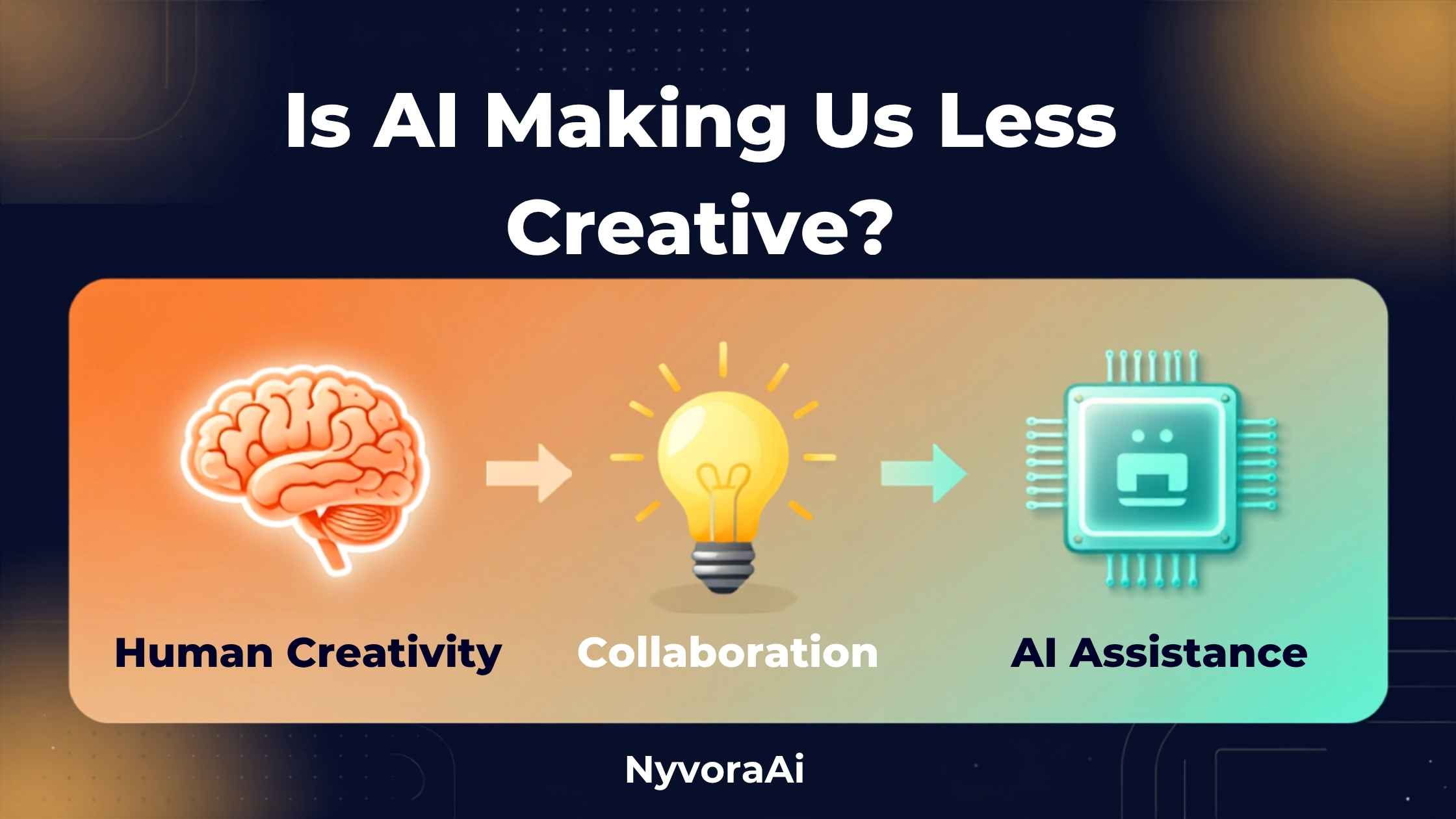
过去两年里的某个时刻,创造力成了争议地带。曾经用手打草稿的设计师,如今改成对模型敲指令;曾经让一个念头在脑子里放一周才落笔的作者,如今一小时内产出十个版本,挑出最不难看的那个;音乐人用自己根本不会演奏的 AI 乐器发专辑。从外面看,产量上去了;从里面看,很多创作者说不清自己感受到的到底是不是更多创造力。
提出担忧的人并非反技术。他们大多正是那些热情拥抱 AI 工具的人——正因为每天在用,他们才看得清:当创作流程中相当大一块被交出去之后,究竟什么变了。他们反对的不是工具存在本身,而是当一个技能、一种创作者身份不再被经常练习时会变成什么样。
01先给简短回答
AI 并没有让创造力消失。真正在变的,是哪几块创作"肌肉"在出力——这点不容轻看。这份担忧有扎实依据:认知科学早已指出,不练的技能会退化,而创造性思维就是一项技能。如果任务中涉及创作决策的环节长期由 AI 接手,坐在键盘前的人做这类决定的次数就会减少。日积月累,某些东西就会改变。
与此同时,确实有创作者借助这些工具做出了真正有趣、真正原创的作品——没有工具,这些作品根本不会存在。两件事同时成立,所以"AI 是否正在杀死创造力"这种问法只会带来无谓争论。更有用的问题是:在你的创作流程里,哪些步骤交给了 AI,哪些仍然由你自己完成?
02争论之前,先界定创造力是什么
关于 AI 与创造力的讨论常常原地打转,原因是各方对"创造力"这个词的界定并不一致。如果把它理解为"产出前所未有的东西",AI 显然够格;如果理解为"表达关于人类体验的真实感受",要把这一点归功于一个用人类文本和图像训练出来的模型,就困难得多。"AI 是否有创造力"的答案,完全取决于是哪个含义。
本文采用多数认知科学家和一线艺术家使用的定义:创造力是形成原创想法、建立出人意料的关联,并表达出真实个人视角或经历的能力。仅有"新"是不够的——那只是随机。创造力是有目的的新意,由品味、判断力,以及"有话要说"的理由共同塑造。
按这个标准,AI 并不创作。它只是依据训练数据中的规律,输出统计上更可能出现的内容。这些输出可能让人意外,偶尔也漂亮,但它们没有目的,也不承载任何视角,因此不算上面所说的创造力。这里真正要紧的不是 AI 有没有创造力,而是用了 AI 之后,人还会不会有。
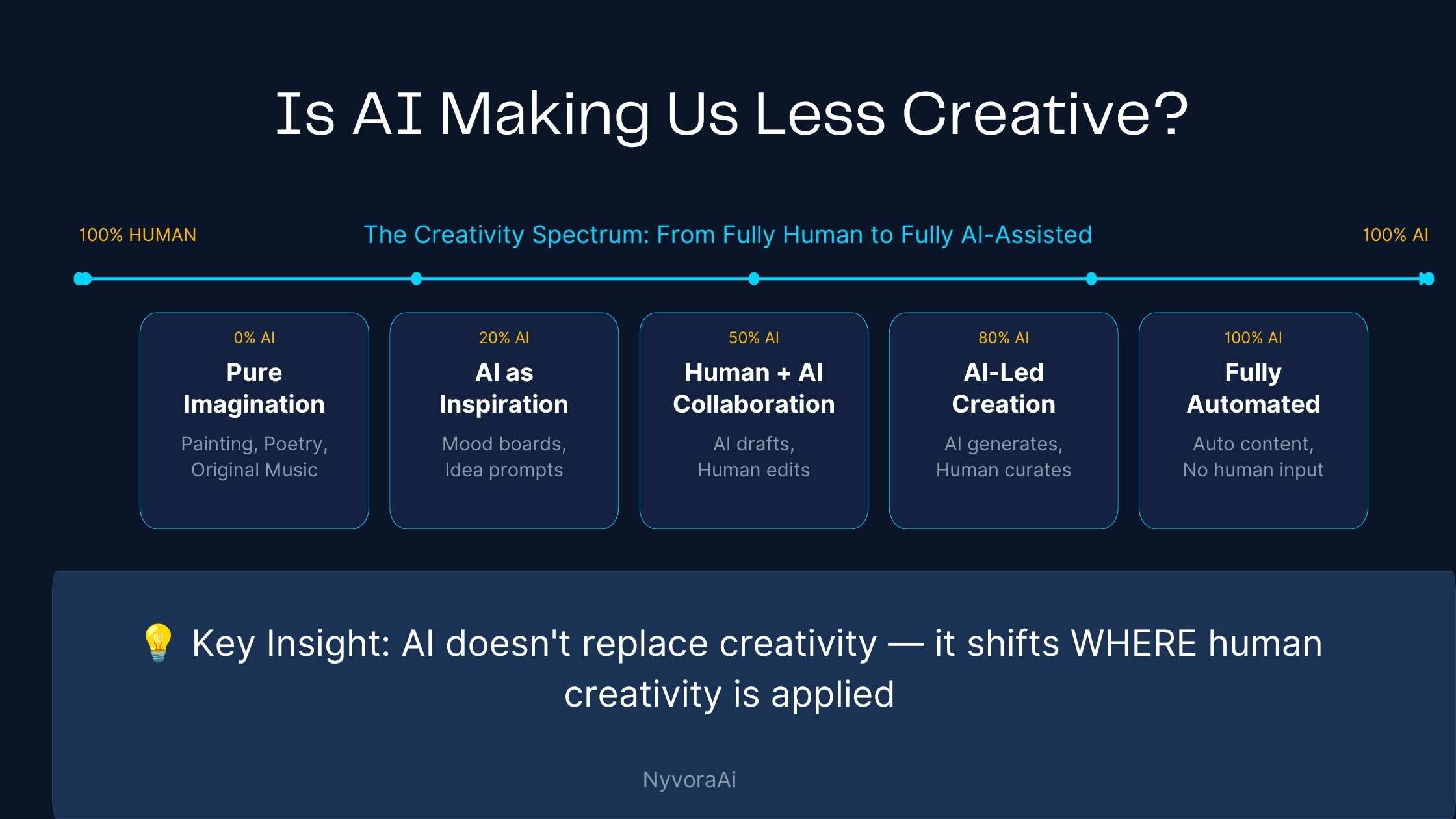
03支持"会"的一方:AI 何时确实削弱创造力
这场争论中让人不舒服的那一半,值得被认真对待。有些使用 AI 的方式确实会明显降低创作投入度,假装看不见对谁都没好处。
真正让认知科学家警惕的,是那些需要费力、挣扎、做判断的环节被持续交出去。创作的难度与创作技能的发展之间存在明确关联,这一点有充分文献支持。跟问题死磕——哪怕毫无进展——也在积累某种东西。先写出十个糟糕的段落、才换来一个好段落的人,练的是判断力;让模型生成五十个段落、自己留下最不差的那个的人,练的是另一回事。
04支持"不会"的一方:AI 何时确实拓宽创作边界
相反的那一方同样站得住脚。此刻就有人在做出从前做不出来的东西——原因不是 AI 降低了门槛,而是它拆掉了与创作才华无关的障碍:技术门槛、时间、资源。
一向用画面思考却不会画画的小说家,如今能给自己笔下的世界配插画;在纸上作曲的音乐人,不必雇乐团就能听见完整配器;有动画构想却不会写代码的设计师,第一次能做出会动的原型。这些情形里,创造力——想法、愿景、意图——完全属于人。AI 补的是技术执行的缺口,不是创作上的决策。
反对"AI 让我们创造力下降"最有力的论据来自历史。每一项重要的生产力工具,当年都被指为会削弱它所辅助的那项技能。文字处理软件会毁掉作家,计算器会毁掉数学家,摄影会让绘画消亡。这些担忧在当时都很真诚,而现实每次都更复杂:工具重新排定了哪些技能才重要,并把从业者推向更高一层的抽象。眼下发生的很可能也属于同一类。
05空白页难题,以及它为何值得认真对待
"AI 创作工具解决了空白页难题"——这是最常见的说法之一。你不必再干坐着,面对"不知道该写什么、做什么"的困境;先生成点东西,再对它有反应就行。这话没错,对很多人也确实有用。但诚实地讲,还该问一句:那张空白页原本在替你做些什么?
空白的页面让人难受,但它也是某类创作思考发生的地方:念头尚未成形,你的大脑在没有外部输入的情况下筛选各种关联与可能。最重要的那部分创作思考——能催生出谁都没料到的作品的那种——往往就发生在一稿之前那段难熬的空隙里。如果 AI 每次都把这段空隙填平,我们很难说清到底没有损失什么。
能盯着空白页面硬逼出东西来,本身就是一项练出来的能力。这样做的写作者会积累一种特定力量:从自身资源中生成内容、信任自己的直觉、忍受"还没有答案"的不确定感。在一个缺口刚出现就能被瞬间填满的世界里,这种力量是否还算数,目前确实没有定论——但在判定它无用之前,值得先认真想一想。
06技能退化:真实风险还是被夸大?
认知外包——把过去自己用脑完成的任务交给外部工具——是一种已被充分确认的现象。长期依赖 GPS 导航的人,空间记忆确实会变差;拼写检查也改变了人们与拼写的关系。这些损失谈不上灾难性,但确实存在。对 AI 而言,待解的问题是:创造性认知是否也遵循同样的规律。
诚实的说法是:长期数据目前并不存在。这一量级的 AI 创作工具是全新的东西。基于我们对技能与练习的全部了解,"长期把创作决策外包出去会削弱独立决策能力"这一担忧是合理的——但它目前仍属于有根据的忧虑,而非已被证实的事实。谁要说证据已经明确指向哪一边,谁就跑到了研究前面。
07AI 在创作上真正做不到的事
有一种东西让创作值得被做出来,而 AI 身上没有:非说不可的理由。能久存的作品,往往出自那些急着要把什么表达出来的人——一个别人没有的视角,一段必须被消化处理的经历,一个在脑子里挥之不去的观察。AI 没有经历可依,没有紧迫感,也没有想要表达的内在世界。
这也是为什么 AI 生成的创作,即便技巧上令人惊叹,读起来往往还是有点空。它有统计意义上的熟练度,也掌握了"什么会成功"的套路,但它在这件事上没有任何利害关系。让一件作品值得被读、被看、被听的那种独特声音,来自某个具体的人——他经历过、思考过、感受过某些具体的事。提示词工程造不出这种东西。
落到实操层面,真正值得投入的是那一组 AI 无法接手的能力:拥有别人没有的视角;通过广泛而挑剔地接触作品来培养真实品味;练出分辨"真正好"与"看上去好"的判断力;找到完全属于你自己的创作理由。这些不会因使用 AI 而退化——AI 根本不在这个层面上运作。至于最有条件发展这些能力的人,是否真的花了足够时间去练,那是另一个问题,也更私人。
08如何用 AI 而不在其中迷失自己
多数创作者并不需要在"拒绝工具"和"全盘接受"之间二选一。他们要的是一种让作品仍然属于自己的配合方式。以下几条原则在不同领域都适用:
- 先做决策,再写提示词。在请模型帮忙之前,先想清楚你要达成什么。让 AI 提供想法、你从菜单里挑,和使用 AI 去实现你自己已经成形的想法,是两种不同的脑力活动。
- 保留一项不借助 AI 的练习。偶尔用手写,画画时不打开生成工具,初稿自己来写。理由不是 AI 有害,而是无辅助的做法会锻炼到有辅助时闲置的那部分能力。
- 有意识地培养品味。广泛阅读,研究你欣赏的作品,对"什么好、为什么好"形成自己的真实看法。品味是创作判断与审美随机的分界线,AI 没法替你长出来。
- 对 AI 到底做了多少,保持诚实。如果概念和执行都由 AI 产出,你只负责挑选和发布,那你到底贡献了什么创作?有时候诚实答案是"筛选与把控方向"——这也是正当的创作角色。但分清是哪一种,对你的成长很重要。
AI 正在如何重塑作为职业的创作——它触及哪些岗位、朝哪个方向推——与创意行业的整体就业图景直接相关。我们对2026 年 AI 对内容写作岗位意味着什么的分析,更深入地讨论了同一问题的经济与职业层面,值得与本文对照阅读。
09被谈论得太少的那个风险
有一个创作风险比技能退化得到的关注少得多,而我认为它更紧迫:产出趋同。当许多人使用同样的工具、同样的训练数据、大致相似的提示习惯时,结果就会彼此靠拢。看够多 AI 图片的人,已经能一眼认出那套共同风格;AI 写作工具偏爱的句式正变成一种标志;AI 生成的音乐也带着可辨认的指纹。
这不是在批评任何把工具用得好的个人创作者。这是一个结构性观察:当创作产出要经过少数几个能力极强的系统,整个文化的作品多样性就会收窄。人类创作中那条又怪、又难归类、又极其离奇的长尾——来自某个具体的人在某个具体时刻的脑袋——如今面对的是另一套竞争条件:因为打磨精致、技术过硬的 AI 产出随取随用,而且几乎不花钱。
10读者常问的问题
AI 会让我们变得不创意吗?
长期使用 AI 工具会让创造力下降吗?
人的创造力与 AI 能配合得好吗?
当 AI 替你完成创作时,失去的是什么?
AI 最终会彻底取代人的创造力吗?
11那么,我们该往哪里走
对"AI 是否让我们创造力下降"最诚实的回答是:要看情况——而这并不是敷衍。取决于你把创作流程中的哪些环节交了出去,你多久会在没有 AI 辅助的情况下练习创作,你是否在培养真实的品味与视角,以及你做出来的东西里是否还有只属于你的成分。这些全部关乎个人习惯,与工具是否存在无关。
有一点看来是清楚的:最值得守护的创作能力,恰恰是 AI 无法复制的那些。日积月累的经历,它让你有值得说出的东西;品味,它帮你分辨真正的好与仅仅过得去;以及愿意在困难里多待一会儿、等到原创的东西浮现出来的耐心。AI 工具威胁不到这些。但它们要求在一条更省事的路随时只需一个提示词就能走通的处境里,仍然刻意去耕耘。至于人们是否选择这份耕耘——这本身就是个极其人类的创作决定,倒也恰当。
At some point in the past two years, creativity turned into disputed territory. Designers who once put ideas down by hand now type instructions into a model. Writers who once let an idea sit for a week before producing a sentence now turn out ten versions in sixty minutes and keep whichever is least poor. Musicians release albums built on AI instruments they have no physical ability to play. Seen from outside, the volume is up. Seen from inside, plenty of creators cannot say whether what they feel is more creativity.
Those voicing the worry are not anti-technology. They are mostly the same people eagerly picking up AI tools — for the very reason that daily use shows them exactly what shifts when a sizeable chunk of the process is handed off. The objection is not that the tools exist. It is about what becomes of a skill, and of a creative self-image, once regular practice stops.
01The Short Answer, Up Front
Creativity is not vanishing because of AI. What is changing is which creative muscles do the work — and that is not trivial. The worry rests on real ground: cognitive science has long held that unpractised skills decay, and creative thinking counts as a skill. Let AI take over the decision-making portions of a task on a regular basis, and the human at the keyboard makes fewer such decisions. Something shifts over time as a result.
Meanwhile, genuine creators are producing work that is interesting and original with these tools — work that simply would not exist otherwise. Both statements hold at the same time, which is exactly why framing the issue as "is AI killing creativity" generates heat rather than light. A better question: inside your creative process, which steps has AI taken over, and which are still yours?
02Settle What Creativity Means Before Arguing About It
Debates about AI and creativity often spin in place because the participants never agree on what the word covers. Take creativity to mean producing something unprecedented, and AI plainly qualifies. Take it to mean voicing something true about lived human experience, and crediting a model whose training came from human writing and pictures with that becomes far harder. Whether AI is creative therefore hinges on which sense you have in mind.
For this article, adopt the definition most cognitive scientists and working artists use: the ability to generate original ideas, draw connections nobody expected, and express something carrying a real personal viewpoint or history. Mere newness is not enough — that is just randomness. Creativity is novelty with a purpose, formed by taste, by judgement, and by having a reason to speak.
By that standard, AI does not create. It emits outputs that are statistically probable given the patterns in its training data. Those outputs can surprise you and sometimes are beautiful, but they lack purpose and carry no viewpoint, so they are not creative in the sense just described. The question that matters here is not whether AI is creative; it is whether using AI changes whether people are.
03The Argument for Yes: When AI Really Does Cut Creativity
It is worth taking the uncomfortable half of this argument at full strength. Certain ways of using AI visibly lower creative engagement, and pretending they do not helps nobody.
What actually alarms researchers in cognitive science is the steady handover of the effortful, struggle-heavy, decision-laden portion of the work. The link between how hard creative production is and how creative skill develops is well documented. Wrestling with a problem — even when it goes nowhere — builds something. Someone who grinds out ten poor paragraphs to reach one good one has been practising judgement. Someone who has the model produce fifty paragraphs and keeps the least poor one has practised something else entirely.
04The Argument for No: When AI Really Does Widen Creative Range
The opposing claim is equally real. Right now there are creators making things that could not have been made before — and the reason is not that AI drops the standard, but that it removes obstacles unrelated to creative talent: technical skill, hours, money.
A novelist with a visual imagination but no drawing hand can now illustrate the world they invented. A composer who works on paper can hear a full orchestration without paying an orchestra. A designer with animation concepts but no coding ability can build a moving prototype for the first time. In every case the creativity — the idea, the vision, the intention — belongs entirely to the human. What AI covers is the technical execution gap, not the creative calls.
History supplies the strongest counter to "AI makes us less creative." Every significant productivity tool was said to be degrading the very skill it helped with. Word processing would ruin writers; calculators would ruin mathematicians; photography would finish off painting. The worry was sincere each time, and each time the reality was messier: the tools rearranged which skills counted and let practitioners operate one layer further from the details. Something of the same kind is probably underway.
05The Blank Page Problem, and Why It Deserves Attention
Saying that AI creative tools "solve the blank page problem" has become a favourite refrain. No more sitting there with no notion of what to make — generate something first, then respond to it. That is accurate, and plenty of people find it genuinely helpful. Still, honesty requires asking what the blank page had been doing for you.
An empty page is unpleasant to face. It is also the site of a particular sort of creative work: the stretch of time when an idea has no shape yet and your mind sifts connections and options with no outside input. The most consequential creative thinking — the kind that yields work nobody saw coming — often occurs in that awkward interval before anything is written. Remove that interval every single time and it is far from obvious that nothing gets lost.
Being able to face an empty page and force your way to something is itself a practised ability. Writers who do it build a particular strength: generating from their own resources, trusting their instincts, and putting up with the uncertainty of not yet having an answer. Whether that strength counts for anything in a world where the gap can be filled the instant it appears is genuinely unsettled — but it deserves careful thought before anyone writes it off.
06Skill Atrophy: Genuine Risk or Overblown Fear?
Cognitive offloading — handing mental work to an outside tool that you used to do in your head — is a well-established phenomenon. Constant GPS use has measurably weakened spatial memory. Spellcheckers have altered how people relate to spelling. Nobody would call such losses catastrophic, but they are losses. The open question for AI is whether creative cognition behaves the same way.
Honestly, the long-term data does not exist yet. Creative AI tools at this level of adoption are brand new. Given what is known about skill and practice, the fear that routinely outsourcing creative decisions erodes the ability to make them alone is a reasonable one — but it remains a reasoned concern rather than a demonstrated result. Claim that the evidence clearly settles the matter either way and you are running ahead of the research.
07What AI Genuinely Cannot Do
One ingredient makes creative work worth the making, and AI does not possess it: a reason to speak. Work that lasts tends to come from someone with something they urgently must get out — a viewpoint that feels like nobody else's, an experience that has to be worked through, an observation about the world that will not stop nagging them. AI has no experience to draw on, no urgency, no inner life pressing for expression.
That is why AI-made creative output, even when the craft is dazzling, usually lands as faintly hollow. It has statistical competence. It has absorbed the patterns of what succeeds. What it lacks is any stake in the outcome. The unmistakable voice that makes a piece worth reading, viewing, or hearing originates in a particular person who has lived, thought, and felt particular things. Prompt engineering cannot manufacture it.
Practically speaking, that leaves one set of skills worth investing in: the ones no AI can take over. Holding a perspective nobody else holds. Building real taste by consuming creative work widely and critically. Acquiring the judgement to tell what is good apart from what merely resembles good. Coming up with a motive for making things that belongs to nobody but you. These do not decay because of AI — AI simply does not operate there. Whether the people best placed to develop them are actually spending the time is a separate matter, and a far more personal one.
08Using AI Without Losing Yourself
Most creators are not choosing between refusing these tools and swallowing them whole. What they want is a working arrangement in which the work stays theirs. A handful of principles that travel well across disciplines:
- Decide before you prompt. Be clear about the outcome you are after before you ask the model for help getting there. Letting AI supply the idea while you pick from its menu is a different mental exercise from using it to carry out an idea you arrived at yourself.
- Keep one practice that runs without AI. Write by hand now and then. Sketch with nothing generating alongside you. Draft the first pass unaided. The reason is not that AI is harmful — it is that the unaided version works a capacity the aided version leaves idle.
- Build taste on purpose. Read across a wide range, study work you admire, and form real opinions about what is good and the reasons why. Taste is the line between creative judgement and aesthetic guesswork, and no model can grow it on your behalf.
- Be straight with yourself about the model's share. If AI produced both the concept and the execution while you selected and hit publish, what creative work did you actually do? Sometimes the honest answer is curation and direction — a legitimate creative role. Knowing which one applies still matters for how you develop.
How AI is reshaping creative work as a profession — which roles it touches and in which direction — ties straight into the wider employment picture across creative industries. Our analysis of what AI means for content writing jobs in 2026 digs into the economic and career side of the same question, and reads well alongside this piece.
09The Risk That Gets Discussed Too Little
One creative risk gets far less airtime than skill atrophy, and in my view it is the more pressing of the two: everything starts to look alike. Put many people on the same tools, trained on the same corpus, prompting in broadly the same way, and the results drift toward one another. Anyone who has looked at enough AI images can already spot the house style. The sentence shapes that AI writing tools reach for are becoming a tell. AI-composed tracks carry recognisable fingerprints.
None of that is aimed at individual creators who use the tools well. The point is structural: route creative production through a handful of very capable systems and the variety of output across a culture narrows. The long tail of odd, uncategorisable, deeply strange human work — the material that emerges from one particular mind at one particular moment — now competes on different terms, because polished and technically assured AI output appears instantly and costs almost nothing.
10Questions Readers Ask
Does AI make us less creative?
Do AI tools wear creativity down over the long run?
Can human creativity and AI cooperate productively?
When AI makes your creative work for you, what goes missing?
Could AI end up replacing human creativity altogether?
11Where This Leaves Us
"Is AI making us less creative" honestly resolves to: it depends — and that is not a dodge. It depends on which stages of the process you gave away, how regularly you practise creating unaided, whether you are building real taste and a real viewpoint, and whether your output still contains something no one else would have produced. Every one of those is a question about personal habit, not about whether the tools exist.
One thing does look clear: the creative capacities most worth defending are precisely the ones AI cannot reproduce. Accumulated experience, which is what gives you something worth saying. Taste, which separates the genuinely good from the merely acceptable. And the patience to remain in the difficult place long enough that something original can surface. AI tools do not threaten any of those. What they do demand is deliberate cultivation, given a landscape where the effortless route sits one prompt away. Whether anyone chooses that cultivation is — fittingly — a very human creative decision.