2026 年顶级 AI 语法检查器,实话实说排名The Top AI Grammar Checkers for 2026, Ranked Honestly
每个写作者都体会过那种懊恼:一句话你已经来回看了十几遍,正中央还藏着一个错,只是眼睛早已麻木。AI 语法工具承诺提供一双永不疲倦的“第二双眼睛”,但如今市场上的产品分别为截然不同的工作而造。下面是一份坦率、有依据的评估,看看哪些产品真配进入你的日常流程。
Every writer knows that painful moment: a sentence you've reread a dozen times still conceals an error dead in its center, simply because your eyes have given up. AI grammar tools promise the fresh attention of a second reader who never tires, yet the market now houses tools built for strikingly different jobs. Below is a candid, evidence-based assessment of which products have earned a place in your daily routine.
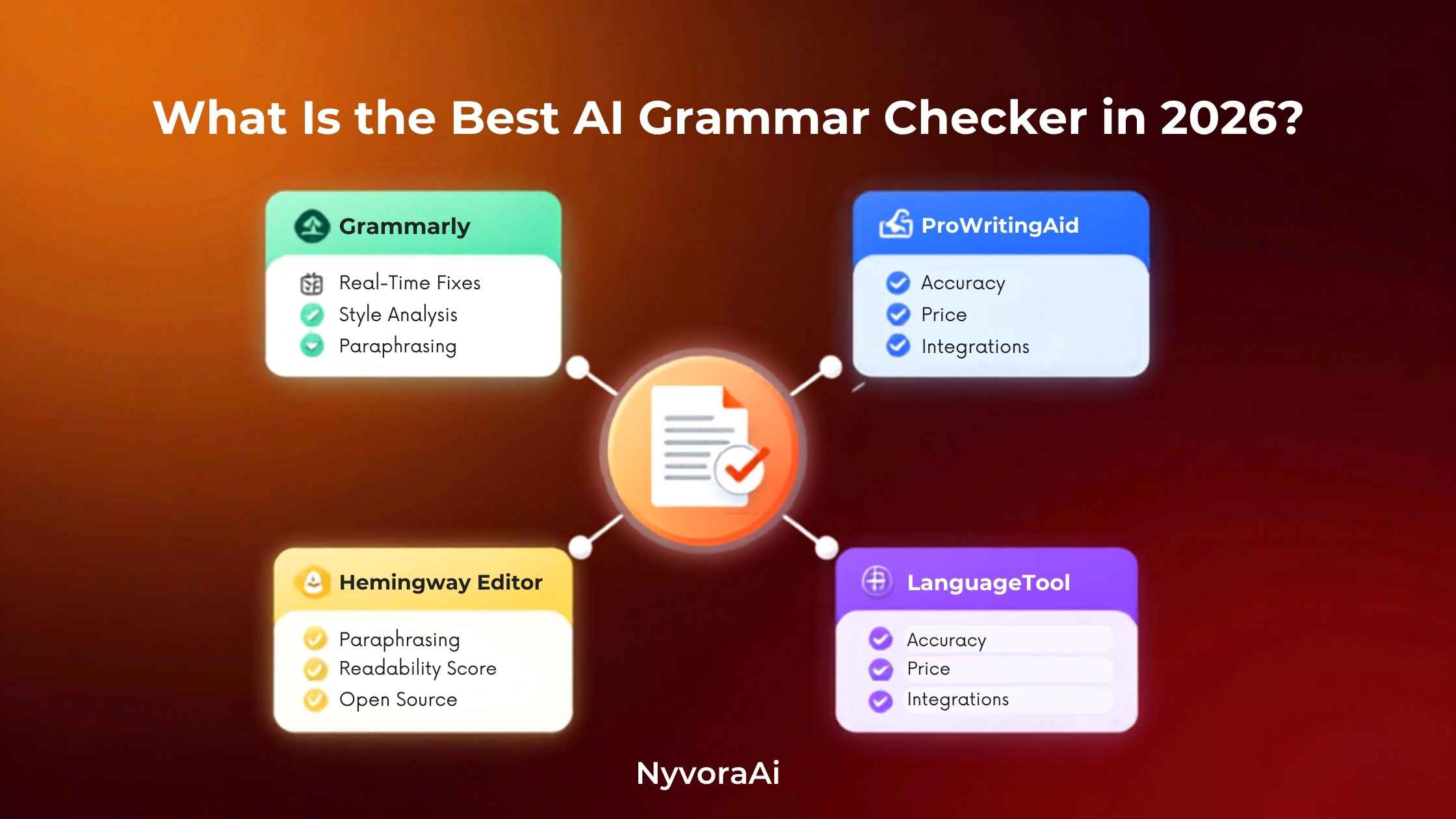
搜索“最好的 AI 语法检查器”,多数结果二话不说就把 Grammarly 排在榜首。这个结论不算错,却只讲了一半。到 2026 年,这个品类已经裂成四块——日常校对、书稿深度分析、免费多语言检查、以改写为核心的重写——冠军是谁,取决于哪项任务才是你购买的理由。只看牌子选购,你很可能为一堆永远用不上的功能买单。
01简短结论
就 2026 年的日常英文写作而言,Grammarly 的整体表现仍居首位:数千个网站和软件内都有实时建议,语气判断可靠,清晰度反馈还会解释每处修改的理由。当项目变得很长——小说、学位论文、完整书稿——ProWritingAid 就反超了,它能给出节奏、重复和用词泛滥的报告,这些 Grammarly 根本不做。预算要压低、语言不止一种时,LanguageTool 的免费档提供最稳的起点。把改写看得和纠正同等重要的人,值得认真试用 QuillBot。
02为什么语法检查与 AI 天生合拍
拼写和语法错误会聚集为自动化特别擅长捕捉的模式:主谓不一致、时态游移、修饰语放错位置、近音词混用、逗号硬接两个句子,这些在几乎所有写作中反复出现。近年的变化更深:这些产品不再只套用规则。今天的检查器运行的是理解句意的上下文模型,而不仅判断句子是否符合课本规则——正因如此,笨拙措辞和含糊表意如今也会与硬错误一起被标出。
对以英语为第二语言的人来说,这种对上下文的敏感最有价值。规则驱动的工具会放行形式上允许、读起来却很别扭的冠词或介词,而有上下文意识的模型会标出它,并带写作者理解更自然的说法。对非母语写作者而言,“修改加解释”的组合往往比修改本身更值钱:它滋养的是底层能力,而不是一句接一句地打补丁。
还有一个更细微的变化值得一提:这些应用越来越像初级编辑,而不只是错误探测器。语气分析会提醒你某封邮件比预期更生硬;清晰度评分能标出已经长到读者跟不上的句子;可读性反馈则会揭露不知不觉变厚、塞满术语的文字。人类编辑的判断仍然高过这一切,但“技术上成立”与“真正好读”之间的距离,已经比从前容易跨越得多。
03优秀语法检查器的分水岭
上下文中的准确度
语言覆盖面
长篇稿件的处理能力
保住你的个人声音
拿这些标准对照你一周里真正在写的东西。一个赶论文的学生和一个打磨 90,000 词书稿的小说家,嘴里要的都是“语法检查器”,需求却几乎不沾边。
04主流 AI 语法检查器横向对比
| 产品 | 适合人群 | 常见价格 | 看家优势 |
|---|---|---|---|
| Grammarly | 随时随地的日常英文写作 | 有免费档;Premium 约 $12-30/mo | 最广的应用和网站集成 |
| ProWritingAid | 小说家与整本书稿 | 免费(500 词);付费约 $10/mo 起 | 风格与节奏的深度报告 |
| LanguageTool | 免费多语言检查 | 免费;Premium 约 $5/mo 起 | 支持 30+ 种语言 |
| QuillBot | 附带语法检查的改写 | 有免费档;Premium 约 $10/mo 起 | 10 多种改写模式 |
| Hemingway Editor | 可读性与句子简化 | 网页版免费;桌面版约 $20 一次买断 | 通俗语言评分 |
如果今天只能装一款,Grammarly 在最广的日常写作范围内走得最远。当稿件又长又结构化——章节、学位论文、报告——ProWritingAid 贯穿全文档的模式报告值得你换工具;在掏卡付费之前,它的免费 500 词检查也值得真跑一遍。
05五步搭好你的写作工具箱
- 1
说清你实际在写什么
1 邮件、社交动态、长篇书稿和多语言写作,各自指向不同的主力选择。
- 2
付费前先试免费档
2 Grammarly、LanguageTool 和 QuillBot 都有能用的免费档——升级前先拿真实文字试一遍。
- 3
第一遍先扫清硬错误
3 先抓拼写、标点和语法,硬错误清完再碰语气和风格。
- 4
手动判断清晰度和语气建议
4 保留那些保护你声音的修改,丢掉把文字压成通用模板的修改。
- 5
确有需要再加专用工具
5 ProWritingAid 的报告对书稿作者物有所值;随手写写的人很少需要这层。
06这些产品的局限
- 建议可能磨平你的声音。全盘照收,有时会去掉让文字 unmistakably 属于你的个性。
- 规则驱动的检查器对付技术词汇会失灵。靠固定规则而非上下文推理的工具,可能误标有意使用的行话和领域术语。
- 免费档限制词数和功能。长文档和高级风格检查通常锁在付费墙后。
- 改写功能可能触发 AI 检测。较重的改写模式,有时在查重或 AI 检测软件眼里就是机器重组的文本。
- 细腻之处仍需人类编辑。讽刺、文化语境和刻意打破语法规则,发布前都需要人过一遍。
07从干净文字到更宽的内容流水线
打磨好的文字不必困在一种形式里。如果草稿最初是视频脚本或录好的对话,可先看我们对Otter AI 是否适合做会议纪要的分析——在语法工具登场之前,它能帮你捕捉和整理那份原始素材。想把同一个想法发布成多种形式?我们关于Synthesia AI 做视频的评测以及2026 年最佳免费 AI 视频工具的盘点,都讲了怎样把完成的脚本直接变成视频而不必从头再来。
严谨、编辑到位的文字在发布后也表现更好,这正是更宽工作流回报你的地方。想让打磨好的草稿真正带来搜索流量,可读我们的博主 AI SEO 工具盘点;想在语法检查之前组织好草稿和修改,可看Notion AI 是否值得加入你的流程。视觉同样值得用心——我们关于Canva AI 是否适合设计新手的评测,能让好文配上同样利落的图;如果你的内容组合里还有音频,我们的播客剪辑 AI 工具盘点覆盖了声音那一侧。
08人们选错语法检查器的方式
- 默认选最有名的牌子。Grammarly 擅长日常写作,却不自动适合小说或多语言文档。
- 不看就照单全收。有些修改客观上正确;另一些会悄悄改变你的意思或语气。
- 完全无视免费档。LanguageTool 和 Grammarly 的免费版足以在花钱之前充分测试是否合适。
- 把改写工具当成纯语法检查器。QuillBot 的强项是重写而非严谨语法分析——想清楚你真正要干哪件活。
- 省掉最后一遍人工阅读。模式匹配是这些工具的强项;上下文、讽刺和意图仍会从它们眼皮底下溜走,落进细心编辑的网里。
09读者最常问的问题
2026 年哪款 AI 语法检查器最好?
2026 年 Grammarly 仍然领先吗?
哪款免费 AI 语法检查器真的好用?
QuillBot 能取代 Grammarly 吗?
这些工具对非母语英语写作者有用吗?
10收尾
那么 2026 年哪款 AI 语法检查器配得上“最好”二字?就日常写作而言,Grammarly 凭覆盖广度和稳定度胜出:它就在你已经打字的每个地方,而且会解释修改、而不是默默套用。但更完整、诚实的答案是,“最好”跟着你的实际项目走:小说家从 ProWritingAid 的结构报告里得到更多价值,省钱的多语言写作者用 LanguageTool 免费档走得更远,而改写和校对一样多的人自然会靠向 QuillBot。
先诚实盘点自己的真实习惯——每日邮件、整本书稿、多语言写作还是频繁改写——再选为那份工作打造的产品,而不是嗓门最大的品牌。重点从来不是囤积写作应用,而是在每次发布前少些纠结,把更干净、更清晰的作品送出去。
Hunt for a top-rated AI grammar checker and most results hand the crown to Grammarly before saying much else. That verdict has truth to it but tells only part of the story. By 2026 the category has fractured four ways — routine proofreading, deep manuscript critique, free checking across languages, and rewriting led by paraphrasing — and the winner shifts depending on which of those tasks drives your purchase. Shop by logo alone and you'll likely fund a shelf of features you never open.
01The Short Verdict
For routine English writing in 2026, Grammarly still finishes first overall, with live suggestions inside thousands of sites and programs, reliable tone readings, and clarity notes that show the reasoning behind each edit. ProWritingAid overtakes it when the project stretches long — novels, theses, complete drafts — surfacing reports about pacing, repetition, and overworked vocabulary that Grammarly never attempts. Keep the budget minimal and the languages multiple, and LanguageTool's no-cost tier gives the firmest foothold. Writers who weigh rewriting as heavily as pure correction should give QuillBin a genuine trial.
02Why AI and Grammar Checking Were Made for Each Other
Mistakes in spelling and grammar cluster into patterns that automation catches unusually well: subjects failing to match their verbs, tense slipping, modifiers stranded in the wrong spot, sound-alike words swapped, and commas soldering two sentences together recur in nearly everything people write. The recent change runs deeper: these products no longer apply rules alone. Today's checkers run contextual models that grasp what a line intends, not merely whether it obeys a textbook rule — which explains why clumsy phrasing and murky meaning now get flagged alongside outright errors.
That sensitivity to context matters most when English is a second language. A rule-driven tool can wave through a preposition or article that is formally allowed yet sounds foreign, whereas a context-aware model marks it and walks the writer through the more natural alternative. For non-native writers, the paired edit and explanation frequently outweighs the fix, nurturing the underlying skill rather than papering over one sentence after another.
A subtler change deserves mention too: these apps increasingly behave like junior editors, not merely error detectors. Tone analysis can warn that an email sounds harsher than you meant, clarity scores flag sentences that have outgrown the reader's attention, and readability notes reveal prose that quietly thickened with jargon. Human editorial judgment still outranks all of it, yet the distance between "technically valid" and "genuinely readable" has grown far easier to cross.
03What Separates the Great Grammar Checkers From the Rest
Accuracy in Context
Breadth of Languages
Holding Up Across Long Drafts
Keeping Your Voice Intact
Match those standards against the writing that actually fills your week. A student refining essays on deadline and a novelist shaping a 90,000-word manuscript both ask for "a grammar checker," but their needs barely overlap.
04The Leading AI Grammar Checkers, Side by Side
| Product | Ideal User | Going Rate | Signature Edge |
|---|---|---|---|
| Grammarly | Daily English writing wherever you work | No-cost tier; Premium around $12-30/mo | The broadest app and site integration |
| ProWritingAid | Novelists and book-length drafts | Gratis (500 words); paid from about $10/mo | Deep reports on style and pacing |
| LanguageTool | No-cost checking across languages | Free; Premium from about $5/mo | Support for 30+ languages |
| QuillBot | Rewriting with a grammar sweep attached | No-cost tier; Premium from about $10/mo | More than 10 separate rewording modes |
| Hemingway Editor | Readability and simpler sentences | Free in the browser; desktop about $20 once | Plain-language scoring |
If a single install is all you can manage today, Grammarly stretches furthest across the widest spread of everyday writing. Switch focus when the draft is long and structural — chapters, dissertations, reports — because ProWritingAid's document-wide pattern reports earn the change, and its free 500-word check deserves a genuine run before any card is charged.
05Assemble Your Writing Toolkit in Five Moves
- 1
Name the writing you actually do
1 Emails, social updates, full-length drafts, and multilingual work each point to a different primary choice.
- 2
Test the gratis version before any upgrade
2 No-cost versions exist from QuillBot, Grammarly, and LanguageTool alike — run real text through each one before you spend a cent.
- 3
Sweep for hard errors on the first pass
3 Spelling, punctuation, and grammar come first; tone and style edits wait until the hard mistakes are gone.
- 4
Judge clarity and tone edits by hand
4 Keep edits that protect your voice and discard any that press your prose into a generic mold.
- 5
Bolt on a specialist only when needed
5 ProWritingAid's reports repay manuscript writers; casual writers rarely miss that extra layer.
06Where These Products Run Into Limits
- Suggestions can sand away your voice. Accepting them wholesale sometimes removes the personality that made the text unmistakably yours.
- Rule-driven checkers fumble technical vocabulary. Fixed-rule tools instead of contextual reasoning can wrongly flag deliberate jargon and domain terms.
- Free tiers ration words and features. Lengthy drafts and advanced style checks typically sit behind payment.
- Paraphrasing can trip AI-detection software. Rewriting on the heavier settings sometimes reads as machine-restructured to detectors and plagiarism scanners.
- Nuance still demands a human editor. Sarcasm, cultural context, and deliberate grammatical rule-breaking require a person's pass before publication.
07From Clean Prose to a Wider Content Pipeline
Polished writing rarely needs to remain trapped in one format. Drafts born as video scripts or recorded conversations benefit first from our look at whether Otter AI works well for meeting notes, which helps capture and shape that raw material before a grammar tool ever sees it. Publishing the same idea in several forms? Our review of Synthesia AI for video creation and our roundup of the top no-cost AI video app in 2026 both explain how a finished script becomes a video without restarting.
Tight, well-edited prose also earns better results after launch, which is where the broader workflow pays off. Read our AI SEO tool roundup for bloggers when you want that polished draft to draw search traffic, and see whether Notion AI deserves a spot in your routine for organizing drafts and edits ahead of the grammar pass. Graphics deserve equal care — our review of Canva AI for design newcomers pairs well-written text with equally sharp images, while our podcast editing AI roundup covers the audio side when your content mix includes sound.
08How People Choose the Wrong Grammar Checker
- Defaulting to the most famous logo. Grammarly excels at daily writing, yet fiction projects and cross-language documents may need something else entirely.
- Accepting edits without reading them. Some fixes are objectively right; others quietly bend your meaning or tone.
- Writing off free tiers completely. The no-cost versions from LanguageTool and Grammarly test fit thoroughly before any spending.
- Mistaking paraphrasers for grammar checkers. QuillBot's strength is rewriting, not rigorous grammatical analysis — keep the actual job in mind.
- Skipping the final human read. Pattern matching is where these tools shine; context, sarcasm, and intent still slip past them into a careful editor's net.
09Questions Readers Ask Most
Which AI grammar checker is best for 2026?
Does Grammarly still lead the field in 2026?
Which free AI grammar checker actually performs?
Can QuillBot stand in for Grammarly?
Do these tools help non-native English writers?
10Wrapping Up
So which AI grammar checker earns the title in 2026? For daily writing, Grammarly wins on sheer reach and steadiness — it sits wherever you already type and explains edits rather than imposing them silently. The fuller, honest answer is that "best" tracks your actual project: novelists extract more value from ProWritingAid's structural reports, thrifty multilingual writers travel further on LanguageTool's free tier, and writers who rewrite as often as they proofread gravitate toward QuillBot.
Begin with an honest audit of your real habits — daily emails, book-length drafts, multilingual work, or constant rewriting — and choose the product shaped for that task rather than the loudest brand. The point was never hoarding writing apps; it is sending cleaner, sharper work into the world with less doubt before every publish.