Chloride233/dsh-cot-profile
DeepSeek Harness的实时思维链轨迹剖析:实时措辞指示器、画像族判定、每会话测量记录
Project Overview项目介绍
dsh-cot-profile is a native DeepSeek Harness plugin that provides real-time profiling of an LLM’s chain-of-thought reasoning trajectory. To install the plugin, run the official DSH CLI command: dsh plugin --profile web add github:Chloride233/dsh-cot-profile. The plugin tracks reasoning as it happens, tallies signature wording indicators like let me, we, let's, and I, and classifies the current session against built-in baseline profiles. It can also optionally record per-session measurement aggregates for further analysis, and builds on community research showing wording patterns reflect model and DSH assembly combinations, not just model identity.
Users can view real-time results via a session-header badge and a collapsible floating panel that updates via session-projection push frames, so no polling or custom RPC is required. The plugin only outputs a classification verdict after a configurable number of reasoning blocks, with a default of 10 blocks required before judging. Any trajectory that cannot be reliably classified, including those that fall in the transition band between the two primary profile groups, is marked as ambiguous or uncertain instead of forcing a hard label. This lets users draw their own conclusions based on the raw data presented side-by-side.
The core plugin works immediately after installation, but adding a web-based settings interface requires a temporary one-time patch for DeepSeek Harness 0.1.0-rc.6. Without the patch, users can still modify all plugin settings via the cordis configuration file. The plugin is released under the permissive MIT open-source license, and it prioritizes privacy: only aggregate data is processed locally, and raw reasoning text is never recorded or transmitted anywhere. Users can also extend the plugin by editing profile families and per-dimension weights directly via settings, and the built-in baselines are calibrated from community-collected probe data.
这是一款专为 DeepSeek Harness 开发的原生插件,用于对大模型的思考轨迹进行实时剖析。它会在推理过程中实时统计let me/we/let's/I这类措辞特征词的出现次数,将当前会话的推理轨迹与内置基线做匹配分类,还支持按会话记录测量聚合数据。该插件的分类逻辑基于社区已有研究,措辞特征反映的是模型与预设装配的组合,而非模型本身的身份。
用户可以通过会话头的徽章和可折叠悬浮面板实时查看分析结果,插件采用会话投影推送帧更新,无需轮询或自定义RPC。它支持自定义配置判断所需的最少推理块数量、是否显示徽章和面板,对无法可靠分类的轨迹会标记为「不确定/过渡带」,不强制给出硬分类结果,方便用户自行得出结论。
可通过dsh plugin --profile web add github:Chloride233/dsh-cot-profile命令直接安装,核心功能安装后即可使用。若要使用Web端设置面板,需要给DeepSeek Harness 0.1.0-rc.6打临时补丁,否则可通过cordis配置文件修改设置。该插件采用MIT许可证开源,所有数据仅在本地计算,不会上传原始推理文本。
请帮我安装这个 DSH 插件。安装前先完成【兼容性检查 + 安全性检查】,检查通过再动手。

插件:dsh-cot-profile(Chloride233/dsh-cot-profile)
仓库:https://github.com/Chloride233/dsh-cot-profile
本站详情页:https://www.yhbd.top/plugins/chloride233-dsh-cot-profile/
本站登记:类型 plugin · 归类 原生 DSH 插件 · 许可证 MIT · ⭐ 4 · 最近提交 2026-08-16 · 主语言 JavaScript

按下面顺序执行,每步先把结论告诉我,再进入下一步:

【1 兼容性检查】
① 我这边:DSH 版本、Node 版本、操作系统、当前 profile(web / desktop)。
② 读它的 README、package.json、插件 manifest,列出它要求的 DSH 版本 / Node 版本 / 操作系统 / 外部依赖 / 需要另外先装的运行时。
③ 逐条比对,结论只写「满足 / 不满足 / 未知」三种;不满足的给出可行替代方案。
④ 检查是否和我已装的插件冲突:命令名重复、skill / tool 重名、端口占用、重复注册的 MCP server。

【2 安全性检查】
① 仓库可信度:和上面「本站登记」是否一致;star / fork 数、创建时间、最近提交,是否归档或长期停更。
② 安装脚本:逐行看 package.json 的 preinstall / install / postinstall,以及 install.sh、setup.ps1 之类脚本。出现 curl|bash、下载后直接执行、混淆代码、访问与插件功能无关的域名,立刻停下来告诉我,不要继续装。
③ 依赖:列出新增依赖,标出无人维护、或与知名包拼写近似的可疑包(typosquatting)。
④ 权限与副作用:它会读写哪些目录、访问哪些域名、需要哪些 DSH 权限(filesystem / network / shell / clipboard 等),以及怎么卸载和回滚。
⑤ 如果它要求 sudo / 管理员权限,或权限明显超出功能所需,先停下来问我。

【3 安装】
上面两步没有「不满足」和「高危项」时才执行;用官方推荐方式安装,不要自行提权。

【4 汇报】
用表格输出:检查项 / 结论 / 依据 / 是否需要我决策。拿不准的一律写「未知」并说明要我怎么确认——不要猜,也不要替我决定。
Send this message to DSH in your current session: it verifies compatibility and security first (answering met / not met / unknown item by item) and only installs once everything checks out — it will stop and ask you if it finds a high-risk item. The box scrolls; the copy is the full prompt. CLI install commands may not be accurate across systems, so DSH is the safer route.把上面这条消息直接发给当前会话里的 DSH:它会先核对兼容性与安全性(逐条给「满足 / 不满足 / 未知」),确认没问题再安装,有高危项会停下来问你。框内可滚动,复制到的是完整提示词;安装命令不一定准确,发给 DSH 更稳。
- Only 4 stars - very few users, little community feedback星标只有 4,几乎没人在用,遇到问题缺少社区反馈
DSH walks through these 9 checksDSH 会逐条核对这 9 项
Compatibility兼容性
- DSH, Node, OS and profile requirementsDSH 版本 / Node 版本 / 操作系统 / profile 是否满足要求
- External dependencies and runtimes (Electron / Python / Docker, ...)外部依赖与运行时(Electron / Python / Docker 等)是否齐备
- Conflicts with installed plugins: command names, skill / tool names, ports, duplicate MCP registration与已装插件是否冲突:命令名、skill / tool 重名、端口占用、重复 MCP 注册
Security安全性
- Repo matches the facts registered here; archived or abandoned?仓库是否与页面登记一致,是否归档或长期停更
- Safety of preinstall / install / postinstall and install.sh / setup.ps1preinstall / install / postinstall 与 install.sh、setup.ps1 是否安全
- curl|bash, download-then-execute, obfuscation, unrelated domains → stop immediatelycurl|bash、下载即执行、混淆代码、无关域名 → 立刻停止
- Typosquatting or unmaintained packages among the new dependencies新增依赖里有没有 typosquatting 或无人维护的包
- Requested permissions vs. what the feature actually needs申请了哪些权限、是否超出功能所需(filesystem / network / shell / clipboard)
- Any sudo / admin requirement, plus uninstall and rollback是否要求 sudo / 管理员权限,以及卸载与回滚方式
Anything uncertain must be marked unknown with a note on how to confirm it. This site's signal screen is a static snapshot, not a security audit.拿不准的必须标「未知」并说明要我怎么确认。本站的信号筛查是静态快照,不能替代安全审计。
Or use CLI install (for developers)或使用命令行安装(适合开发者)
CLI Install命令行安装
dsh plugin --profile web add github:Chloride233/dsh-cot-profile把 Chloride233/dsh-cot-profile 加入你的 DSH 配置(web profile)即可启用。
READMEREADME
dsh-cot-profile
Real-time chain-of-thought trajectory profiling for DeepSeek Harness: watch the reasoning stream as it happens, tally signature wording indicators (let me / we / let's / I), classify the current session's trajectory family against built-in baselines, and optionally record per-session measurement aggregates.
Read this first: honest framing
Wording fingerprints describe the (model × assembly) combination — system prompt, tool schema, reasoning effort — not model identity. The underlying research (xiaobright/modeltest) shows the same wording pattern across different models when the interface changes (the V4 Flash counterexample: identical we-heavy, let me-free reasoning under the minimal assembly, at a different ability level).
yjh051108/dsh-router-standard maps the same lexicon onto a fault line: along the persona axis, V4 Pro behavior collapses into three bands — spec (collective We, let me ≈ 0), a transition band (mixed: We/The/Let mixing, unstable), and react (first-person The/Let, we ≈ 0). Neither side is universally "stronger" (maintenance tasks favor the spec side; greenfield builds favor the react side). The author's own correction note rejects any reading of the wording as model identity or capability proof.
This plugin tells you which trajectory side the current session behaves like (minimal-like / standard-like / ambiguous), flags the transition band explicitly as "不确定" instead of forcing a label, and shows you the raw indicators side by side, so you draw your own conclusions. It does not assert "this is model X".
Where the family names come from: minimal-like / standard-like / ambiguous are the labels of the lexicon classifier in xiaobright/modeltest (evaluator/trigger_probe/src/classifier.mjs, MIT) — trajectories are named after the DSH preset they appear under (the minimal preset's collective We voice vs the standard preset's first-person Let me voice), with ambiguous for unclassifiable runs. yjh051108/dsh-router-standard later mapped the same lexicon onto the spec/mixed/react bands. This plugin keeps the classifier labels as profile ids and the bands as the professional-level vocabulary.
Showing the opening section of the README — the full document lives in the repository以上为 README 开头摘要,完整文档在仓库内 · View the full README on GitHub →在 GitHub 查看完整 README →
Related相关推荐
- PerryLink/jevcore TypeSafe Jev for DeepSeek Harness, the Model Context Protocol, and plain Node: typed judgments instead of prose, offline…
-
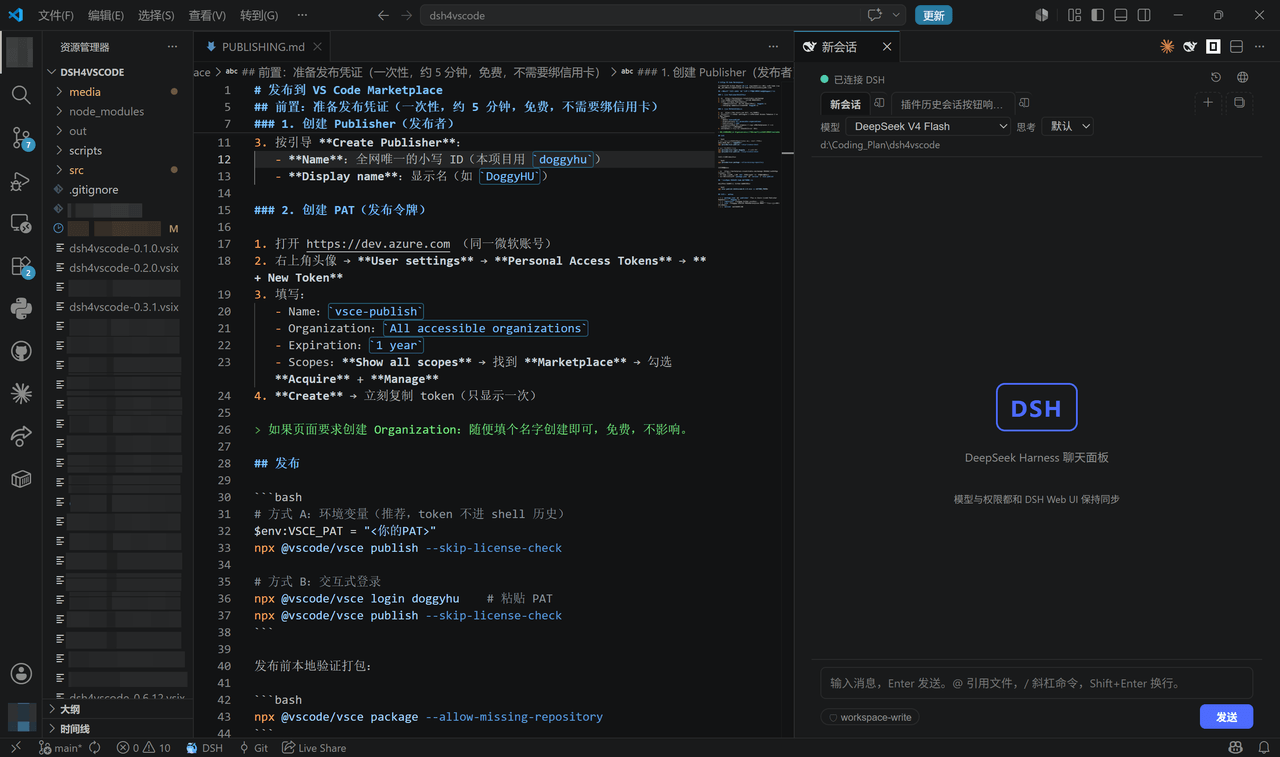 DoggyHU/dsh4vscode
DSH Chat for VS Code — DeepSeek Harness chat windows inside VS Code (OpenCode-style independent sessions, model auto-rou…
DoggyHU/dsh4vscode
DSH Chat for VS Code — DeepSeek Harness chat windows inside VS Code (OpenCode-style independent sessions, model auto-rou…
-
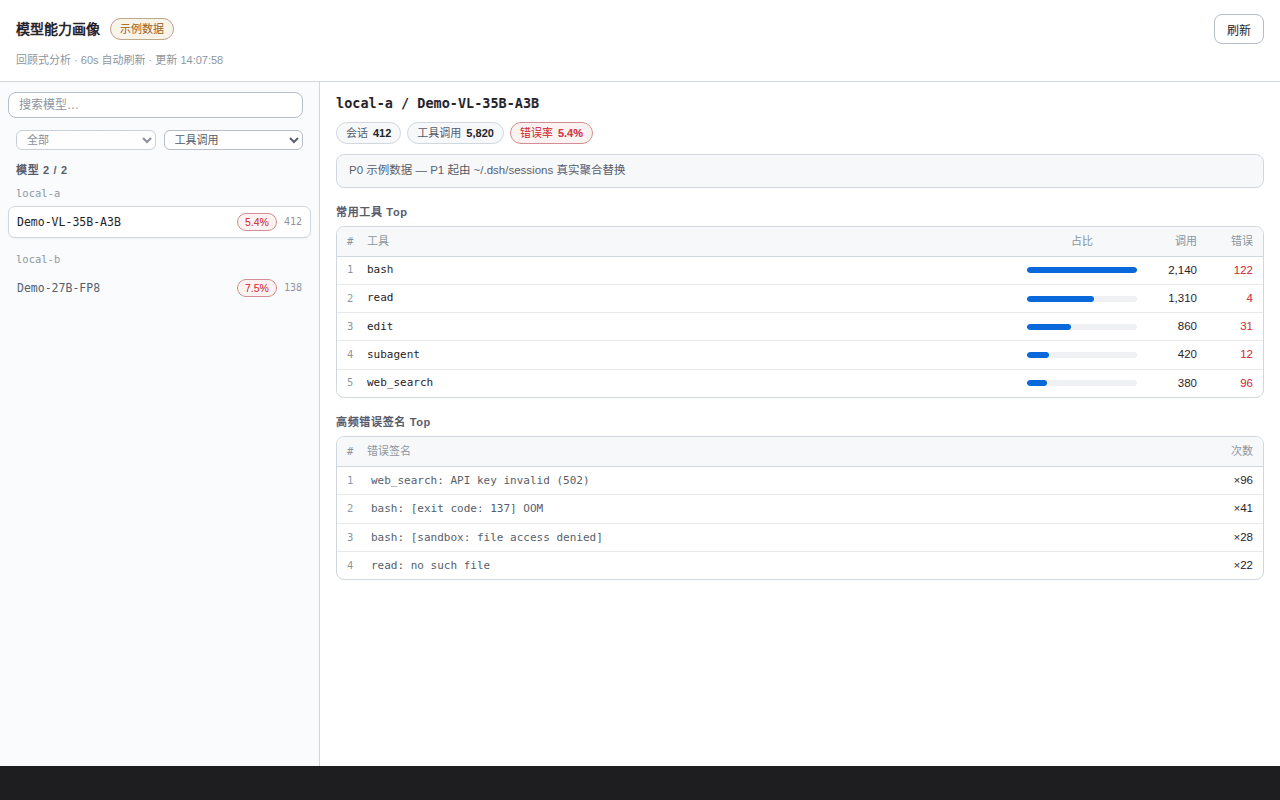 Ansonfishing/dsh-cap-profile
Per-model capability profiling for DSH: turns local session history into tool-usage and error-rate dashboards with time-…
Ansonfishing/dsh-cap-profile
Per-model capability profiling for DSH: turns local session history into tool-usage and error-rate dashboards with time-…
-
 Q00/ouroboros
Agent OS: the agent gets smarter on its own. We just hold the line: Interview-gated, staged evaluation, budgeted evoluti…
Q00/ouroboros
Agent OS: the agent gets smarter on its own. We just hold the line: Interview-gated, staged evaluation, budgeted evoluti…
-
 crafter-station/petdex
A public gallery of animated pets for Codex, Claude Code, DeepSeek Harness, Hermes, OpenCode, Gemini CLI, and more.
crafter-station/petdex
A public gallery of animated pets for Codex, Claude Code, DeepSeek Harness, Hermes, OpenCode, Gemini CLI, and more.
-
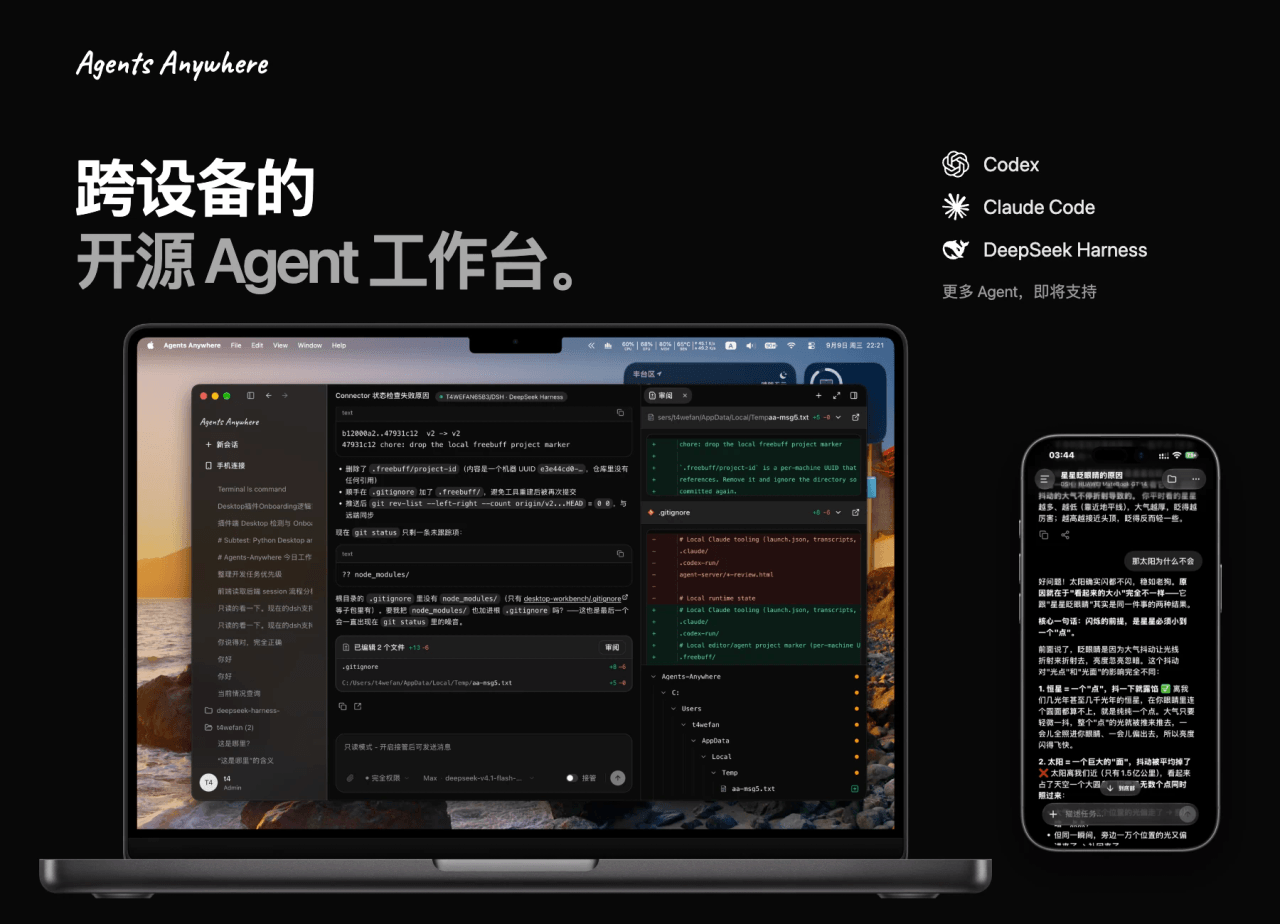 anywhere-labs/Agents-Anywhere
跨设备的开源Agent工作台
anywhere-labs/Agents-Anywhere
跨设备的开源Agent工作台
- houyanchao/chatgpt-gemini-timeline ChatGPT & Gemini:Add Folders, Timeline & Prompts. - 为 ChatGPT & Gemini 添加文件夹、提示词库和时间轴。
-
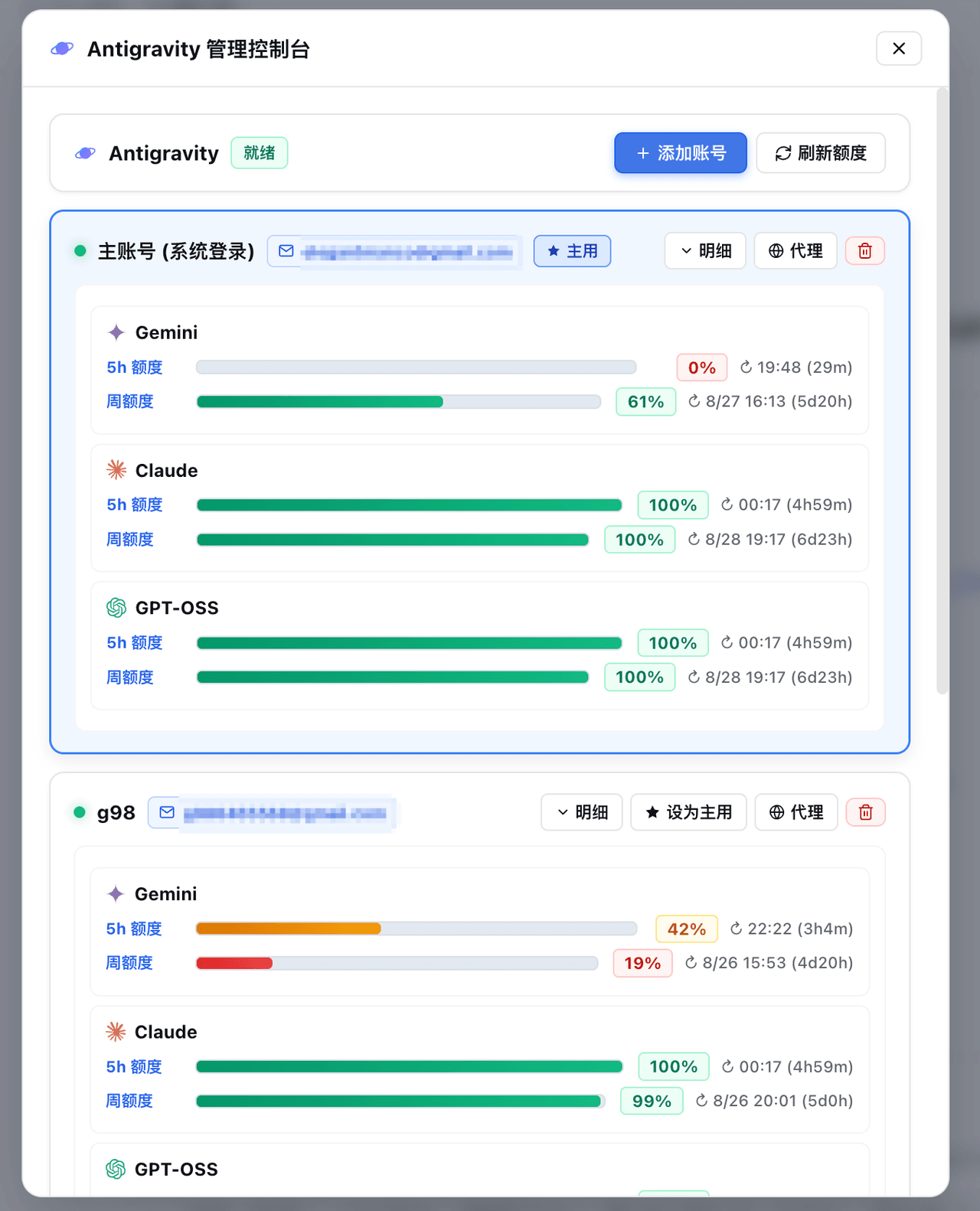 amlyczz/dsh-agy-link
Google Antigravity (agy CLI) models for DeepSeek Harness — streaming chat, thinking, tool activity, usage, in-GUI Google…
amlyczz/dsh-agy-link
Google Antigravity (agy CLI) models for DeepSeek Harness — streaming chat, thinking, tool activity, usage, in-GUI Google…