DavidRm1911/dsh-llm-subscription
A native DeepSeek Harness LLM adapter that puts Claude and Gemini in the model picker — real entries, right next to DeepSeek, with a working reasoning-effort selector — using your existing Claude Code / Antigravity subscriptions instead of a metered API key. It also registers a local Ollama model, for a $0 option with no login of any kind.
catalog descriptioncatalog 简介 / catalog description:Native DeepSeek Harness LLM adapter for Claude Code / Antigravity CLI subscriptions — no API key
Project Overview项目介绍
dsh-llm-subscription is a native DeepSeek Harness (DSH) adapter plugin that ships as a dsh.bundle and registers against DSH's internal dsh-llm seam via ctx.llm.registerAdapter, the exact same extension point that the official dsh-llm-deepseek plugin uses internally. Once added with dsh plugin --profile web add dsh-llm-subscription from inside a DSH profile, the DSH model picker gains real entries for Claude, Gemini (via Antigravity), and a local Ollama model, sitting alongside DeepSeek itself. Claude entries additionally expose a native reasoning-effort selector spanning Low through Max, mirroring the underlying --effort flag.
The typical workflow assumes the user is already authenticated in the claude and/or agy CLI on their PATH, or has pulled a local Ollama model such as qwen3.5:9b; missing any one of these only hides that provider's entries without breaking the rest. On each request the plugin shells out to claude -p or agy -p in headless JSON mode, or hits Ollama's /api/chat over localhost, and reshapes the reply into DSH's expected StreamChunk sequence (block-start → text-delta → block-end → usage → finish). Every response is suffixed with a via <real-model-id> line that reports whichever model actually produced the visible output tokens. The project supersedes an earlier sibling, dsh-subscription-gateway, which achieved the same goal by pointing DSH's Custom Provider screen at a separate HTTP bridge process.
Dependencies are simply the CLIs already on PATH: a logged-in claude, a logged-in agy, and/or Ollama with at least one model pulled; Ollama is auto-started on first use if it is not already running. Documented limits include non-incremental streaming, no chain-of-thought text exposure, no image input, no Gemini equivalent of --strict-mcp-config, and a hard pin to DSH 0.1.1-rc.2 because both cordis and the dsh-llm seam are developer-preview and may break without notice. The license is MIT, but the README carries an explicit, prominently worded warning that Anthropic and Google terms prohibit routing subscription credentials through third-party products and that paid Antigravity accounts have already received 403 suspensions, so installation is entirely at the user's own risk.
dsh-llm-subscription 是一个原生 DeepSeek Harness (DSH) LLM 适配器插件,作为 dsh.bundle 加载并向 DSH 的 dsh-llm 内部扩展点 ctx.llm.registerAdapter 注册,对接机制与官方 dsh-llm-deepseek 插件一致。在 DSH 的 profile 内执行 dsh plugin --profile web add dsh-llm-subscription 即可安装,无需额外常驻进程。安装后 DSH 模型选择器中会出现 Claude、Antigravity 旗下 Gemini 以及本地 Ollama 三组真实条目,Claude 还附带独立的推理强度选择器(Low 到 Max)。
典型使用流程:用户保持原有的 claude 或 agy CLI 登录状态,或本地拉取一个 Ollama 模型,三者至少具备其一;插件以 -p 无头 JSON 模式调用这些 CLI,并把结果重塑为 DSH 的 StreamChunk 序列,使 Claude 订阅、Gemini 订阅或本地 qwen3.5:9b 都能直接驱动 DSH 对话。该项目同时也是 dsh-subscription-gateway 的升级替代,后者通过 Custom Provider HTTP 桥接入,本插件走官方扩展点,免去配置界面的负担。适合希望用现有订阅抵扣 DSH 调用成本、又不愿手动维护额外进程的开发者。
依赖方面:需要 PATH 中存在 claude(claude login)或 agy,或本地 Ollama 加一个已 pull 模型;缺哪个仅导致对应条目消失,其他不受影响。明确限制:不输出增量流式、不透传推理正文、不支持图像输入、不能像 Claude 那样通过 --strict-mcp-config 隔离 Gemini 内置工具,且针对 DSH 0.1.1-rc.2 测试,cordis 与 dsh-llm 属开发者预览,未来可能失效。项目以 MIT 发布,但 README 严肃提示 Anthropic 与 Google 服务条款禁止将订阅凭据经第三方路由,已有付费 Antigravity 账户被 403 封禁的真实案例,安装即视为自担风险。
请帮我安装这个 DSH 插件。安装前先完成【兼容性检查 + 安全性检查】,检查通过再动手。

插件:dsh-llm-subscription(DavidRm1911/dsh-llm-subscription)
仓库:https://github.com/DavidRm1911/dsh-llm-subscription
本站详情页:https://www.yhbd.top/plugins/davidrm1911-dsh-llm-subscription/
本站登记:类型 plugin · 归类 原生 DSH 插件 · 许可证 MIT · ⭐ 2 · 最近提交 2026-09-29 · 主语言 JavaScript

按下面顺序执行,每步先把结论告诉我,再进入下一步:

【1 兼容性检查】
① 我这边:DSH 版本、Node 版本、操作系统、当前 profile(web / desktop)。
② 读它的 README、package.json、插件 manifest,列出它要求的 DSH 版本 / Node 版本 / 操作系统 / 外部依赖 / 需要另外先装的运行时。
③ 逐条比对,结论只写「满足 / 不满足 / 未知」三种;不满足的给出可行替代方案。
④ 检查是否和我已装的插件冲突:命令名重复、skill / tool 重名、端口占用、重复注册的 MCP server。

【2 安全性检查】
① 仓库可信度:和上面「本站登记」是否一致;star / fork 数、创建时间、最近提交,是否归档或长期停更。
② 安装脚本:逐行看 package.json 的 preinstall / install / postinstall,以及 install.sh、setup.ps1 之类脚本。出现 curl|bash、下载后直接执行、混淆代码、访问与插件功能无关的域名,立刻停下来告诉我,不要继续装。
③ 依赖:列出新增依赖,标出无人维护、或与知名包拼写近似的可疑包(typosquatting)。
④ 权限与副作用:它会读写哪些目录、访问哪些域名、需要哪些 DSH 权限(filesystem / network / shell / clipboard 等),以及怎么卸载和回滚。
⑤ 如果它要求 sudo / 管理员权限,或权限明显超出功能所需,先停下来问我。

【3 安装】
上面两步没有「不满足」和「高危项」时才执行;用官方推荐方式安装,不要自行提权。

【4 汇报】
用表格输出:检查项 / 结论 / 依据 / 是否需要我决策。拿不准的一律写「未知」并说明要我怎么确认——不要猜,也不要替我决定。
Send this message to DSH in your current session: it verifies compatibility and security first (answering met / not met / unknown item by item) and only installs once everything checks out — it will stop and ask you if it finds a high-risk item. The box scrolls; the copy is the full prompt. CLI install commands may not be accurate across systems, so DSH is the safer route.把上面这条消息直接发给当前会话里的 DSH:它会先核对兼容性与安全性(逐条给「满足 / 不满足 / 未知」),确认没问题再安装,有高危项会停下来问你。框内可滚动,复制到的是完整提示词;安装命令不一定准确,发给 DSH 更稳。
- Only 2 stars - very few users, little community feedback星标只有 2,几乎没人在用,遇到问题缺少社区反馈
DSH walks through these 9 checksDSH 会逐条核对这 9 项
Compatibility兼容性
- DSH, Node, OS and profile requirementsDSH 版本 / Node 版本 / 操作系统 / profile 是否满足要求
- External dependencies and runtimes (Electron / Python / Docker, ...)外部依赖与运行时(Electron / Python / Docker 等)是否齐备
- Conflicts with installed plugins: command names, skill / tool names, ports, duplicate MCP registration与已装插件是否冲突:命令名、skill / tool 重名、端口占用、重复 MCP 注册
Security安全性
- Repo matches the facts registered here; archived or abandoned?仓库是否与页面登记一致,是否归档或长期停更
- Safety of preinstall / install / postinstall and install.sh / setup.ps1preinstall / install / postinstall 与 install.sh、setup.ps1 是否安全
- curl|bash, download-then-execute, obfuscation, unrelated domains → stop immediatelycurl|bash、下载即执行、混淆代码、无关域名 → 立刻停止
- Typosquatting or unmaintained packages among the new dependencies新增依赖里有没有 typosquatting 或无人维护的包
- Requested permissions vs. what the feature actually needs申请了哪些权限、是否超出功能所需(filesystem / network / shell / clipboard)
- Any sudo / admin requirement, plus uninstall and rollback是否要求 sudo / 管理员权限,以及卸载与回滚方式
Anything uncertain must be marked unknown with a note on how to confirm it. This site's signal screen is a static snapshot, not a security audit.拿不准的必须标「未知」并说明要我怎么确认。本站的信号筛查是静态快照,不能替代安全审计。
Or use CLI install (for developers)或使用命令行安装(适合开发者)
CLI Install命令行安装
dsh plugin --profile web add dsh-llm-subscription把 DavidRm1911/dsh-llm-subscription 加入你的 DSH 配置(web profile)即可启用。
READMEREADME
dsh-llm-subscription
A native DeepSeek Harness LLM adapter that puts Claude and Gemini in the model picker — real entries, right next to DeepSeek, with a working reasoning-effort selector — using your existing Claude Code / Antigravity subscriptions instead of a metered API key. It also registers a local Ollama model, for a $0 option with no login of any kind.
If you've seen dsh-subscription-gateway, this is the same idea done properly: that one is an HTTP bridge you point DSH's Custom Provider at. This one is an actual dsh.bundle plugin registered against DSH's own dsh-llm seam (ctx.llm.registerAdapter) — same mechanism dsh-llm-deepseek uses internally. No Custom Provider screen, no separate process to keep running; it's just there once installed.
What you get
- Claude (subscription):
claude,haiku,sonnet,opus,fable— each with a native reasoning-effort selector (Low → Max), because Claude's own--effortflag supports that independently of which model you pick. - Gemini (subscription): five Antigravity tiers (
Flash Low/Medium/High,Pro Low/High) — Gemini bakes its intensity into the model name itself, so there's no separate effort control for it. - Grok (subscription):
grok-4.6via the official@xai-official/grokCLI (npm install -g @xai-official/grok, thengrok login --device-authfor headless environments). No reasoning-effort selector yet —grok --helpexposes--reasoning-effort/--effortbut doesn't enumerate accepted values anywhere reachable without a logged-in account, so it's left unwired rather than guessed. Heads up on cost: a real logged-in test call (grok -p "reply with exactly the word: pong") billed 17,665 input tokens — grok's own agent scaffolding (system prompt, tool schema, safety instructions) costs real tokens on every call even with tools disabled. ~$0.036 for a one-word reply in that test. - Qwen (local, $0): whatever's running in Ollama (
qwen3.5:9bby default) — no CLI login, no subscription, nothing to authenticate. Startsollama serveitself the first time it's actually used if it isn't already running; never touches it otherwise. - Every response ends with a
via <real-model-id>line —claude --model sonnetis an alias, and Claude Code sometimes uses a small internal model alongside it for things like session titling. This picks out whichever model actually wrote the visible text (the one with the most output tokens) so you're not left guessing whether you got Sonnet or something else.
Showing the opening section of the README — the full document lives in the repository以上为 README 开头摘要,完整文档在仓库内 · View the full README on GitHub →在 GitHub 查看完整 README →
Related相关推荐
-
 Q00/ouroboros
Agent OS: the agent gets smarter on its own. We just hold the line: Interview-gated, staged evaluation, budgeted evoluti…
Q00/ouroboros
Agent OS: the agent gets smarter on its own. We just hold the line: Interview-gated, staged evaluation, budgeted evoluti…
-
 crafter-station/petdex
A public gallery of animated pets for Codex, Claude Code, DeepSeek Harness, Hermes, OpenCode, Gemini CLI, and more.
crafter-station/petdex
A public gallery of animated pets for Codex, Claude Code, DeepSeek Harness, Hermes, OpenCode, Gemini CLI, and more.
-
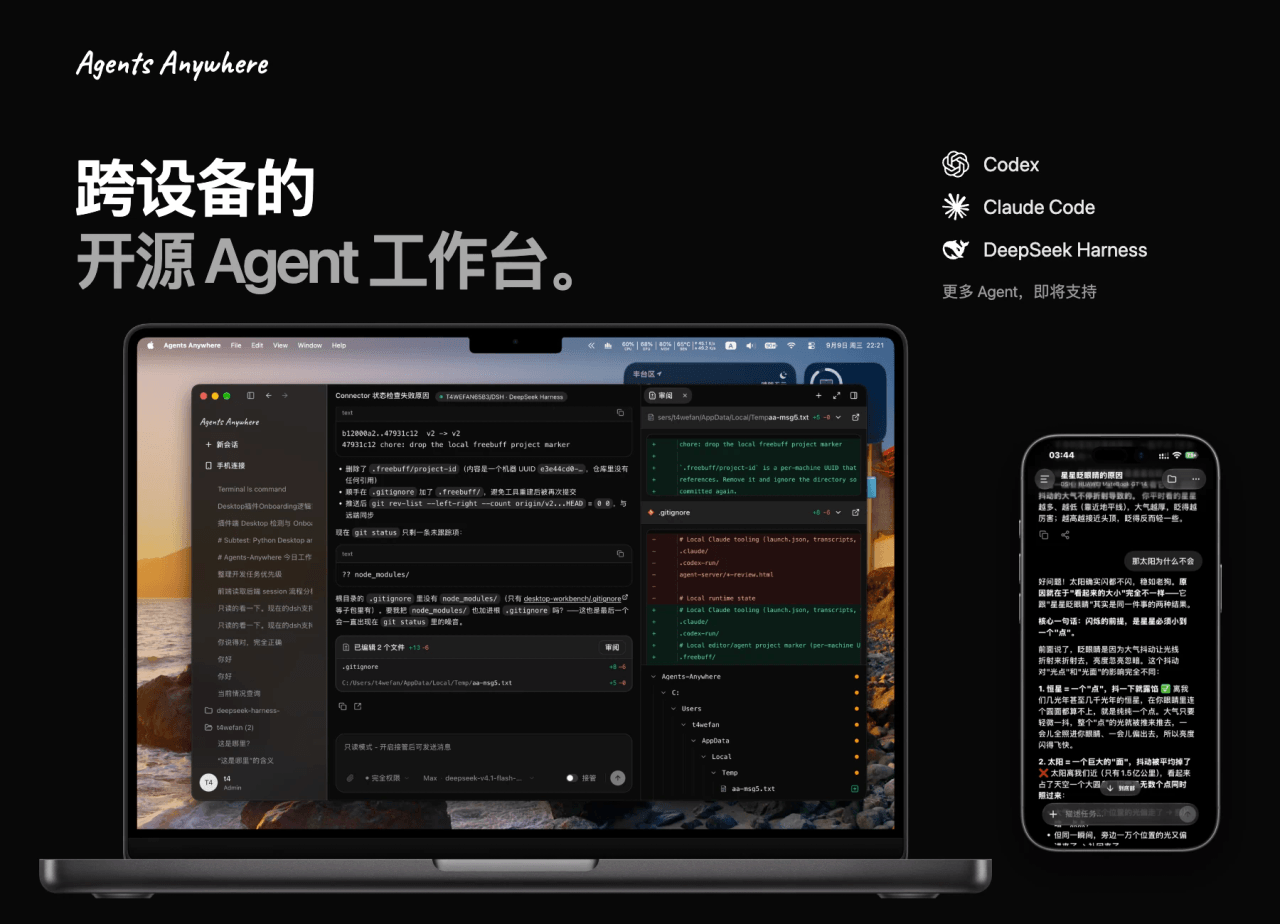 anywhere-labs/Agents-Anywhere
跨设备的开源Agent工作台
anywhere-labs/Agents-Anywhere
跨设备的开源Agent工作台
- PerryLink/jevcore TypeSafe Jev for DeepSeek Harness, the Model Context Protocol, and plain Node: typed judgments instead of prose, offline…
-
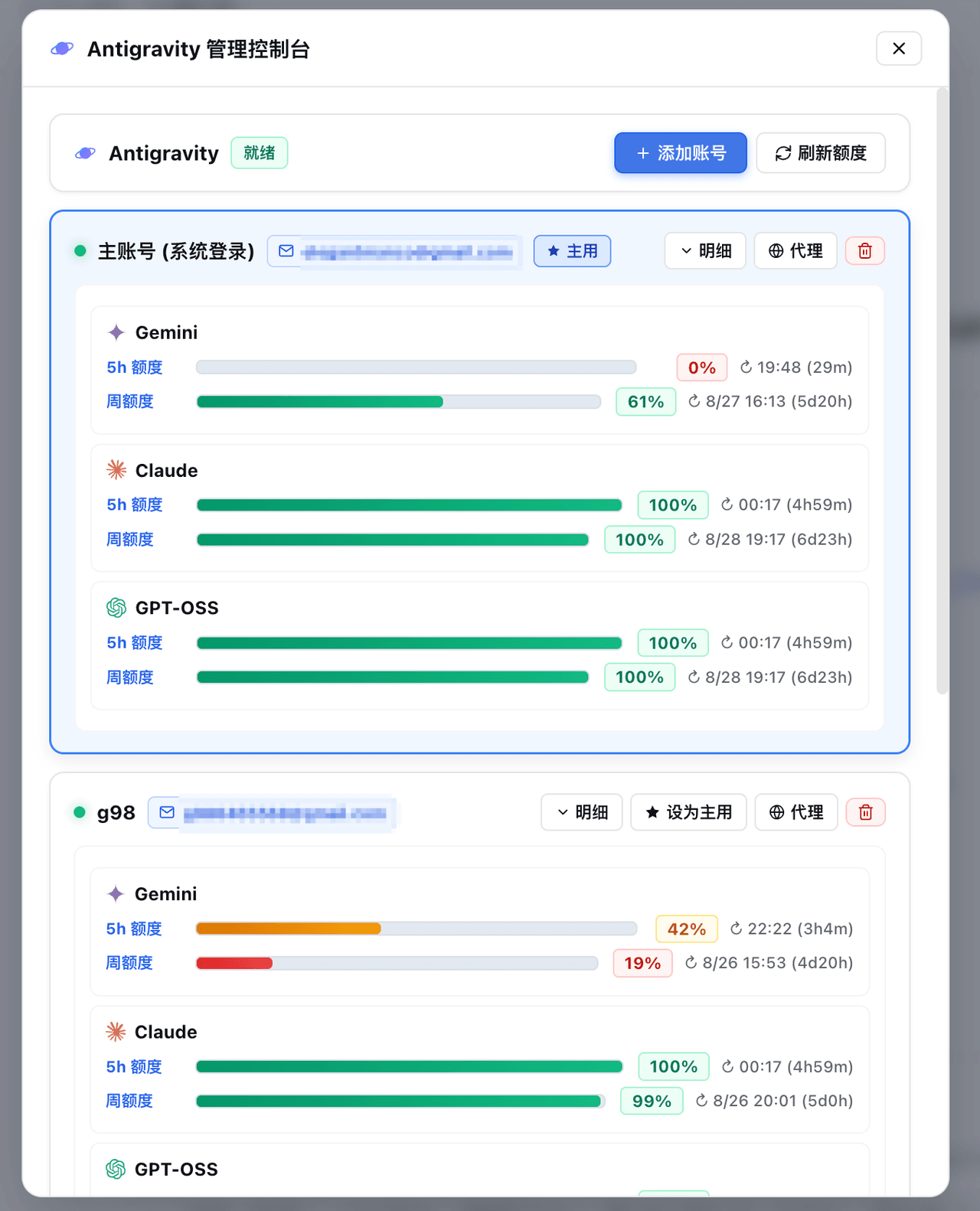 amlyczz/dsh-agy-link
Google Antigravity (agy CLI) models for DeepSeek Harness — streaming chat, thinking, tool activity, usage, in-GUI Google…
amlyczz/dsh-agy-link
Google Antigravity (agy CLI) models for DeepSeek Harness — streaming chat, thinking, tool activity, usage, in-GUI Google…
-
 opencues/opencues
The open standard for omnipresent AI. Claude Code, OpenCode, Gemini CLI, Shell, Chrome, DeepSeek Harness. Model-agnostic
opencues/opencues
The open standard for omnipresent AI. Claude Code, OpenCode, Gemini CLI, Shell, Chrome, DeepSeek Harness. Model-agnostic
-
 chaos-03x/dsh-agy
Google Antigravity (agy) OAuth auth + model access plugin for DeepSeek Harness: multi-account pool, 429 rotation, device…
chaos-03x/dsh-agy
Google Antigravity (agy) OAuth auth + model access plugin for DeepSeek Harness: multi-account pool, 429 rotation, device…
- aa2246740/dsh-model-fusion Fusion for DeepSeek Harness: a frontier Lead plans and reviews, a much cheaper Sidekick writes the code — frontier resul…