nomicore-ai/nomicore
A self-describing, governed data core for AI agents—schemas, authority, validation, and semantic context travel with the data.
Project Overview项目介绍
Nomicore is an agent-native database built specifically to address gaps traditional databases leave for dynamic agent workflows. It embeds schema and semantic metadata directly alongside every piece of data, so agents do not need to rely on external documentation or hidden shared organizational context to correctly interpret values. It supports DeepSeek Harness natively, providing DSH with persistent storage, semantics-aware data access, and a shared foundation for collaboration across multiple sessions and agents. To get started, clone the repository from GitHub and follow the clear step-by-step installation guide in INSTALL.md to set it up for your specific use case.
It uses a TypeScript-like syntax for data definitions, so you can add field meanings, business rules, and interpretation guidance directly inline, readable by both humans and agents. Every write operation is validated against the embedded schema, so invalid data is rejected before it enters storage, preventing constraint drift over time. Agents can receive real-time change notifications when data is updated, eliminating the need for periodic polling or repeated full dataset reads that waste valuable context window space, reduce overall system speed, and lower LLM response quality.
Nomicore is released under the permissive MIT open source license, so you can use it for free in both personal and commercial projects. It supports flexible deployment: you can use it as a module embedded inside any existing application, or run it as a standalone service. For growing workloads, you can deploy it as a replicated Hub/Peer cluster with full replicas across multiple nodes to scale out performance and improve overall system reliability for both small and large scale agent workflows. Additional documentation on architecture decisions and protocol specifications is available in the project’s GitHub docs folder.
Nomicore是一个专为智能体设计的自描述数据库,核心特性是让每条数据都绑定自身的模式和语义信息,解决传统数据库缺少数据解释、约束不强、回滚成本高等问题。它原生支持DeepSeek Harness,为DSH提供持久化存储、带语义约束的数据访问,以及跨会话和智能体的协作数据基础。
它支持用类TypeScript语法定义数据结构,在定义中直接写入字段含义、业务规则和解读指南,方便人和智能体读取。每次写入数据都会根据模式进行验证,无效数据会在存储边界被拒绝,避免约束随时间漂移。智能体还能实时接收数据变更信号,无需轮询或重复读取全量数据集。
项目采用MIT许可证开源,支持多种部署方式,可以作为模块嵌入任意应用,也可以作为独立服务运行,需求增长时还能部署为多实例的Hub/Peer复制集群。用户可以查看项目文档获取安装、集成、部署和开发的详细指引,了解架构设计和协议规范。
请帮我安装这个 DSH 插件。安装前先完成【兼容性检查 + 安全性检查】,检查通过再动手。

插件:nomicore(nomicore-ai/nomicore)
仓库:https://github.com/nomicore-ai/nomicore
本站详情页:https://www.yhbd.top/plugins/nomicore-ai-nomicore/
本站登记:类型 plugin · 归类 多平台兼容工具(非 DSH 原生) · 许可证 MIT · ⭐ 4 · 最近提交 2026-09-22 · 主语言 TypeScript · 未检测到 DSH 插件清单

按下面顺序执行,每步先把结论告诉我,再进入下一步:

【1 兼容性检查】
① 我这边:DSH 版本、Node 版本、操作系统、当前 profile(web / desktop)。
② 读它的 README、package.json、插件 manifest,列出它要求的 DSH 版本 / Node 版本 / 操作系统 / 外部依赖 / 需要另外先装的运行时。
③ 逐条比对,结论只写「满足 / 不满足 / 未知」三种;不满足的给出可行替代方案。
④ 检查是否和我已装的插件冲突:命令名重复、skill / tool 重名、端口占用、重复注册的 MCP server。

【2 安全性检查】
① 仓库可信度:和上面「本站登记」是否一致;star / fork 数、创建时间、最近提交,是否归档或长期停更。
② 安装脚本:逐行看 package.json 的 preinstall / install / postinstall,以及 install.sh、setup.ps1 之类脚本。出现 curl|bash、下载后直接执行、混淆代码、访问与插件功能无关的域名,立刻停下来告诉我,不要继续装。
③ 依赖:列出新增依赖,标出无人维护、或与知名包拼写近似的可疑包(typosquatting)。
④ 权限与副作用:它会读写哪些目录、访问哪些域名、需要哪些 DSH 权限(filesystem / network / shell / clipboard 等),以及怎么卸载和回滚。
⑤ 如果它要求 sudo / 管理员权限,或权限明显超出功能所需,先停下来问我。

【3 安装】
上面两步没有「不满足」和「高危项」时才执行;用官方推荐方式安装,不要自行提权。

【4 汇报】
用表格输出:检查项 / 结论 / 依据 / 是否需要我决策。拿不准的一律写「未知」并说明要我怎么确认——不要猜,也不要替我决定。
Send this message to DSH in your current session: it verifies compatibility and security first (answering met / not met / unknown item by item) and only installs once everything checks out — it will stop and ask you if it finds a high-risk item. The box scrolls; the copy is the full prompt. CLI install commands may not be accurate across systems, so DSH is the safer route.把上面这条消息直接发给当前会话里的 DSH:它会先核对兼容性与安全性(逐条给「满足 / 不满足 / 未知」),确认没问题再安装,有高危项会停下来问你。框内可滚动,复制到的是完整提示词;安装命令不一定准确,发给 DSH 更稳。
- Only 4 stars - very few users, little community feedback星标只有 4,几乎没人在用,遇到问题缺少社区反馈
- No DSH plugin manifest detected - it may only carry the dsh-plugin topic, so the install method must be confirmed on the spot未检测到 DSH 插件清单:可能只是打了 dsh-plugin 话题,安装方式要现场确认
- Not DSH-native: a multi-platform tool that may require Node / Electron or another runtime first非 DSH 原生,是多平台兼容工具:可能要先装 Node / Electron 等运行时
DSH walks through these 9 checksDSH 会逐条核对这 9 项
Compatibility兼容性
- DSH, Node, OS and profile requirementsDSH 版本 / Node 版本 / 操作系统 / profile 是否满足要求
- External dependencies and runtimes (Electron / Python / Docker, ...)外部依赖与运行时(Electron / Python / Docker 等)是否齐备
- Conflicts with installed plugins: command names, skill / tool names, ports, duplicate MCP registration与已装插件是否冲突:命令名、skill / tool 重名、端口占用、重复 MCP 注册
Security安全性
- Repo matches the facts registered here; archived or abandoned?仓库是否与页面登记一致,是否归档或长期停更
- Safety of preinstall / install / postinstall and install.sh / setup.ps1preinstall / install / postinstall 与 install.sh、setup.ps1 是否安全
- curl|bash, download-then-execute, obfuscation, unrelated domains → stop immediatelycurl|bash、下载即执行、混淆代码、无关域名 → 立刻停止
- Typosquatting or unmaintained packages among the new dependencies新增依赖里有没有 typosquatting 或无人维护的包
- Requested permissions vs. what the feature actually needs申请了哪些权限、是否超出功能所需(filesystem / network / shell / clipboard)
- Any sudo / admin requirement, plus uninstall and rollback是否要求 sudo / 管理员权限,以及卸载与回滚方式
Anything uncertain must be marked unknown with a note on how to confirm it. This site's signal screen is a static snapshot, not a security audit.拿不准的必须标「未知」并说明要我怎么确认。本站的信号筛查是静态快照,不能替代安全审计。
Or use CLI install (for developers)或使用命令行安装(适合开发者)
CLI Install命令行安装
dsh plugin --profile web add github:nomicore-ai/nomicore把 nomicore-ai/nomicore 加入你的 DSH 配置(web profile)即可启用。
READMEREADME
Nomicore
English | 中文

The database built for agents.
面向 Agent 的数据库
Example: when revenue: 120 is not enough
Suppose an Agent receives this result from a conventional database:
{
  "month": "2025-01",
  "revenue": 120
}
The value looks simple, but the Agent cannot safely use it without asking more questions:
- Is
revenuemeasured in dollars, thousands of dollars, or another currency? - Is it recognized revenue, invoiced revenue, or cash collected?
- Does it include tax, refunds, and intercompany transactions?
- Which schema version produced this record?
- Did the definition change between this month and historical records?
With Nomicore, the result includes both the data and the information needed to interpret it:
{
  ok: true,
  value: {
    month: '2025-01',
    revenue: 120
  },
  schema: `# readData []

{
  month: Pattern<"^[0-9]{4}-(0[1-9]|1[0-2])$"> // Reporting month in YYYY-MM format
  revenue: Range<0, 999999999> // Recognized revenue in USD thousands, excluding tax and refunds; accounting policy 2025-v2
}
`,
  truncated: false
}
Pattern<"…"> means the value must match the specified format. Range<0, 999999999> means the value must be a number within that range. The comments explain what each field means and how it should be interpreted.
The Agent now knows that 120 means USD 120,000 of recognized revenue under accounting policy 2025-v2. If an older record uses a different shape or definition, that record can retain its own schema and semantics rather than being silently interpreted under the latest rules.
When this result is sent to another Agent, its schema and semantics travel with it. The receiving Agent does not need access to a separate data dictionary or undocumented organizational context before it can interpret the value correctly.
Why Nomicore
Why traditional databases fall short in the Agent era
Traditional databases were primarily designed for applications written by humans. An application can encode data structures, business rules, and error handling in advance, but an Agent works on dynamic tasks and must understand data and its boundaries while reading, changing, sharing, and monitoring it. Traditional databases leave important gaps at every step:
Showing the opening section of the README — the full document lives in the repository以上为 README 开头摘要,完整文档在仓库内 · View the full README on GitHub →在 GitHub 查看完整 README →
Related相关推荐
-
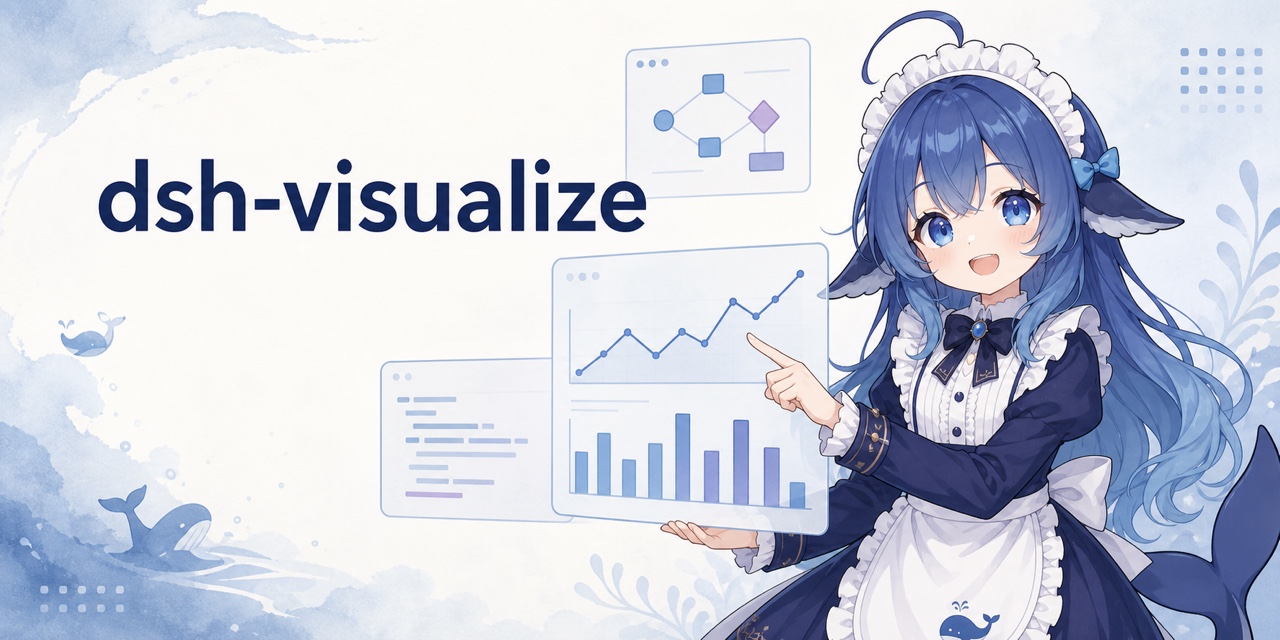 Nagi-ovo/dsh-visualize
在 DSH 对话中生成交互式可视化|Render model-generated interactive cards inside DSH conversations
Nagi-ovo/dsh-visualize
在 DSH 对话中生成交互式可视化|Render model-generated interactive cards inside DSH conversations
-
 omdsh-dev/dsh-data-agent
Connect DSH to your database for conversational data analysis and actionable business insights.
omdsh-dev/dsh-data-agent
Connect DSH to your database for conversational data analysis and actionable business insights.
-
 youdotcom-oss/agent-skills
You.com skills and plugins for web search, content extraction, research, finance, and integration discovery, helping AI …
youdotcom-oss/agent-skills
You.com skills and plugins for web search, content extraction, research, finance, and integration discovery, helping AI …
-
 Awu12277/dsh-stock-watch
A股自选股实时行情盯盘插件 - DeepSeek Harness Web 右上角可折叠弹窗
Awu12277/dsh-stock-watch
A股自选股实时行情盯盘插件 - DeepSeek Harness Web 右上角可折叠弹窗
-
 dream12347/dsh-session-manager
DSH 会话管理插件:删除(回收站恢复/彻底清除)、统计、继续/暂停、打开日志目录、对话顶部抽屉、工作区分组与排序、上下文压缩阈值设置。DSH session manager: delete with trash/restore/purge…
dream12347/dsh-session-manager
DSH 会话管理插件:删除(回收站恢复/彻底清除)、统计、继续/暂停、打开日志目录、对话顶部抽屉、工作区分组与排序、上下文压缩阈值设置。DSH session manager: delete with trash/restore/purge…
-
 yuezengwu/dsh-explain
Private, local-first continuous learning for DeepSeek Harness: capture, review, and correct what Explain learns.
yuezengwu/dsh-explain
Private, local-first continuous learning for DeepSeek Harness: capture, review, and correct what Explain learns.
-
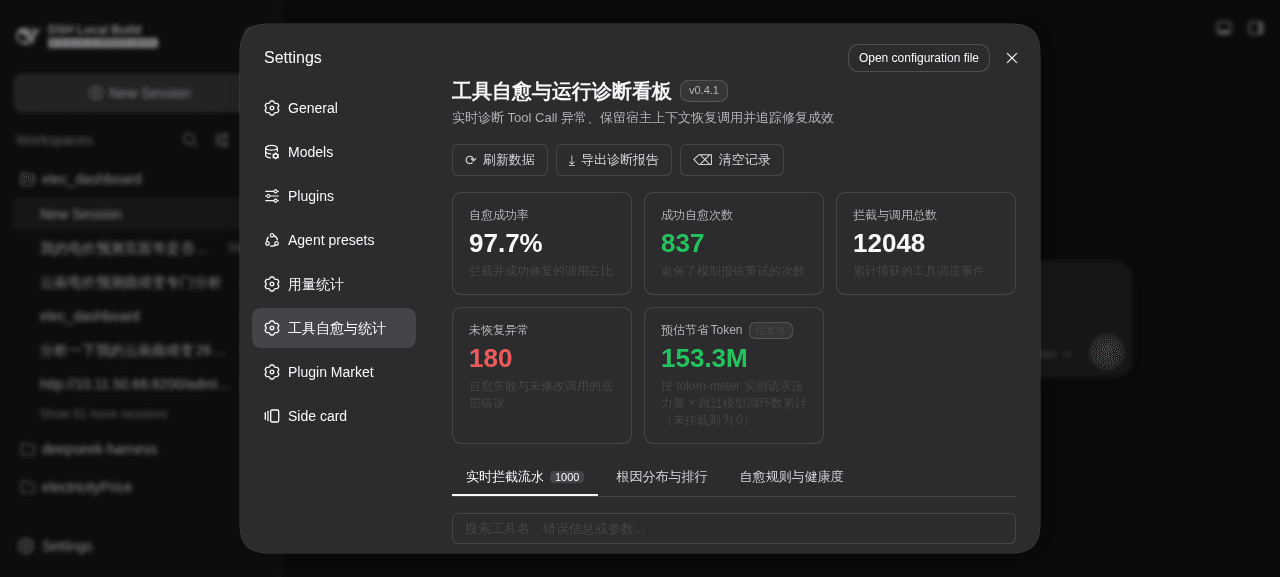 merenguesL/dsh-tool-normalizer
-
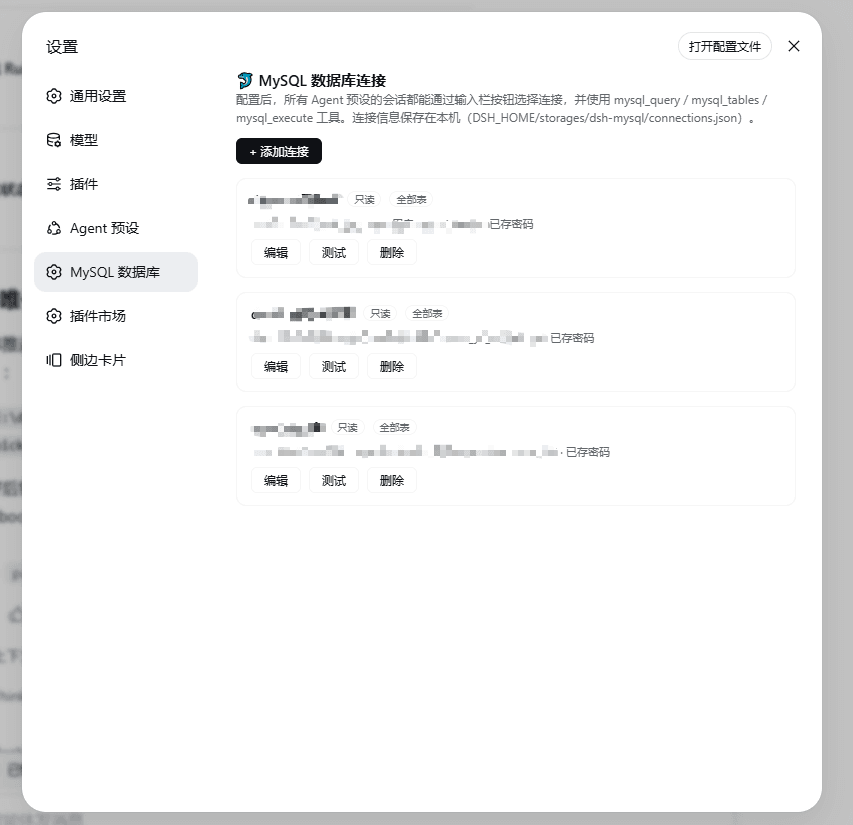 1321928757/dsh-mysql
MySQL connector plugin for DeepSeek Harness: configure connections in settings, switch per session from the composer, an…
1321928757/dsh-mysql
MySQL connector plugin for DeepSeek Harness: configure connections in settings, switch per session from the composer, an…