orpheus0829/dsh-identity-control
为 DeepSeek Harness (DSH) 打造的自定义人设控制插件。 在对话输入栏旁自由填写你的人设文本,一键开关,所有新对话自动生效、免重启。 人设纯粹是你设定的风格,不覆盖 DSH 安全护栏,安装即用、状态持久化。
Project Overview项目介绍
dsh-identity-control is a native cordis plugin built specifically for DSH (DeepSeek Harness) under the web profile, and the repository ships a real bundle-manifest along with cordis.patch.yml that targets DSH's plugin host. Its purpose is to give users direct control over their conversational persona instead of forcing them to pick from a handful of hard-coded styles: the plugin adds a small button beside the chat input that opens an editor panel containing a multi-line text field and an enable toggle, letting you author, edit, and turn the persona on or off whenever you like. When enabled and non-empty, every new conversation automatically prepends the persona as an injected prompt segment, and the plugin explicitly states it never overrides DSH's built-in safety rules.
The typical workflow begins with installation and a DSH interface restart, after which the new persona button appears on the right side of the input bar; clicking it reveals the editor, where you paste or write your persona text, tick the enable checkbox, save, and start chatting. If the text is empty or the toggle is off, the plugin injects nothing and DSH behaves exactly as it does by default. The target audience is DSH power users, operators, and role-play or domain-specific setups who want to swap personas frequently without retyping system prompts or restarting sessions, and configuration persists in DSH settings under the identity-control namespace using enabled and text fields.
Installation is a single command — dsh plugin --profile web add github:orpheus0829/dsh-identity-control — and local development supports dsh plugin --profile web add link:<local-path> for symlink-based testing. The source layout is small and readable: lib/index.mjs on the host side reads settings and injects the persona segment when conditions are met, while lib/client.js runs in the browser to render the button and editor panel. Dependencies are minimal, the project is released under the MIT license at version 0.1.0, and a fresh install requires restarting the DSH UI before the button registers and becomes visible.
dsh-identity-control 是面向 DSH(DeepSeek Harness)的原生 cordis 插件,仓库内附带 bundle-manifest 与 cordis.patch.yml,专门为 DSH web profile 设计。它解决的是“写死人设”这一痛点:在对话输入栏旁新增一个人设入口按钮,点击后弹出编辑面板,提供多行文本框与启用开关,用户可自行填写人设文本并实时生效。开启后所有新对话会自动注入该人设段,关闭后立即恢复 DSH 默认行为,不覆盖平台安全规则。
典型使用流程是安装后重启 DSH 界面,在输入栏右侧点开人设按钮,填写自定义人设、勾选启用、保存即可开始对话;文本留空或未启用时插件不做任何注入。该插件适合需要按项目/角色频繁切换语气、身份或专业语境,又不愿反复手写系统提示词的 DSH 高级用户与运营人员。配置存储于 DSH settings 的 identity-control 命名空间下,状态持久化。
安装通过 dsh plugin --profile web add github:orpheus0829/dsh-identity-control 一行完成,本地调试支持 link:<本地路径> 方式。代码包含 host 侧 index.mjs 与浏览器侧 client.js,前者读取配置并注入人设段,后者提供 UI。许可为 MIT,当前版本 0.1.0,仅服务 DSH web profile,首次使用需重启界面以注册按钮。
请帮我安装这个 DSH 插件。安装前先完成【兼容性检查 + 安全性检查】,检查通过再动手。

插件:dsh-identity-control(orpheus0829/dsh-identity-control)
仓库:https://github.com/orpheus0829/dsh-identity-control
本站详情页:https://www.yhbd.top/plugins/orpheus0829-dsh-identity-control/
本站登记:类型 plugin · 归类 原生 DSH 插件 · 许可证 MIT · ⭐ 3 · 最近提交 2026-08-21 · 主语言 JavaScript

按下面顺序执行,每步先把结论告诉我,再进入下一步:

【1 兼容性检查】
① 我这边:DSH 版本、Node 版本、操作系统、当前 profile(web / desktop)。
② 读它的 README、package.json、插件 manifest,列出它要求的 DSH 版本 / Node 版本 / 操作系统 / 外部依赖 / 需要另外先装的运行时。
③ 逐条比对,结论只写「满足 / 不满足 / 未知」三种;不满足的给出可行替代方案。
④ 检查是否和我已装的插件冲突:命令名重复、skill / tool 重名、端口占用、重复注册的 MCP server。

【2 安全性检查】
① 仓库可信度:和上面「本站登记」是否一致;star / fork 数、创建时间、最近提交,是否归档或长期停更。
② 安装脚本:逐行看 package.json 的 preinstall / install / postinstall,以及 install.sh、setup.ps1 之类脚本。出现 curl|bash、下载后直接执行、混淆代码、访问与插件功能无关的域名,立刻停下来告诉我,不要继续装。
③ 依赖:列出新增依赖,标出无人维护、或与知名包拼写近似的可疑包(typosquatting)。
④ 权限与副作用:它会读写哪些目录、访问哪些域名、需要哪些 DSH 权限(filesystem / network / shell / clipboard 等),以及怎么卸载和回滚。
⑤ 如果它要求 sudo / 管理员权限,或权限明显超出功能所需,先停下来问我。

【3 安装】
上面两步没有「不满足」和「高危项」时才执行;用官方推荐方式安装,不要自行提权。

【4 汇报】
用表格输出:检查项 / 结论 / 依据 / 是否需要我决策。拿不准的一律写「未知」并说明要我怎么确认——不要猜,也不要替我决定。
Send this message to DSH in your current session: it verifies compatibility and security first (answering met / not met / unknown item by item) and only installs once everything checks out — it will stop and ask you if it finds a high-risk item. The box scrolls; the copy is the full prompt. CLI install commands may not be accurate across systems, so DSH is the safer route.把上面这条消息直接发给当前会话里的 DSH:它会先核对兼容性与安全性(逐条给「满足 / 不满足 / 未知」),确认没问题再安装,有高危项会停下来问你。框内可滚动,复制到的是完整提示词;安装命令不一定准确,发给 DSH 更稳。
- Only 3 stars - very few users, little community feedback星标只有 3,几乎没人在用,遇到问题缺少社区反馈
DSH walks through these 9 checksDSH 会逐条核对这 9 项
Compatibility兼容性
- DSH, Node, OS and profile requirementsDSH 版本 / Node 版本 / 操作系统 / profile 是否满足要求
- External dependencies and runtimes (Electron / Python / Docker, ...)外部依赖与运行时(Electron / Python / Docker 等)是否齐备
- Conflicts with installed plugins: command names, skill / tool names, ports, duplicate MCP registration与已装插件是否冲突:命令名、skill / tool 重名、端口占用、重复 MCP 注册
Security安全性
- Repo matches the facts registered here; archived or abandoned?仓库是否与页面登记一致,是否归档或长期停更
- Safety of preinstall / install / postinstall and install.sh / setup.ps1preinstall / install / postinstall 与 install.sh、setup.ps1 是否安全
- curl|bash, download-then-execute, obfuscation, unrelated domains → stop immediatelycurl|bash、下载即执行、混淆代码、无关域名 → 立刻停止
- Typosquatting or unmaintained packages among the new dependencies新增依赖里有没有 typosquatting 或无人维护的包
- Requested permissions vs. what the feature actually needs申请了哪些权限、是否超出功能所需(filesystem / network / shell / clipboard)
- Any sudo / admin requirement, plus uninstall and rollback是否要求 sudo / 管理员权限,以及卸载与回滚方式
Anything uncertain must be marked unknown with a note on how to confirm it. This site's signal screen is a static snapshot, not a security audit.拿不准的必须标「未知」并说明要我怎么确认。本站的信号筛查是静态快照,不能替代安全审计。
Or use CLI install (for developers)或使用命令行安装(适合开发者)
CLI Install命令行安装
dsh plugin --profile web add github:orpheus0829/dsh-identity-control把 orpheus0829/dsh-identity-control 加入你的 DSH 配置(web profile)即可启用。
READMEREADME
dsh-identity-control
DSH(DeepSeek Harness)的自定义人设控制插件。对话输入栏旁提供一个入口,可以自己填人设文本,开启后新对话会自动带上,关掉就恢复默认。


为什么写这个
市面上的人设插件大多是写死的一种风格,只能开关。这个插件把控制权交给你:人设文本由你自己写,界面里填、随时改、一键开关。
功能
- 输入栏旁有个人设按钮,点开是编辑面板,里面一个多行文本框 + 启用开关
- 填好保存后,所有新对话自动带上这段人设
- 关闭开关立即恢复默认人设,不用重启
- 人设只是注入提示词,不覆盖 DSH 的安全规则
安装
dsh plugin --profile web add github:orpheus0829/dsh-identity-control
装完重启 DSH 界面,输入栏右侧出现人设按钮。
本地调试时也可以用 link 方式:
dsh plugin --profile web add link:<本地路径>
使用
- 点输入栏右侧的人设按钮
- 在文本框里写人设,勾上启用
- 保存,开聊
人设文本留空或没勾启用时,插件什么都不注入,DSH 保持默认行为。
结构
lib/
  index.mjs   # host 侧:读配置,开启且文本非空时注入人设段
  client.js   # 浏览器侧:输入栏入口 + 编辑面板
cordis.patch.yml
package.json
配置存在 DSH settings 的 identity-control 命名空间里(enabled / text 两个字段),状态会持久化。
Credits
人设注入的整体思路参考了 DSH 社区的人设类插件,在此致谢。
License
MIT
Related相关推荐
-
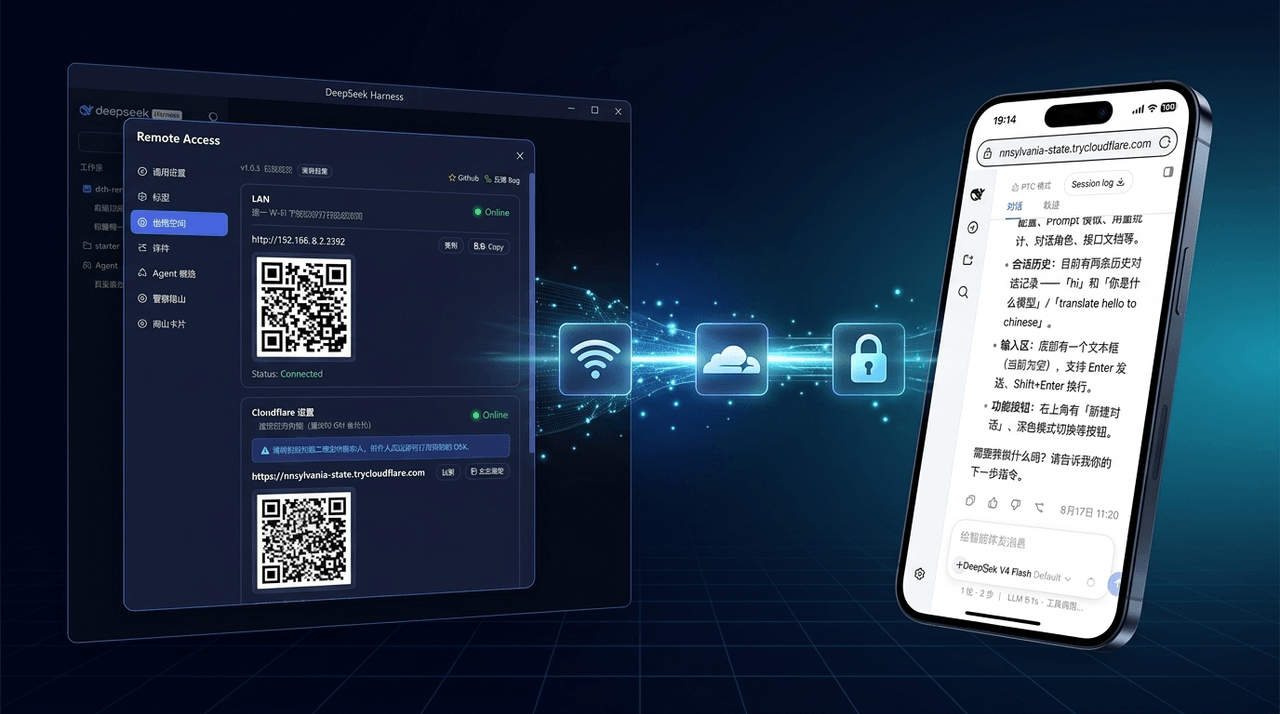 wenbin-wb/dsh-bridge
🚀 DeepSeek Harness 多通道远程访问与安全守护插件 | 局域网扫码直连、Cloudflare / 自建公网隧道、微信 / QQ / 飞书 / Telegram 机器人全生命周期对话 | 内置全协议访问安全认证、后台防篡改与…
wenbin-wb/dsh-bridge
🚀 DeepSeek Harness 多通道远程访问与安全守护插件 | 局域网扫码直连、Cloudflare / 自建公网隧道、微信 / QQ / 飞书 / Telegram 机器人全生命周期对话 | 内置全协议访问安全认证、后台防篡改与…
-
 PerryLink/dsh-permission-rules
Claude Code-style declarative permission rules for DeepSeek Harness: ordered allow/deny/ask rules with tool-name, argume…
PerryLink/dsh-permission-rules
Claude Code-style declarative permission rules for DeepSeek Harness: ordered allow/deny/ask rules with tool-name, argume…
-
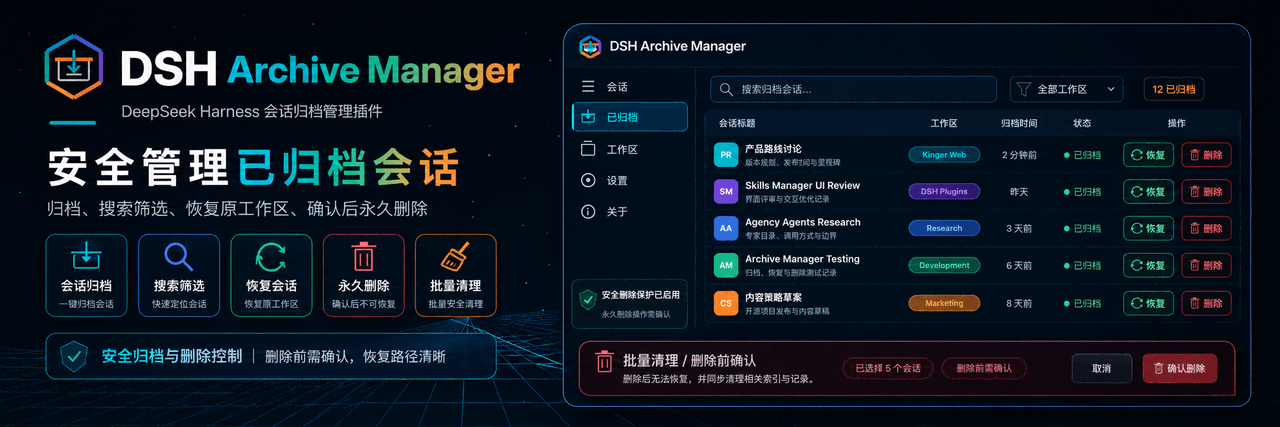 MichengAI/dsh-archive-manager
DSH Archive Manager — 在 DeepSeek Harness 中安全查看、恢复和管理已归档会话 · Safely view, restore, and manage archived sessions in DSH
MichengAI/dsh-archive-manager
DSH Archive Manager — 在 DeepSeek Harness 中安全查看、恢复和管理已归档会话 · Safely view, restore, and manage archived sessions in DSH
-
 eri64/dsh-claude-ux
DSH plugin: Claude-style Chinese risk control & conversation autonomy for DeepSeek Harness web
eri64/dsh-claude-ux
DSH plugin: Claude-style Chinese risk control & conversation autonomy for DeepSeek Harness web
- jermaine123123/agent-context-editor Cross-agent plugin for manually excluding and editing AI conversation context, with search, filtering, hide/restore, und…
-
 lsz-asd/dsh-plugin-session-delete
Delete DeepSeek Harness sessions from the UI: header danger button + sidebar session-row menu item (no conversation jump…
lsz-asd/dsh-plugin-session-delete
Delete DeepSeek Harness sessions from the UI: header danger button + sidebar session-row menu item (no conversation jump…
-
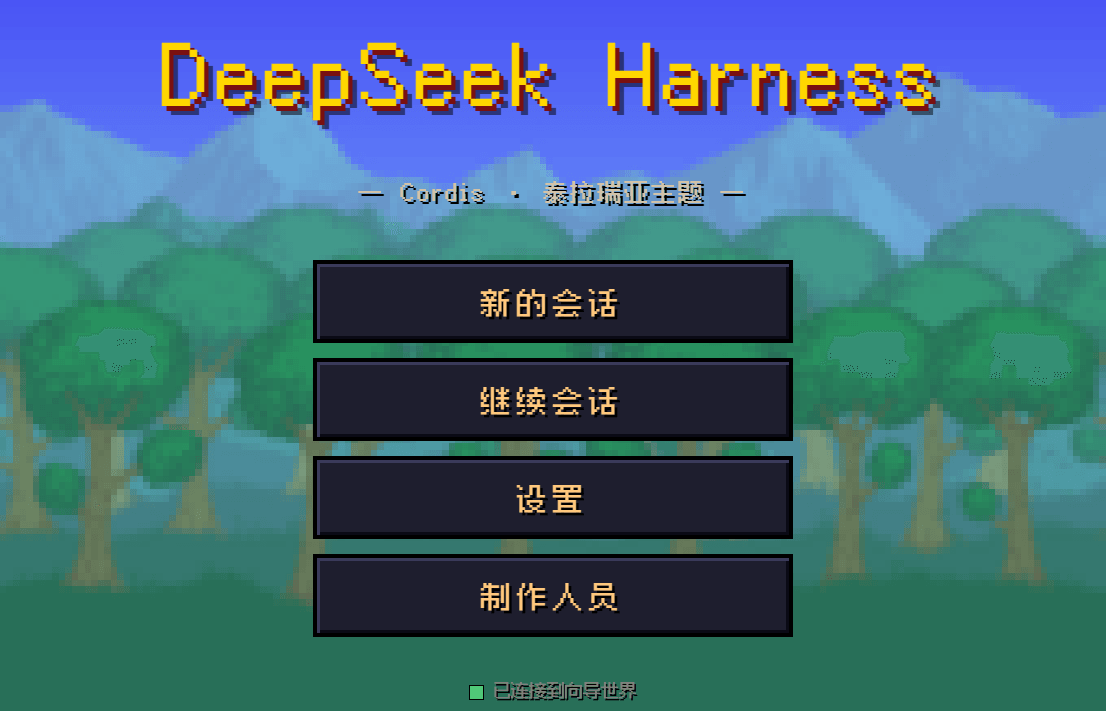 10086ggqq/dsh_theme_terraria
把 DeepSeek Harness 的 AI 编码控制台变成泰拉瑞亚像素世界——向导陪你写代码,真实对话、工具审批、难度切换,单文件零依赖。
10086ggqq/dsh_theme_terraria
把 DeepSeek Harness 的 AI 编码控制台变成泰拉瑞亚像素世界——向导陪你写代码,真实对话、工具审批、难度切换,单文件零依赖。
-
 king-bcolor/dsh-multi-tenant-projects
Multi-tenant projects & users plugin for DeepSeek Harness (DSH): per-user symlinked workspaces, login gate, session isol…
king-bcolor/dsh-multi-tenant-projects
Multi-tenant projects & users plugin for DeepSeek Harness (DSH): per-user symlinked workspaces, login gate, session isol…