rogerdigital/dsh-vet
Security vetting for DeepSeek Harness (DSH) plugins: permission & supply-chain audits before install, graded via the open dsh-vet/v1 report standard.
Project Overview项目介绍
dsh-vet is a security vetting tool for DeepSeek Harness (DSH) plugins. It runs static permission and supply chain audits before plugin installation, outputs graded reports following the open dsh-vet/v1 standard, and supports CLI and CI integration. Use it before installing DSH plugins or for authors to self-audit. It is in active v0.3 development and requires Node.js ≥ 20.
dsh-vet是面向DeepSeek Harness(DSH)插件的安全审查工具,可在安装前对插件做权限、供应链静态审计,按开放的dsh-vet/v1标准输出分级结果,支持CLI和CI集成。可在安装插件前排查风险,或供插件作者自查,注意当前仍在开发中,需要Node ≥ 20。
请帮我了解并安装插件:【dsh-vet】【https://github.com/rogerdigital/dsh-vet】Send this message to DSH in your current session. CLI install commands may not be accurate across systems — DSH will figure it out for you.把上面这条消息直接发给当前会话里的 DSH,让它帮你了解并安装。安装命令不一定准确,发给 DSH 更稳。
Or use CLI install (for developers)或使用命令行安装(适合开发者)
CLI Install命令行安装
dsh plugin --profile web add github:rogerdigital/dsh-vet把 rogerdigital/dsh-vet 加入你的 DSH 配置(web profile)即可启用。
READMEREADME
dsh-vet

Security vetting for DeepSeek Harness (DSH) plugins: permission & supply-chain
audits before install, graded via the open dsh-vet/v1
report standard.
Status: v0.3 underway. v0.2 shipped the author side — reference scanner (npm, 16 calibrated rules with public rationales), CI Action, and auditable grade badges live in two repos. v0.3 is the ecosystem round: report validation for consumers, the verified-emitter program, and marketplace adoption before the contract's formal freeze (roadmap).
Install
Requires Node ≥ 20.
npm install -g dsh-vet        # or: pnpm add -g dsh-vet / bun add -g dsh-vet
dsh-vet --help
Prefer not installing? npx dsh-vet <specifier> runs the same scanner with
zero footprint. The scanner is the only thing that runs — dsh-vet never
installs the plugin it audits.
Usage
npx dsh-vet <specifier>          # npm package, git URL, or local path
npx dsh-vet --json <specifier>   # dsh-vet/v1 report on stdout
npx dsh-vet --strict <specifier> # exit 1 on findings >= high (confidence >= medium)
npx dsh-vet --rules dep.install-scripts <specifier>
npx dsh-vet validate <https://github.com/rogerdigital/dsh-vet/blob/HEAD/report.json> # check a report against the contract
npx dsh-vet diff base.report.json head.report.json --json
Any completed report exits 0 — grades describe findings, they do not gate.
Scanner failures exit non-zero. The scanner runs locally, reads the npm
registry for dependency metadata only, and never transmits audited code.
Every report records what the scan actually covered (x-dsh-vet scan
context: rule profile, coverage, content digests, stable finding
identities); human output and badges show coverage alongside the grade,
and a missing context reads as unknown, never complete.
Comparing two reports (release review)
dsh-vet diff compares two reports produced by the same scanner version
and rule profile over complete scans, and reports what changed:
dsh-vet/diff/v1 — added/removed/changed
findings by stable identity, behavior-observation deltas, both sides of
every transition. Exit 0 for a comparable result regardless of risk
changes, 1 when the pair cannot be trusted to describe the same
subject under the same checks (with explicit reasons), 2 on usage or
invalid reports. Two local-directory scans additionally need
--subject <label>. An incomparable pair is a prompt to rescan both
artifacts with the same configuration — never a claim that nothing
changed.
Shipped rules (each with a public rationale under
docs/rules/):
| Family | Rules |
|---|---|
perm.* |
seam-mismatch, undeclared-fs-write, subprocess-spawn, network-client, unreachable-files |
dep.* |
install-scripts, floating-range, typosquat-proximity |
obf.* |
eval-detect, dynamic-require, encoded-payload, charcode-chain, unparseable |
egress.* |
outbound-endpoints, secret-adjacent |
dsh-vet audits itself with the same scanner:
examples/dsh-vet.report.json is generated
from the exact tarball that ships (npm pack → scan), seams declared in
package.json. It is not an A-by-cheating report — every signal the scanner
finds in itself is in there.
CI & badge for plugin authors
Audit your plugin on every push and PR, and publish your grade from the report committed to your repository — shields.io reads the badge straight from your repo, so its value is auditable through git history and no badge service is involved:
- uses: rogerdigital/dsh-vet/action@v0.4.0
  with:
    specifier: '.'
    commit-report: true
Every run uploads the full report as an artifact; PRs get a single
comment, edited in place. Set baseline-report to a report scanned from
the merge base and PRs additionally show what changed since it — see
comparing releases for the
trusted-baseline recipe, and the
pilot record for how the comparison
behaved on real release pairs.
edited-in-place findings comment. Badge snippet and all inputs:
action/README.md. The dsh-vet badge <https://github.com/rogerdigital/dsh-vet/blob/HEAD/report.json>
command renders the shields endpoint JSON if you wire CI yourself.
Why
DSH's everything-is-a-plugin architecture is its greatest strength and its largest attack surface: a plugin you install can register tools, touch the filesystem, and open network connections. The community's single most-upvoted feature request asks for marketplace standards and review mechanisms (deepseek-harness#1115), and incidents like a Full Access session deleting a user's home directory (#461) show the stakes. The official marketplace will take time; trust tooling cannot.
dsh-vet exists so that "should I install this plugin?" has a shared,
machine-readable answer instead of vibes.
What it checks (v0.1 scope)
- Capability surface — which Cordis seams a plugin injects (
fs,shell,web, …) versus what its manifest and README claim - Supply chain — dependency tree, install scripts,
postinstallhooks, typosquat-adjacent package names - Obfuscated behavior —
eval/new Function/ dynamicrequire/ encoded payloads - Data egress — outbound endpoints reachable from code that can read secrets, session data, or the DSH home directory
The dsh-vet/v1 report standard
The differentiating piece is not another scanner — it is
docs/dsh-vet-v1.md: an implementation-agnostic,
deterministic JSON report contract (findings with severity and confidence,
derived A–F grades) that any scanner may emit and any marketplace, CI job, or
UI may consume, in the spirit of the community's dsh-doctor/v1 contract.
The TypeScript reference types and the reference markdown renderer ship from
this package; dsh-vet validate checks any report against the contract —
including the derived grade, so a report from an emitter you don't know can't
forge one. Third-party emitters are welcome and
listed once verified; marketplaces can start from
docs/adopt-marketplace.md.
How it differs
| Tool | Form | Focus |
|---|---|---|
dsh-plugin-vetting |
dsh plugin | install-time static heuristics |
dsh-audit |
CLI | ecosystem-wide catalog scoring (maintenance / docs / npm, security veto) |
dsh-plugin-audit |
dsh plugin | per-plugin permission profiling + runtime sentinel |
plugin_vet skill pack |
agent skills | audit methodology + gate |
dsh-vet |
library + CLI + CI action | the open dsh-vet/v1 report contract, a reference scanner, and author-side badges — the shared trust layer others can emit and consume |
Findings are signals, not verdicts
A report describes what code does, not what its author intended. Low-confidence findings never lower a grade, and every finding carries evidence and a remediation. If you believe a finding about your plugin is wrong, open a false-positive dispute — disputed rules get re-examined and the rule set gets corrected in public.
Roadmap
- v0.1 — contract shipped (stable, additive-only since 0.1.0) + reference
CLI (
dsh-vet <pkg>) with the four check families above - v0.2 — GitHub Action + badge so plugin authors self-audit and publish their grade
- v0.3 — ecosystem round:
dsh-vet validate+ the verified-emitter program, marketplace integrations renderingdsh-vet/v1reports, and the contract's formal freeze after the feedback round
The detailed, trackable plan — task breakdowns, recorded decisions, definitions of done, risks, and kill criteria — lives in ROADMAP.md.
Develop
pnpm install
pnpm test      # vitest
pnpm build     # tsdown → lib/
pnpm verify    # typecheck + test + build + pack check
Security
Reporting a vulnerability in dsh-vet itself: see SECURITY.md. dsh-vet runs locally, reads the npm registry for dependency metadata, and never transmits audited code or results anywhere.
License
Related相关推荐
-
 Minglink/dsh-infinite-gen-4
DeepSeek v4.1 flash 网络安全红队工具(无限四代) — jailbreak prompts and test suite for DeepSeek 求 Star 收藏 ⭐欢迎大家提交项目的改进
Minglink/dsh-infinite-gen-4
DeepSeek v4.1 flash 网络安全红队工具(无限四代) — jailbreak prompts and test suite for DeepSeek 求 Star 收藏 ⭐欢迎大家提交项目的改进
-
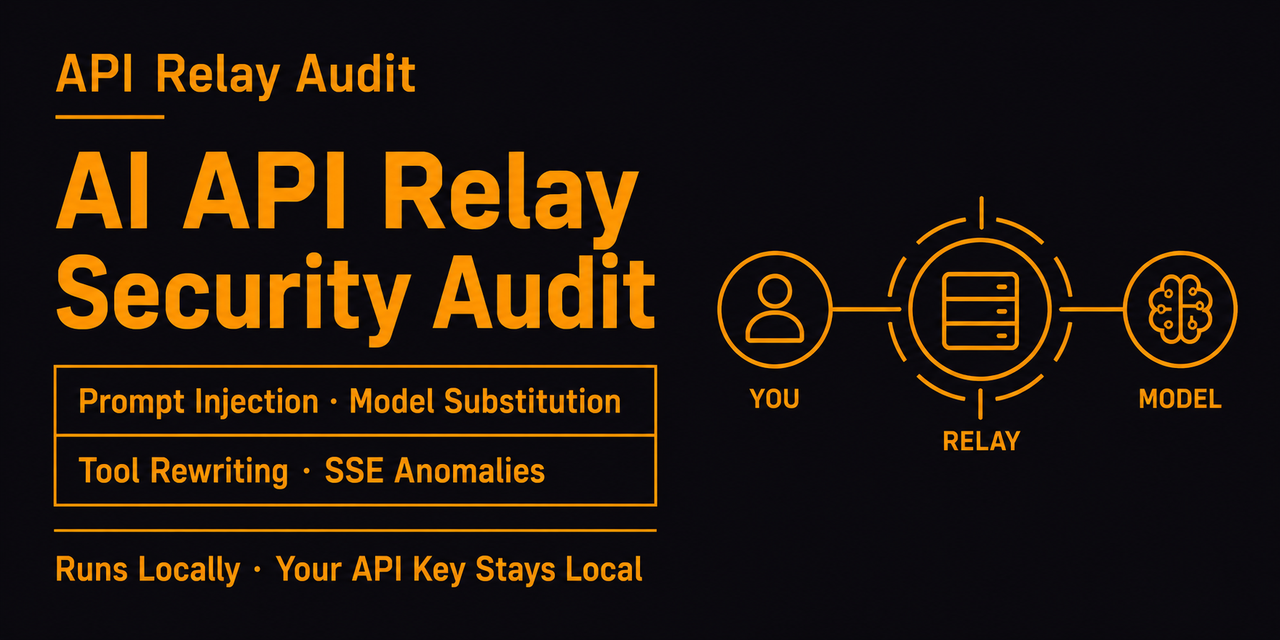 toby-bridges/api-relay-audit
Local security audit for AI API relays and LLM proxies: detects prompt injection, model substitution, tool-call rewritin…
toby-bridges/api-relay-audit
Local security audit for AI API relays and LLM proxies: detects prompt injection, model substitution, tool-call rewritin…
-
 howmp/dsh-pentest
面向 DeepSeek Harness(dsh)的渗透测试模式 @CloverSecLabs
howmp/dsh-pentest
面向 DeepSeek Harness(dsh)的渗透测试模式 @CloverSecLabs
-
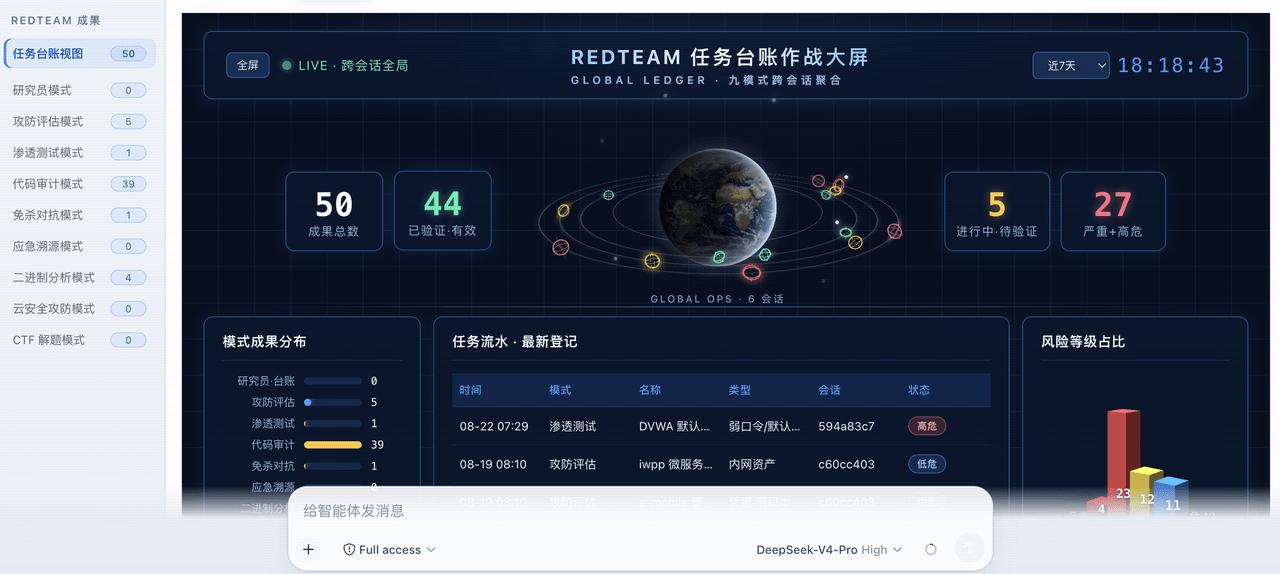 SeaOf0/dsh-redteam-model
基于dsh web实现的多种模式,目的是服务于redteam进行授权的安全研究,覆盖渗透测试、红队评估、代码审计等范围领域,请勿用于非法行为。(允许二开,赋予模块各位自己的业务逻辑,方法论只有自己熟练的才好用,好的方法论=好的生态)
SeaOf0/dsh-redteam-model
基于dsh web实现的多种模式,目的是服务于redteam进行授权的安全研究,覆盖渗透测试、红队评估、代码审计等范围领域,请勿用于非法行为。(允许二开,赋予模块各位自己的业务逻辑,方法论只有自己熟练的才好用,好的方法论=好的生态)
-
 saya-ch/dsh-mobile
DeepSeek Harness 的 Android App 与安全远程访问插件,支持局域网/远程连接和高度自定义的移动界面与扩展能力。
saya-ch/dsh-mobile
DeepSeek Harness 的 Android App 与安全远程访问插件,支持局域网/远程连接和高度自定义的移动界面与扩展能力。
-
 liguobao/ds-harness-remote
一个基于 DeepSeek Harness 插件机制构建的多端远程访问方案,通过安全、低延迟、端到端加密的 P2P 优先网络,支持从 PC、Android 和 Web 随时访问并操作远程 Harness 和 CodeX。 (A multi-…
liguobao/ds-harness-remote
一个基于 DeepSeek Harness 插件机制构建的多端远程访问方案,通过安全、低延迟、端到端加密的 P2P 优先网络,支持从 PC、Android 和 Web 随时访问并操作远程 Harness 和 CodeX。 (A multi-…
-
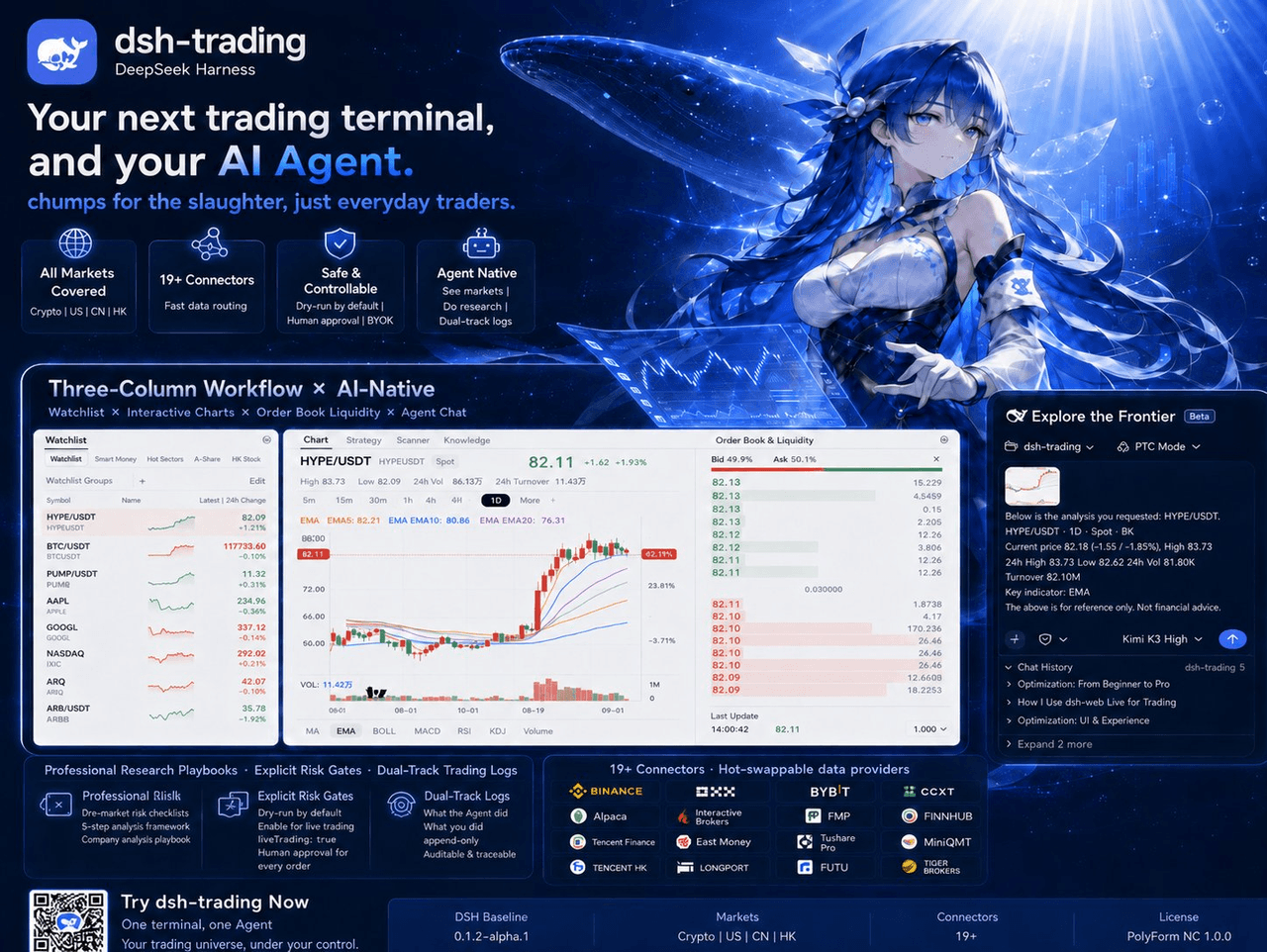 zhu1090093659/dsh-trading
Agent-native trading terminal built on DeepSeek Harness. Crypto, US, CN and HK in one three-column GUI, 19+ hot-swappabl…
zhu1090093659/dsh-trading
Agent-native trading terminal built on DeepSeek Harness. Crypto, US, CN and HK in one three-column GUI, 19+ hot-swappabl…
-
 PerryLink/dsh-auto-review
Second-model AI auto-review for DeepSeek Harness approval requests: a read-only reviewer subagent returns structured all…
PerryLink/dsh-auto-review
Second-model AI auto-review for DeepSeek Harness approval requests: a read-only reviewer subagent returns structured all…