怎样用 AI 来备考?How Do You Study for Exams With AI?
让 AI 解释一遍,点点头就翻篇——多数学生就是这么用它的,而这恰恰绕开了真正能让知识留住的那些方法。下面讲的是确实有效的做法:自己生成练习卷,以及在几分钟内搭出一份贴合自己的复习计划。
Ask AI for one explanation, nod, and move on — that is how most students use it, and it skips the very methods that make knowledge stay put. What follows is what genuinely works: making your own practice papers, and assembling a study plan tailored to you in a matter of minutes.
先说一句大多数人都不好意思承认的话:我们很多年都用错了复习方法。把笔记再看一遍、换支荧光笔再划一遍,然后坐进考场,才发现要用的时候什么都想不起来。被动阅读有一种「在努力」的错觉,其实并不算努力。这方面的研究结论很明确:自我测试、把复习分散到不同时间、主动答题,才是把内容压进长期记忆的机制。而这三件事恰好都很适合交给 AI 工具来做——这也是它们对备考真正有用的原因,而不只是个新鲜玩意。
本文讲的不是用 AI 作弊,而是让它扮演一位好家教:凌晨两点也能找到、永远不嫌你烦、愿意用八种说法讲同一个概念还不发脾气,而且专挑你老是做错的地方反复考你。用对了,这就是一件相当厉害的学习工具。
01快速回答
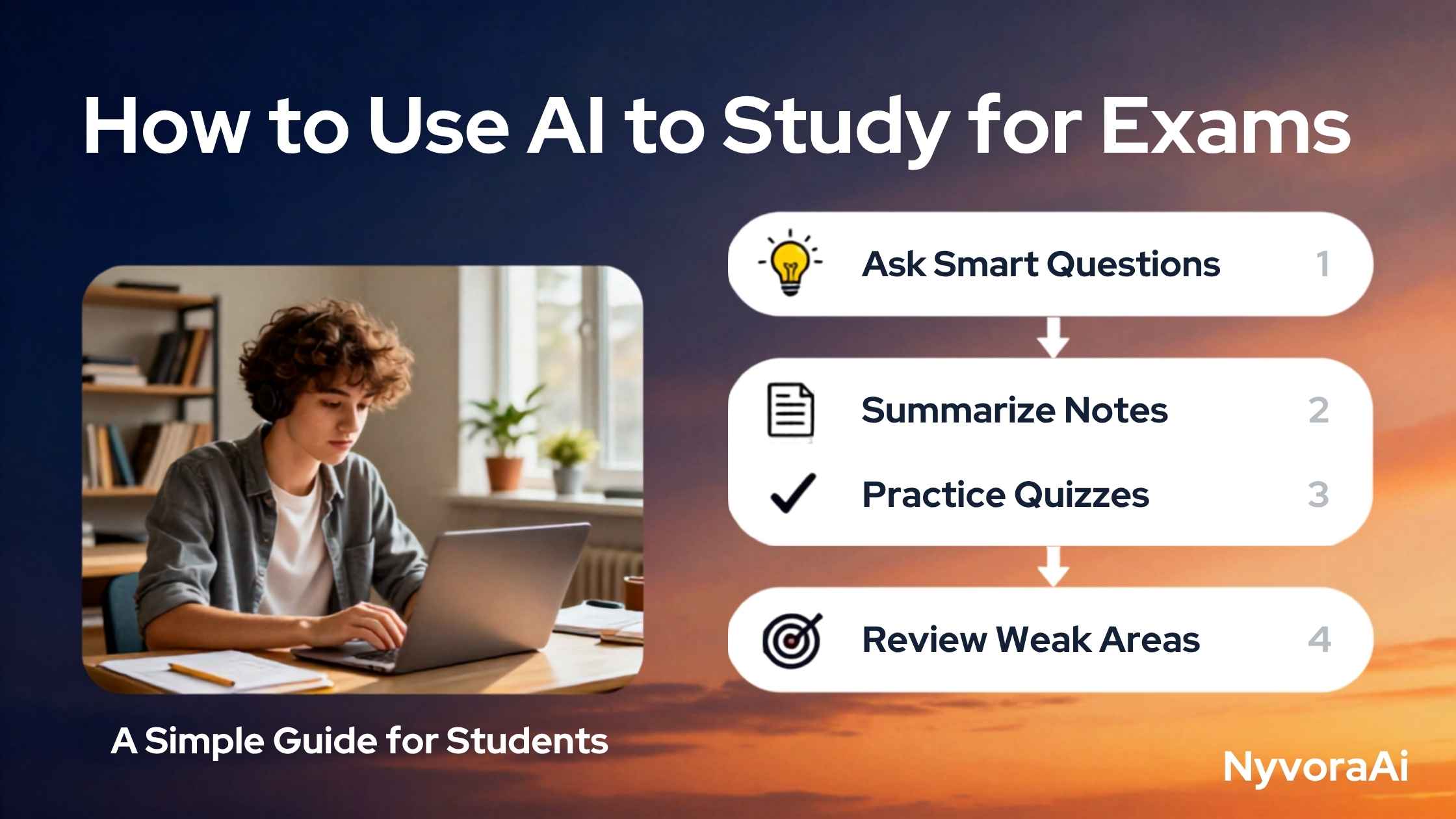
离考试只剩两天?那就照这个做:打开 ChatGPT 或 Claude,粘贴你的考点清单,让它按不同难度出二十道练习题。合上笔记做完它们,对答案,再让 AI 把做错的地方讲一遍。接着转向让你吃力的主题,重复一遍。这一轮循环——出题、做题、回顾薄弱点——比几小时被动复习更有效,而且任何科目都能在几分钟内跑完。
本文余下的内容都从这个核心循环展开——别的工具、别的方法,以及一些看起来有用、实则在悄悄偷走你时间的事。
02AI 究竟改变了学习的哪些方面
以前要找到好的练习题真的很难。历年真题有用,但总有用完的时候。教材上的习题往往要么太简单,要么范围太窄。学习小组的效果时好时坏。私人辅导费用不低,而且你想在奇怪的时间找他们时,常常约不上。
你得到的是一台读懂语境、永远出不完题的机器。把生物教材的一章丢给它,让它按考试难度出十道选择题;指定它专攻你最吃力的部分;或者让它把同一个答案用三种说法讲,直到有一种能讲通。这些在以前都不现实,除非舍得花大钱,或者身边正好有对的人。
还有第二层好处:它拿掉了拦住许多学生求助的那道坎——没弄懂基础知识的那种难为情。面对 AI,你可以把同一个问题连问五遍,坦白说还是没懂,再要求讲得更简单些,也没有人会叹气或让你觉得自己笨。这一点比听起来更重要。
03几分钟搭出一份个性化复习计划
AI 见效最快的一项用途,是按你的真实情况(而不是老生常谈)排出一份复习时间表。关键在于把话说具体:光说「给我做个学习计划」没什么用。要告诉它考试日期、完整的考点清单、每天大概能投入几小时,以及你诚实地承认自己最弱的地方。你给得越充分,产出的东西越可用。
拿到时间表之后,把它当成承诺来执行,而不是当成建议。固定的每日结构本身就有一部分作用:它免去了「今天该学什么」这种反复的决策消耗——而这个问题的答案,恰恰要消耗它本该用来学习的那些时间。
04让 AI 讲清教材讲不明白的地方
每个科目迟早都会碰到一个教材怎么也讲不明白的概念。你读完那段话,点点头,一个星期后才发现自己依旧说不清它到底是什么意思。AI 特别擅长打通这类卡点,正因为你可以让它彻底换一个方向再讲一遍。
最有效的做法是点明自己到底卡在哪一环,而不是干巴巴地说「解释一下 X」。可以这样说:我知道有丝分裂会产生两个相同的细胞,但我想象不出染色体为什么必须先在中部排好队——如果它们不排队会出什么问题?这样等于交给模型一个具体问题,得到的回答通常也比「教材定义换个说法」有用得多。
直接点名要类比也是一条路。比如要求它「用水在管子里流动来讲解导线的电阻」,或者「用大多数青少年都要面对的现实取舍解释机会成本」,往往在技术性表述讲不通的地方一下就通了。这正是静态教材完全比不过 AI 的地方。
05用你自己的笔记生成记忆卡片
记忆卡片确实有效,间隔重复背后的证据既扎实又一致。麻烦在于人工成本:做出好卡片很费时间,若要覆盖一整门科目,更是耗时惊人。AI 正是替你把这些小时省回来的东西。
把你的笔记片段或教材的一章喂给 AI 工具,让它生成五十组记忆卡——一面问题、一面答案。再把结果导入 Anki 或 Quizlet 这类应用,它们靠间隔重复调度,让总做错的卡片比已经掌握的更频繁地出现。大约五分钟,你就得到一副手工编写要花一小时的专属卡组。
- 1
把原始笔记丢给 AI
1 给出章节或主题。背景信息给得越足,卡片越能抓住真正重要的内容,而不是停留在表层事实上。
- 2
要求生成问答配对
2 把要求写清楚:「用这份材料生成 30 组问答卡片,定义题与应用题各占一部分,并标出考查频率最高的五个概念。」
- 3
导入间隔重复类应用
3 Anki 和 Quizlet 都支持导入文本。设好复习周期,把「哪些卡片该再出现、什么时候出现」交给算法去决定。
- 4
每天复习,而不是临时突击
4 每天早上复习十分钟,效果胜过考前一晚猛看九十分钟。把复习摊开。
06任何主题、任何难度,都能生成练习卷
这是 AI 给学生带来的最大实际优势。很少有哪种学习方法的证据比「做题测试」更充分,但它只有在题目难度合适、且确实覆盖考试范围时才有效。教材上的练习题往往太少,真题也终有用尽的一天。
只要你开口让 AI 出题,两个缺口都会消失。关键是把难度、题型和侧重点说清楚。比如要求它「就第一次世界大战的成因出十道选择题,难度对标 A-level,每题四个选项,并附上带简短解析的答案」,拿到的东西才真正可用来测试自己——那不是知识问答游戏,而是要求你动用考试所需的那种思考。
07把 AI 当作互动出题伙伴
学生对 AI 对话工具最容易忽略的一点,是它可以来回对话,而不是只能索取内容。你不必让它列一堆练习题、自己闷头做,而可以把它变成现场考官:它出题,停下来等你的答案,判定对错,再补上你漏掉的部分。
可以这样设置:「用法语大革命的内容考我。一次只问一道,然后等我把答案说出来;告诉我答得对不对,答错的地方先解释原因,再进入下一题。一开始问宽泛的,往后逐步收窄。」然后就真的合上笔记、把答案打出来。你得到的反馈,接近一位好家教的水平:即时、针对你本人答错的那一点,而不是一段通用解释。
08细读之前,先要一份摘要
有一种方法听起来有点反直觉,但效果不错。在逐字啃完一章艰涩内容或一叠讲义之前,先把材料粘进 AI,要一份高层次的概览:核心论点是什么、哪些术语是关键、这段材料想回答什么问题。先读这份概览,再回头读原文。
它起的作用是给你一个框架,让新信息有处可挂。你不用在啃三十页的同时还要判断哪些内容重要,因为你事先已经知道整体结构,注意力就能放在「理解」而不是「过一遍」上。听起来是小事,但对理解程度的影响并不小,尤其是面对那些没有清晰叙事线索的技术材料。
在这一步,会不会把要求说清楚差别极大:如果拿到的摘要浮于表面、或者漏掉了关键内容,问题几乎总是出在提示词上,而不是工具。适合这类任务的具体技巧,我们写在 如何向 AI 提问才能拿到更好的结果 这篇指南里。
09悄悄浪费你学习时间的几种做法
用 AI 复习,并不是每种用法都有效。有些做法看着很勤奋,实际上只是把被动学习的老问题换了个更精致的包装。
- 只看 AI 的解释,之后不做自测。阅读会带来「在学习」的感觉,但若后面不接一次提取,就并不等于学会。每看完一段解释,都应该合上标签页,用自己的话把它复述一遍。
- 让 AI 做个摘要,就把这称作「学习」。别人替你准备好的摘要并不等于理解。把它当作起点,而不是终点。
- 不加核实就采信 AI 给出的事实。模型会非常自信地讲错细节,涉及具体日期、统计数据或技术定义时尤其如此。对事实类科目,任何重要内容在进入笔记之前,都要对着真实来源核一遍;最快的做法收录在我们 如何核查 AI 生成内容 这篇指南里。
- 生成了练习题,却把难的跳过去。你最想跳过的那些,正是最该做的。让 AI 针对你的薄弱环节多出题,而不是专挑你顺手的内容。
- 把 AI 当成理解的替代品。不自己走一遍推理就直接拿答案,你手里握着的是答案,而不是底层概念——而考试考的恰恰是后者。
如果你正准备把 AI 工具融入学习之外的其他日常——效率、写作、工作任务——我们在 如何用 AI 工具搭起日常工作流 这篇指南里讲了怎么安排,才不会侵占学习真正需要的专注时间。
如果你的考试涉及论文或长篇作答,也值得了解如何借助 AI 更高效地构思与起草——我们在 如何用 AI 更快写成长文 里介绍的方法可以直接迁移到学术写作。若想把学习与工作的全部日程集中在一处管理,这份 AI 辅助内容与规划的实操分步指南 也值得一读。如果你的生活中还有自由撰稿或副业,可以看看 AI 如何辅助自由撰稿工作,那里有一些能在繁重复习中依然可行的时间管理思路。
10常见问题一览
AI 真的有助于备考吗?
用 AI 复习算作弊吗?
学习最好用哪个 AI 工具?
我该怎么用 AI 做学习计划?
AI 能帮我弄懂那些看不明白的概念吗?
11结语
用 AI 备考不是什么捷径,而是通往同一个目的的更快路径。那个目的是:真正把科目理解到能在压力下应付没见过的问题。只要你用得主动,AI 就能让你更早抵达——自己生成练习卷、被来回提问、反复要解释直到豁然开朗,以及排出一份符合自身情况而非套用模板的时间表。
收获最大的,是那些始终自己握着方向盘的人:他们用 AI 来创造主动学习的条件,而不是让它代替自己思考。距离一场重要考试还有两周?今天最值得花的一小时是这样过的:打开对话窗口,粘贴你最没把握的主题,要二十道练习题,做完,再让 AI 把做错的那几道讲给你听。这一小时比再把笔记读一遍有用得多,而且不只一点点。
Time for a confession most of us could make: for years we revised badly. Out came the notes for another pass, the highlighter for another colour, and then came the exam hall, where none of it surfaced on demand. Passive reading has the feel of work without being work. The evidence here is unambiguous — testing yourself, spacing sessions out, and answering questions actively are the mechanisms that push material into long-term memory. All three happen to suit AI tools unusually well, which is why they are more than a gimmick for exam revision.
Nothing here is about cheating with AI. The idea is to get the kind of help an excellent tutor gives: reachable at 2am, endlessly patient, willing to put the same idea eight different ways without irritation, and ready to drill you on the exact items you keep fumbling. Handled properly, that is a serious study instrument.
01The Short Answer
Down to two days before the paper? Then do this. Launch ChatGPT or Claude, paste in your topic list, and request twenty practice questions pitched at a range of difficulty levels. Work through them with your notes shut. Mark your own answers, then have the AI walk you through whatever you missed. Move on to the topics that gave you trouble and repeat. That one cycle — produce, sit the test, revisit the gaps — beats hours of passive revision, and any subject can be run through it in minutes.
The rest of this article builds out from that one loop — other tools, other methods, and a handful of habits that appear helpful while quietly burning your hours.
02What AI Genuinely Changes About Studying
Good practice questions used to be genuinely scarce. Past papers were useful until you exhausted them. Textbook exercises tended to be either trivially easy or too narrow in scope. Study groups varied wildly in quality. Tutors cost a lot and were rarely free at the strange hours you actually needed them.
What you get instead is a context-aware source of questions that never runs dry. Hand it a biology chapter and request ten multiple-choice items at exam standard. Direct it at the sections that trouble you most. Ask it to render an explanation three ways over until one lands. None of that was realistic before, short of spending a lot of money or having exactly the right person to hand.
There is a second benefit: it takes away the thing that keeps many students from ever asking — the shame of not grasping something elementary. With an AI you can put the same question five times running, own up to still not following, and request something even simpler, with nobody sighing or making you feel slow. That counts for more than it may sound.
03A Tailored Study Plan, Assembled in Minutes
Among the fastest payoffs AI offers is a revision timetable built around your actual circumstances instead of the usual platitudes. Specificity is what makes it work. A bare "make me a study plan" will not get you far. Supply the exam date, the full topic list, a rough daily hour budget, and an honest account of where you are weakest. The richer the input, the more usable the schedule.
Having a timetable, follow it as a commitment rather than a proposal. The mere existence of a fixed daily structure does part of the work, because it spares you the recurring drain of deciding "what should I study today" — a question that nibbles away at the very time it takes to answer.
04Getting AI to Explain What the Textbook Doesn't
Sooner or later every subject throws up a concept the textbook simply fails to deliver. You read the passage, you nod, and a week later it dawns on you that you still cannot say what it means. AI is unusually good at clearing these logjams, precisely because you can ask for another attempt from an entirely different direction.
What works best is naming precisely where your understanding breaks, instead of issuing a bare "explain X". Say something along these lines: I follow that mitosis yields two identical cells, yet I cannot picture why the chromosomes must first queue up along the middle — what would fail if they did not? That hands the model a concrete problem to solve, and the reply is typically far more serviceable than a textbook definition phrased a shade differently.
Asking outright for an analogy is another route. Requests such as "walk me through the electrical resistance of a wire as though it were water moving through a pipe" or "explain opportunity cost through a real-life trade-off most teenagers have to make" regularly deliver the instant click that technical phrasing never managed. Here is one place where a static textbook simply cannot match AI.
05Turning Your Notes Into Flashcards
Flashcards deliver. The case for spaced repetition is both robust and consistent. The trouble is the labour: producing decent cards eats time, and covering an entire subject eats a great deal of it. AI is what claws those hours back.
Feed a section of your notes, or a textbook chapter, to your AI tool and have it produce fifty flashcard pairs, prompt on one side and answer on the other. Import the result into something like Anki or Quizlet, which schedules spaced repetition so that cards you keep failing come round more often than the ones you have down. Five minutes or so gives you a bespoke deck that would have cost an hour of writing by hand.
- 1
Drop your raw notes into the AI
1 Point to whichever chapter or topic you are working from. Context is what makes the difference: the more of it you provide, the better the cards isolate what truly matters instead of recycling surface detail.
- 2
Request question-and-answer pairs
2 Make the instruction precise: "Produce 30 question-and-answer pairs from this, combining definition prompts with applied ones, and mark the five concepts that come up most often in exams."
- 3
Move them into a spaced-repetition app
3 Text imports cleanly into both Anki and Quizlet. Configure the review interval and leave it to the algorithm to decide which cards resurface, and at what point.
- 4
Review every day rather than in one cram
4 Ten minutes of card review each morning outperforms ninety minutes crammed in the night before. Keep it spread out.
06Producing Practice Papers on Any Topic, at Any Level
This is where AI hands students their largest practical edge. Few techniques have stronger research behind them than practice testing — yet it only pays off when the questions sit at the right level and genuinely map onto what the paper will ask. Textbooks rarely carry enough exercises, and past papers are a finite resource.
Both shortages disappear the moment you ask AI to write the questions. What matters is pinning down difficulty, format and focus. Ask for "ten multiple-choice questions on what caused the First World War, calibrated to A-level, four options apiece, plus an answer key carrying short explanations", and what comes back is material you can properly test yourself on — not a pub quiz, but items that demand the same thinking the exam will.
07Making AI Your Live Quiz Partner
What students overlook most in AI chat tools is that the exchange can go both ways; you are not limited to requesting content. Rather than having it list practice questions for you to grind through alone, you can turn the AI into a live quizmaster: it poses an item, pauses for your reply, judges it, then fills in whatever you left out.
Set it up like this: "Quiz me on the French Revolution. Just one question at a time — then wait for what I say, tell me whether it is right, and where it is wrong explain why before the next question. Begin broad and narrow down as we go." Then genuinely type your answers with the notes closed. What comes back resembles a good tutor's feedback: instant, tied to the specific mistake you made, and never a canned explanation.
08Ask for a Summary Before the Close Read
One method feels backwards yet performs well. Prior to working through a heavy chapter or a pile of lecture notes line by line, paste the material into AI and request a top-level overview: the central claims, the terms that matter, and the questions the text sets out to answer. Read that overview first, then return to the original.
The effect is to supply a frame that incoming details can be attached to. Rather than grinding through thirty pages while simultaneously judging what counts, you arrive already knowing the shape of the argument, so attention goes to comprehension rather than mere intake. It sounds trivial; the shift in understanding is not, particularly with technical material that offers no obvious narrative to follow.
Knowing how to word a request matters enormously at this point: when the summaries come back shallow or skip what counts, the problem nearly always lies in the prompt rather than the tool. The techniques that suit this kind of task are set out in our guide to framing prompts that get better results from AI tools.
09Habits That Silently Squander Study Time
Not every way of using AI for revision is useful. Some routines look industrious while amounting to nothing more than the same passive-studying trap in a fancier form.
- Reading an AI explanation and never testing yourself afterwards. Reading gives the sensation of learning without being it, unless retrieval follows. Each explanation should finish with you closing the tab and restating the idea in your own words.
- Having AI summarise something and labelling that "studying". A summary handed to you is not comprehension. Treat it as the opening move, never the closing one.
- Taking AI-produced facts on trust. Models will assert wrong details with total confidence, above all when dates, statistics or technical definitions are involved. In fact-heavy subjects, check anything that matters against a genuine source before it reaches your notes; the fastest methods are gathered in our guide to verifying content that AI has produced.
- Generating practice questions, then dodging the difficult ones. The items you feel like avoiding are precisely the ones worth doing. Ask for more questions aimed at your weak areas, not at the topics you already find comfortable.
- Letting AI stand in for real understanding. Take the answer without doing the reasoning yourself and you end up holding answers rather than grasping the ideas underneath — and the ideas are what the paper examines.
Should you be folding AI tools into the rest of your day — productivity, writing, work tasks — our guide to structuring a daily routine around AI tools explains how to organise it so that it never encroaches on the focused hours studying demands.
And where your exams involve essays or extended written answers, it is worth learning how AI can help you plan and draft them more efficiently — the techniques in our article on using AI to produce long-form writing faster carry straight over into academic work. To keep your whole study and work schedule in one view, the step-by-step guide to AI-assisted planning and content workflows is worth your time as well. If freelance or side work also features in your life, take a look at how AI supports freelance writing jobs for ideas on managing your time that survive a heavy revision load.
10Question Round-Up
Does AI genuinely help with exam revision?
Does revising with AI count as cheating?
Which AI tool is best for studying?
How should I go about building a study plan with AI?
Can AI help with concepts I find baffling?
11Where This Leaves You
Revising with AI is not a shortcut; it is a faster road to the same place. And the place is genuine understanding of your subject — enough to handle unfamiliar questions while under pressure. AI carries you there sooner provided you use it actively: making practice papers, being quizzed back and forth, requesting explanations until one lands, and drawing up a timetable shaped around your own circumstances rather than a template.
Those who gain most stay behind the wheel themselves; they employ AI to set up the conditions for active learning, not to think on their behalf. Two weeks out from a big exam? The most valuable hour available to you today looks like this: open a chat window, paste in your shakiest topic, request twenty practice questions, work through them, then have AI talk you through the ones you got wrong. That beats another pass over your notes, and it beats it comfortably.