如何用 AI 写商品描述How to Use AI to Write Product Descriptions
手写五百条商品描述——哪怕只是五十条——都算是开网店最吃力不讨好的活之一。而这恰恰是那种重复、有固定套路的文字,只要喂给 AI 的是真实商品信息而不是含糊指令,它就能写得不错。下面讲的是怎么把这件事做成,同时让文案牢牢贴住你的品牌,绝无机器味儿。
Hand-writing five hundred product descriptions — or even fifty — ranks among the most thankless chores in ecommerce. It is also precisely the sort of repetitive, template-shaped writing that AI does well, provided you feed it real product facts rather than vague direction. What follows shows how to make that work while keeping the copy unmistakably on-brand and nothing like machine output.
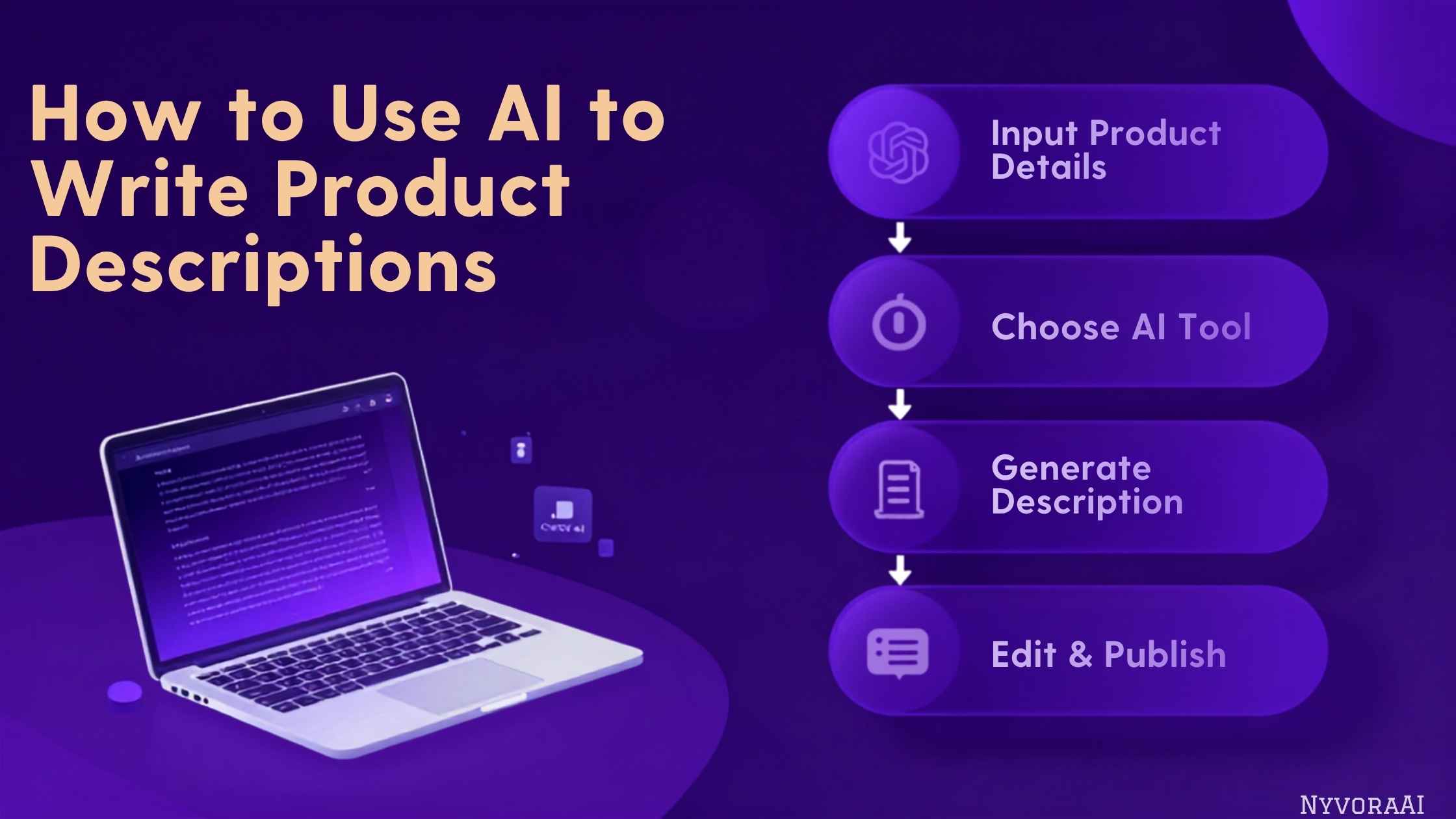
做电商的人都懂这个难题:每上一个新品就要写描述,每条描述都得带上品牌的腔调,而一周根本没有那么多时间从零写起。AI 确实改写了这道算式。它许诺的不是按一下按钮就得到完美成稿,而是几秒内拿到一份扎实的初稿,让人的活儿从「凭空造」变成「打磨」。
下面把实操环节全部讲到:为什么这类文案特别适合交给 AI;目录规模不同时,哪些工具值这个价;提示词怎么写才不至于写出泛泛之词;如何把顾客真正会搜的词自然融进去;以及怎么修改,才能读起来像是出自你的品牌。这套流程跑起来之后,如果你还没考虑过把 AI 用到店铺的其他运营环节,我们这篇 为企业配置 AI 助手 就是顺理成章的下一步。
01一句话回答
先把真实的规格整理出来——材质、尺寸、这件商品跟同类有什么不同。然后把一份详细说明交给 Claude 或 ChatGPT 这类工具,里面包含品牌调性、目标顾客、这些硬事实,以及你希望自然带进去的搜索词。让它给两三个版本,挑最好的那一版,发布前再核对准确性、调整语气。目录一旦达到几百个 SKU,用带批量生成功能的电商专用文案工具,比打开聊天窗口逐个处理要快得多。
02为什么这类文案特别适合 AI
产品描述之所以和 AI 特别合拍,在于它的骨架是重复的:一个钩子、一组卖点、一份规格清单,再加一句促动购买的话。只要输入清晰,大语言模型最擅长的就是照着这副骨架稳定输出。而且和随笔或评论文章不同,这类文案根本不需要原创思想——它需要的是你的事实,条理清楚地摆出来,并且有说服力。
省下的时间会迅速累加。一家有 200 件商品的店铺,过去写文案要耗掉整整一周,如今一个下午就能拿到全目录的初稿,团队的时间得以留给真正需要人来判断的部分:核对事实、调整语气,以及想清楚每件商品究竟凭什么值得买。
03AI 能做什么,不能做什么
快速产出初稿
多版本与 A/B 文案
整目录批量处理
它的短板在哪里
清单上所有条目里,这一条最要紧。语言模型天生带着笃定的口吻,哪怕对布料、版型一无所知,它也能写出一句听起来很合理的说法。所以每一条生成的描述都要当成待核实事实的草稿——这条规矩适用于任何 AI 辅助写作,包括 用 AI 优化简历,那里编造细节的风险同样大。
04主流 AI 文案工具横向对比
| 工具 | 最适合用于 | 突出优势 | 适合的目录规模 |
|---|---|---|---|
| Claude | 必须带强烈品牌调性的文案 | 对语气把控细腻,能可靠地执行详细指令 | 小到中型 |
| ChatGPT | 快速、灵活的起草 | 迭代速度快,插件生态庞大 | 小到中型 |
| Copy.ai | 为电商而设的模板 | 自带商品描述模板和批量模式 | 中到大型 |
| Jasper | 大规模经营下的品牌调性统一 | 可为整个团队和目录训练品牌语调 | 大型 |
| Writesonic | 通过 CSV 批量上传商品 | 喂给它一张表格,成批返回描述文案 | 大型 |
如果你单打独斗,或者目录不到五十件商品,用 Claude 这类通用助手配上一份写得好的提示词就足够,不需要专门的平台。但目录一旦超过几百个 SKU,Writesonic 或 Copy.ai 这类工具的批量处理能力就会凭着省下的时间很快回本。
05从空白的商品页到可发布的文案,分步走
- 1
收集真实的商品信息
1 尺寸、材质、保养说明,再加上一个能让它区别于自家或竞争对手同类商品的特点。
- 2
弄清楚买家是谁
2 想清楚实际买家是谁——挑礼物的人、回头客,还是第一次来比价的新访客。这三种人需要完全不同的语气。
- 3
写一条详细的提示词
3 把事实、买家、品牌语气、目标篇幅,以及希望自然出现的关键词一并写进去。
- 4
产出两三个版本
4 要求不同篇幅或不同切入点——一版以卖点开篇,一版以功能开篇——再看看哪一版更贴合你的店铺。
- 5
拿你的数据核对每一条说法
5 在任何一个字上线之前,拿商品的真实数据核对尺寸、大小和材质方面的说法。
- 6
对齐品牌语气后再发布
6 删掉套话,把不像你品牌的部分改掉,然后发布。
06写一条真正管用的提示词
决定成品好坏的首要因素就是提示词本身——它决定了你拿到的文案是可以直接发布,还是谁都写得出来的那种。如果只丢给 AI 一句「给这支蜡烛写个描述」,它几乎没有原料可用,只能拿套话把空缺填满。给它一份详细的说明,它才有真东西可以加工。
注意这份说明从头到尾没有让模型编造任何内容——每个细节都来自真实的商品。正是这一点,让生成的文案准确、具体,而不是含糊其辞、和网上一堆蜡烛页面互相替换。同一套纪律——硬事实、明确格式、不给猜测留空间——不管是用在产品文案上,还是用来制作 YouTube 内容 推广这些商品,都同样适用。
07调整文案,让它被搜到
写得再漂亮却从不出现于搜索结果,也只算做了一半。所以在敲定提示词之前,先花几分钟弄清楚顾客实际会输入什么词——而不是你以为他们会输的词。我们这篇 用 AI 做 SEO 关键词调研 讲了具体做法,和这套流程正好衔接:先做关键词功课,再把它作为描述说明的一部分交给 AI。
选定关键词后,把它放进商品标题、描述的第一句,以及至少一条要点里——是放进去,而不是连着重复四遍。谷歌的态度是:它评估的是有用性和质量,与内容由谁或什么写出无关;也就是说,一份经过认真调研和编辑的 AI 描述,和人工撰写的描述是在同一水平线上竞争。如果动手前想先看看竞争对手都在靠什么排名,Perplexity AI 与谷歌做调研的对比 这类工具能显著加快这项排查。
08改到读起来像人写的
真正的手艺大半花在这一步。生成的初稿总会扑向一套可预测的词库——「提升你的」「适合任何场合」「你一定会喜欢」——这些话在成千上万个机器写的商品页上反复出现。把它们揪出来,换成只有你这件商品才有的细节,文案才会让人感觉写它的人真的拿过这件东西。
- 把稿子读出声——凡读起来生硬、过于正式的句子,一律重写。
- 把空泛的夸赞(「高品质」「超赞」)换成顾客能自己核实的具体细节。
- 凡是换成同类别的任何一件商品都照样成立的句子,删掉。
- 加入一个真正会被注意到的具体感官细节——手感如何、声音怎样、闻起来是什么味。
- 让句子长短贴合品牌惯有的节奏——要么短促有力,要么舒展铺陈。
09让生成文案变得平淡无味的几个失误
- 第一版改都不改就发布。省掉人工编辑这一步,整店文案都会变得泛泛而记不住——没有比这更快的办法。
- 让模型去猜你根本没提供的事实。材质或保养说明你不给,它就会编出一套听着可信、实则完全错误的内容。
- 所有商品都用同一条提示词。皮钱包和蜡烛的语气、结构完全不同;调整提示词应当按品类来,而不是按单个 SKU 来。
- 堆砌关键词。同一个搜索词反复硬塞,顾客读着别扭,而且它早已换不来过去那种排名提升了。
- 跳过品牌语气检查。文案可以事实无误,却读起来像另一家店写的——这种错位顾客能感觉到,哪怕说不上来问题出在哪。
把商品描述的流程跑顺之后,同样的习惯——认真给背景、刻意做编辑——会自然而然地延伸到店铺的其他角落:比如一个用同一批商品事实来回答尺码问题的 网站免费聊天机器人,或者那套把这些页面带来源头流量的内容工作。
10常见问题
AI 真的能写出好的商品文案吗?
写商品描述,该选哪个工具?
谷歌会惩罚由 AI 生成的商品描述吗?
AI 生成的商品描述,多长最合适?
发布前需要先编辑 AI 写的商品描述吗?
11结语
用 AI 写商品描述,并不是要取代那个真正了解商品的人。它解决的是「对着空白页无从下手」的困境——正是这种困境让写五百条描述、甚至五十条都显得不可能。只要提供真实事实、明确的品牌语气和确定的格式,模型就能稳定地交出一份扎实的初稿,让人用从零起笔所需时间的一小部分,把它打磨成真正的好文案。
做对了的店铺,从不把生成的初稿当成成品。它们会核实内容、删掉套话、把顾客真正会搜的词融进去,并确认最终文字读起来像是出自一个既懂这件商品、也在意它的人之手。省掉编辑这一步,你的文案就会淹没在其他 AI 辅助店铺吐出的同一种泛泛之声里。认真做,它反而会成为开网店最省时、最可靠的环节之一。
先挑五款最畅销的商品,写出一条真正扎实的提示词,看看它能省下多少时间,再推广到整个目录。跑通之后,这套模式——真实输入、明确指令、人工复核——就值得套用到你引进业务中的每一个 AI 工具上。
Anyone who sells online knows the shape of the problem: each new listing demands its own copy, that copy has to carry your brand's sound, and the week never contains enough hours to produce it all from nothing. AI has genuinely shifted that arithmetic. The promise is not a button that spits out a flawless finished description; it is a solid first draft within seconds, so the human's job shrinks to refining rather than inventing.
Everything practical is covered below: the reasons this particular writing job suits AI, which tools justify their price depending on how big your catalog is, how to phrase prompts so the copy avoids sounding generic, how to fold in the terms shoppers really type into search, and how to revise the result until it reads as though your brand composed it. Once this workflow is running, and if you have not yet looked at applying AI to the rest of your store's operations, the obvious follow-up is our guide to setting up an AI assistant for your business.
01The Short Answer
Begin by pulling together the genuine spec sheet — materials, measurements, what sets the item apart. Then hand a tool such as Claude or ChatGPT a detailed brief covering your brand's voice, the shopper you are writing for, those hard facts and the search terms you want worked in. Request two or three takes, keep the best, and revise it for accuracy and tone before it goes live. Once a catalog runs to hundreds of SKUs, a purpose-built ecommerce copy tool with bulk generation speeds things up far beyond opening a chat window and working through items one at a time.
02Why This Kind of Copy Suits AI So Well
What makes product copy such a natural match for AI is its repeatable skeleton: a hook, the benefits, the spec list, a closing nudge to buy. Hand a large language model clear inputs and that skeleton is precisely the kind of thing it reproduces dependably. And unlike an essay or an opinion column, this copy calls for no original thinking at all — it calls for your facts, arranged clearly and argued persuasively.
The hours add up quickly. A shop carrying 200 items whose copy once ate a full week can plausibly obtain first drafts for the whole catalog in a single afternoon, which frees the team for the work that does require a person: checking facts, reshaping tone, and judging what actually makes each item worth someone's money.
03What the AI Can Do, and What It Can't
Fast First Drafts
Variants and A/B Copy
Whole-Catalog Batches
Where It Falls Short
Of everything on that list, this is the one that counts. A language model defaults to sounding certain, and it will happily assert something plausible about fabric or fit without actually knowing. So treat every generated description as a draft awaiting a factual review — the same rule that governs any AI-assisted writing, a task like improving a resume with AI included, where fabricated detail carries exactly the same risk.
04Comparing the Best AI Tools for Product Copy
| Tool | Best Suited To | Standout Strength | Catalog Scale |
|---|---|---|---|
| Claude | Copy that must carry a strong brand voice | Fine-grained tone control; handles detailed instructions reliably | Small to Medium |
| ChatGPT | Quick, adaptable drafting | Rapid iteration and a large ecosystem of plugins | Small to Medium |
| Copy.ai | Templates built for ecommerce | Ships with product description templates plus a bulk mode | Medium to Large |
| Jasper | Brand voice across a large operation | Trains brand voice for an entire team and catalog | Large |
| Writesonic | Uploading products in bulk via CSV | Feed it a spreadsheet and receive descriptions en masse | Large |
Selling on your own, or carrying fewer than fifty items? A general assistant such as Claude, paired with a well-crafted prompt, genuinely covers you — no specialist platform required. Past a few hundred SKUs, though, the bulk-processing options in Writesonic or Copy.ai begin repaying their cost in recovered hours almost immediately.
05From an Empty Product Page to Live Copy, Step by Step
- 1
Gather the genuine product facts
1 Measurements, materials, care instructions, plus the one thing that sets this item apart from the lookalikes on your own site or a rival's.
- 2
Identify who is buying
2 Picture the actual buyer — someone hunting a gift, a returning customer, or a newcomer weighing up options. Each of those calls for a different register.
- 3
Compose a detailed prompt
3 Put in the facts, the buyer, your brand's voice, the length you want, and whichever keywords should appear without feeling forced.
- 4
Produce two or three variations
4 Request different lengths or approaches — one that leads with benefits, one that leads with features — then see which suits your shop.
- 5
Check every claim against your data
5 Before a single word goes live, check the dimensions, sizing and material claims against the real product data.
- 6
Align it with brand voice, then publish
6 Strip out the stock phrases, rework whatever doesn't sound like your brand, and put it live.
06Writing a Prompt That Genuinely Delivers
Nothing influences the outcome more than the prompt itself — it is what separates copy you would happily publish from copy anybody could have generated. Tell the AI only "write a description for this candle" and it has almost no raw material, so it papers over the gaps with clichés. Hand it a detailed brief instead and it has something real to work with.
Note that the brief never once asks the model to make something up — every detail traces back to the real item. That is what keeps generated copy accurate and particular rather than vague and swappable with every other candle listing on the internet. And the same discipline — hard facts, a defined format, no space for invention — carries over to any use of AI, whether that means product copy or YouTube content promoting those very items.
07Tuning Generated Copy So It Gets Found
Copy that reads beautifully but never surfaces in results is only half working. So before you lock in your prompt, take a few minutes to establish what shoppers genuinely type — as opposed to what you imagine they type. Our guide to using AI for SEO keyword research walks through the method, and it slots straight into this workflow: do the keyword work first, then feed that keyword into the description brief itself.
With a keyword chosen, place it in the product title, in the first line of copy and in at least one bullet — placed, not hammered in four times over. Google's position is that usefulness and quality are what it assesses, irrespective of who or what did the writing, which means a carefully researched and edited AI description goes head to head with a human-written one on level terms. And if you want to see what rivals are ranking for before you start, a comparison piece such as Perplexity AI against Google for research can make that competitive sweep a good deal quicker.
08Editing the Output Until It Sounds Human
Most of the real craft lives in this step. Generated drafts reach for a predictable little vocabulary — "you'll love this," "perfect for any occasion," "elevate your" — the same stock lines recurring across thousands of machine-written product pages. Hunting those down and substituting details unique to your item is what gives copy the feel of having been written by a person who has actually had the thing in their hands.
- Read it aloud — any sentence that lands stiff or needlessly formal goes back for rewriting.
- Swap vague praise ("high quality," "amazing") for one detail a shopper can actually verify.
- Delete every line that would fit any other item in the same category.
- Include one concrete, sensory detail a person would really register — how it feels, what it sounds like, how it smells.
- Let sentence length follow your brand's natural cadence, whether that is clipped and punchy or long and descriptive.
09Missteps That Leave Generated Copy Flat
- Going live with draft one untouched. Skip the human editing pass and you get forgettable, generic copy from one end of the catalog to the other — faster than by any other route.
- Leaving the model to guess at facts you never supplied. Withhold the material or the care instructions and it invents something that sounds credible and is simply wrong.
- Reusing one prompt for every single item. A leather wallet and a candle share neither tone nor structure, so tune the prompt category by category rather than SKU by SKU.
- Cramming keywords. Forcing the same search term in again and again puts shoppers off, and it no longer buys the ranking lift it once did.
- Skipping the brand-voice pass. Copy can be factually correct yet sound like some other shop entirely — and customers sense the mismatch even when they cannot name it.
Get the description workflow humming and the same habits — careful briefing, deliberate editing — carry over naturally to other corners of a store: a free chatbot for your website that fields sizing questions off those very same product facts, for instance, or the wider content operation that brings visitors to those pages in the first place.
10Common Questions
Is AI genuinely capable of good product copy?
Which tool should I choose for writing product descriptions?
Does Google penalise descriptions produced by AI?
What length works best for an AI-generated product description?
Do I need to edit AI-written descriptions before they go live?
11In Closing
Putting AI to work on product descriptions is not an attempt to replace whoever actually understands the merchandise. It removes the blank-page paralysis that makes writing five hundred descriptions — or even fifty — feel impossible. Supply real facts, an unmistakable brand tone and a defined format, and the model reliably returns a strong first draft that a person can polish into something genuinely good — at a fraction of what drafting from nothing would cost.
Shops that do this well never mistake a generated draft for a finished one. They verify it, strip the boilerplate, fold in the terms their customers really search, and confirm the finished text reads as though written by someone who knows the product and cares about it. Miss that editing stage and your copy dissolves into the same generic drone pouring out of every other AI-assisted store. Do it properly and it turns into one of the quickest, most dependable parts of running a shop.
Take your five top sellers, craft a single really strong prompt, and measure the time it saves before extending the method to the rest of the catalog. Once it works, that same shape — genuine input, explicit instructions, human review — is the template to reuse with every other AI tool you bring into the business.