AI 进入学校,究竟是好是坏?So Is AI Good or Bad for Schools?
把同一个问题分别抛给一位老师和一名学生——课堂上的 AI 到底怎么样——你多半会得到两个截然不同、却都站得住脚的答案。这种分歧并非糊涂,它折射出研究本身尚未化解的张力。所以本文不评胜负,而是把两边真正观察到的东西、证据目前的落点,以及究竟是哪些条件决定了 AI 在某一间教室里是助力还是拖累,一一摆出来。
Put the same question about classroom AI to a teacher and to a student, and the two replies will differ — and both will be defensible. That gap is not muddle; it mirrors a tension the literature has not resolved. So rather than declare a winner, this article sets out what each camp actually observes, where the evidence stands today, and which conditions decide whether the technology helps or hurts in a particular class.
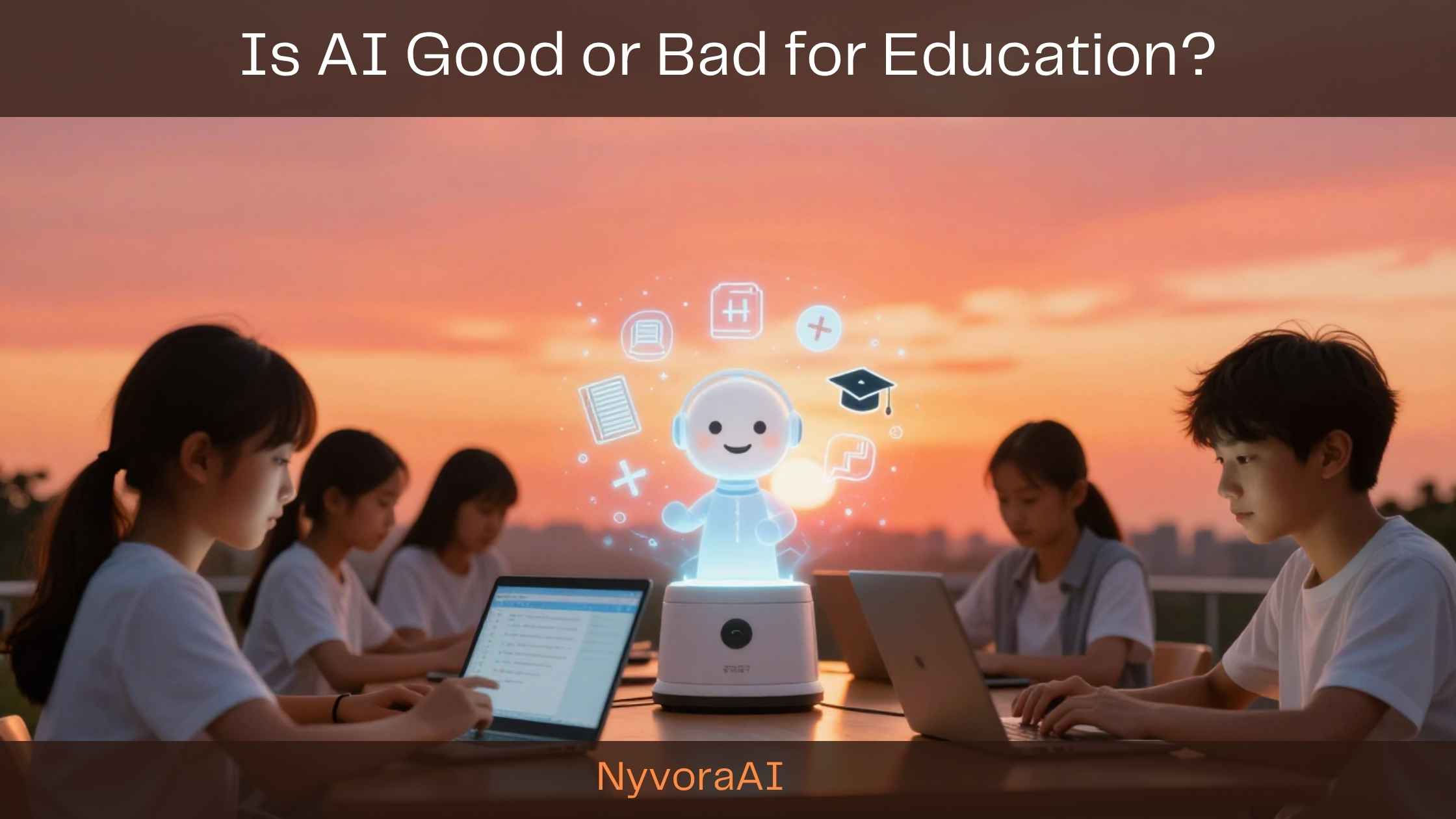
这个问题被反复问起,而且几乎每次问法都像在暗示:一个词就够了。可那个词并不存在。硬要装作有,只会把一个真有厚度的问题压扁。诚实的起点是一个让人不太舒服的事实:同样仔细读过同一批研究的人,依然会分属不同阵营,而各自的理由都值得认真对待。弄清这种分歧怎么产生,比选边站学到的东西多得多。
教育也不是第一个被拿来追问 AI 对思考与创造有何影响的地方。另一种形态极为相似的争论——个体收获与集体忧虑并存——出现在我们那篇 AI 是否让我们变得不那么有创造力 里。
01简明回答
AI 在教育里究竟是助力还是祸害,几乎完全取决于怎么落地——如何引入、如何约束——而不是技术本身有什么固有属性。研究支持的就是这个结论。若是有意识地引入,把它当作即时反馈、个别辅导和难点讲解的来源,教育上的好处既实实在在又有充分证据。若是在毫无护栏、没有结构、也不做 AI 素养培训的情况下把同样的工具丢进课堂,得到的就是依赖、被钝化的批判性思维,以及「这份作业到底是谁做的」这种界限模糊。2026 年布鲁金斯学会(Brookings Institution)一份被广泛引用的报告发现,按当前的使用方式,风险已经超过收益——不过报告也谨慎指出,这并非必然结局,更合理的政策、培训与防护措施可以改变它。
02为什么给不出非黑即白的答案
所谓「教育」并不是在世界各地以同一种方式发生的一件事。试想三个画面:五岁孩子跟着 AI 阅读辅导练读,大学生让 ChatGPT 起草论文,老师用 AI 加快批改测验。这是三种毫不相干的情形,风险不同、参与者的成熟度不同,连「什么才算好结果」都没有共识。只研究其中一种,得出的结论和另一种必然不一样。
还要考虑到证据本身的年岁。生成式工具在学生中普及不过几年,而「成长期持续使用 AI,十年后能力会怎样」这个问题,需要十年量级的研究才能回答,眼下还没有人做完。这些都不是否掉担忧或否掉收益的理由——但它提醒我们,对当前的判断要留一分谦逊,不该朝任何一边拍胸脯。
03AI 的助益在哪里最明显
随人而变的教学
不用等的反馈
可及性与语言支持
批改负担减轻
这些都不是纸上推演。多项独立研究和学生调查反复给出同样的图景,而学生自己提到最多的好处恰恰是这类实用支持:把练习题讲一遍、帮忙整理复习提纲、把一直没弄懂的概念说通。
04伤害在哪里显现
担忧一方同样有扎实依据。布鲁金斯学会(Brookings Institution)旗下的普及教育中心(Center for Universal Education)用一年时间做了一项覆盖 50 多个国家的全球研究,其 2026 年报告得出结论:按目前的使用方式,生成式 AI 给学习者带来的危害超过它带来的好处。报告点出的风险包括学生隐私与安全受威胁、对学习过程本身的信任被削弱、技术依赖加深,以及家庭支持与监管水平不同的学生之间差距可能被拉大。
直接去问学生,浮现的是类似的焦虑:担心学术诚信出问题、怀疑模型给出的信息是否准确、觉得自己的解题能力在退化,以及对数据隐私和偏见有实实在在的疑问。其中有一种恐惧反复出现:自己亲手做的作业会被误判成 AI 生成。在宏大的争论之下,这是很具体的一层不安。
05把证据合起来读
把两边合起来看,学界大致形成了一个共识:当 AI 被有目的地设计、并扎根于可靠的教学方法时,它确实能提升效率、可及性和个性化程度;而缺乏监督的使用,会对批判性思维、学术诚信和结果公平构成实际威胁。这两项发现都不是某一家实验室的产物,而是在不同研究团队中反复重现,这本身就说明问题。这不是哪一方凭空造出来的好处或危险。
还有一点值得注意:研究者和学生对这些发现的权重并不相同。比较研究显示,学生总体上更愿意、也更有准备去使用这些工具,而教师更常把伦理风险和学习质量可能受损放在前面。两边都不是简单地看错,只是各自站在职责不同的位置上,看到了同一幅图景的不同部分。
06为什么「怎么用」比「用什么」更重要
这一领域几乎所有研究都指向同一点:结果取决于 AI 如何被引入、如何被组织,而不取决于技术有什么固定属性。布鲁金斯报告把它归纳为三大支柱——以优质教学帮助学生成长、通过真正的 AI 素养和专业发展让教育体系做好准备、以及用覆盖隐私、安全和情绪健康的切实保障措施保护学生。
这和以往每一种强大新技术进入课堂时的规律一致:决定结果很少是工具本身,而是它周围的支架。围绕 孩子是否该在学校学习 AI 技能 的争论也是同样的道理——答案往往与技术关系不大,更取决于教学和监督做得有多用心。
07给同学、家长和老师的实操建议
- 1
让 AI 检验你是否弄懂,而不是替你做
1 先自己动手做一遍,再用 AI 核对或讲解你的推理——学习的收益保住了,援助也没有缺席。
- 2
坦白说明 AI 用在了哪里
2 明说 AI 在作业里做了什么,而不是藏着掖着,既能绕开诚信麻烦,也树立了诚实的示范。
- 3
规则要写得具体
3 政策含糊甚至根本没有,造成的混乱和风险要大于按学科逐条写明可接受做法的指南。
- 4
开放使用,同时补上素养教育
4 讲清它的工作原理、它会在哪里出错、以及如何评估它的输出,和直接发账号一样重要。
- 5
识别过度依赖的苗头
5 如果学生离开 AI 就完不成同类任务,这就是一个信号:把工具往后撤,直接重建底层能力。
08这场争论里常见的误区
- 把它当成一个已有定论的问题。挂在「教育中的 AI」这个标签下的工具、年龄段和使用场景差异极大,各自该有不同的答案。
- 把风险说成夸大其词。关于批判性思维和学术诚信的担忧有真实研究支撑,并非机构的神经过敏。
- 把好处当成炒作。个性化反馈和可及性提升同样有充分记录,不只是教育科技公司的宣传话术。
- 忽视年龄与场景的差别。适合研究生的做法,不会自动适合一个十岁的孩子。
- 非要等「研究尘埃落定」才行动。技术已经在课堂里飞快铺开,眼下拿出经过思考的防护措施,比日后等一个完全确定的结论更有价值。
如果你更关心那个更大的命题——这项技术走出教室之后究竟有多重要——我们这篇 AI 是不是互联网以来最重大的发明 也用了同样平衡的视角来审视它。而如果你对校园 AI 的犹豫,部分来自对安全与可控性的担心,那我们关于 开源 AI 是否危险 的梳理,正好覆盖了这场大讨论中相邻而不同的一条线索。
09读者最常问的问题
AI 对学校来说是利大于弊吗?
研究对 AI 与学习效果的结论是什么?
用 AI 会损害学生的批判性思维吗?
学校该禁用这些工具,还是教学生怎么用?
风险更大的是低龄学生,还是高年级学生?
10结语
回到开头那个问题。就现有证据而言,最公允的判断是:两者皆是。而在某一间教室里哪一面占上风,与技术本身关系不大,更取决于它如何被部署、被监督、被理解。收益是具体的:反馈更快、支持更贴合个人、对有需要的人而言可及性显著改善。代价同样具体:依赖、批判性思维退化,以及现有许多制度并不擅长应对的诚信问题。
坐等一个干净利落的结论,是最不划算的选择。对学生、家长和老师来说,真正能把天平压向收益的是一组习惯:坦诚说明这些工具怎么被使用、制定有实际约束力的规则、练就真正的 AI 素养,并经常自问——它是在帮你弄懂,还是帮你跳过弄懂这一步。坚持这样问,比任何一项单一研究都更能回答这个问题。
The question comes up endlessly, and almost always in a form that implies a single word will settle it. No such word exists. Pretending otherwise flattens a problem with real depth. The place to begin is an uncomfortable fact: careful people who have read exactly the same studies still end up in different camps, each with arguments worth taking seriously. Working out how that happens teaches you more than choosing a team ever could.
Nor is education the first arena where AI's wider influence on thinking and making has drawn this kind of examination. A closely parallel argument — individual gains sitting beside collective unease — plays out in our piece on whether AI dulls our creative instincts.
01The Short Answer
Whether AI helps or harms comes down overwhelmingly to deployment — how it is introduced and governed — rather than to anything intrinsic to the software. That is what the research supports. Bring it in deliberately, as a source of instant feedback, individual support and clearer explanations of hard material, and the educational advantages are substantial and well evidenced. Bring in the same tools with no guardrails, no structure and no training in AI literacy, and you get dependency, blunted critical thinking, and a blurred line around whose work an assignment really is. A 2026 Brookings Institution report, widely cited since, found that under prevailing usage patterns the risks currently exceed the benefits — while taking care to note this is not a foregone conclusion, and can shift with sounder policy, training and safeguards.
02Why the Answer Refuses to Be Binary
Nothing called "education" happens uniformly across the world. Picture a five-year-old with an AI reading tutor, an undergraduate having ChatGPT draft an essay, and an instructor using AI to mark quizzes faster: three unrelated scenarios, different risks attached, different levels of maturity in play, and no shared notion of what a good outcome would even be. Study just one of them and you arrive at a different conclusion than you would from studying another.
Add to that the age of the evidence itself. Widespread student access to generative tools dates back only a few years, and nobody has yet finished the decade-long work needed to say how continuous use through the formative years shapes skills across that span. Neither the worries nor the gains should be waved away on those grounds — but the present picture does call for humility instead of confident pronouncements either way.
03Where the Benefits Are Strongest
Teaching That Adapts
Answers Without the Wait
Access and Language Help
A Lighter Marking Load
None of this is speculative. Independent studies and student surveys keep turning up the same pattern, and the advantage learners name most often is precisely this practical kind of help — walking through exercises, building revision aids, and unpacking ideas that had not clicked.
04Where the Damage Shows Up
The misgivings are every bit as grounded. Over a year, the Brookings Institution's Center for Universal Education ran a global study spanning more than 50 countries; its 2026 report concluded that under present usage patterns the dangers generative AI poses to learners outweigh what it delivers. Named among the findings were threats to student privacy and safety, erosion of trust in learning as a process, deepening technological dependence, and the prospect of widening the gap between students whose homes offer differing levels of support and oversight.
Ask students directly and comparable anxieties surface: integrity worries, doubt about whether the information a model hands back is accurate, a sense that their own problem-solving muscle is atrophying, plus legitimate questions about data privacy and bias. One fear recurs in particular — that genuine work of theirs will be misidentified as machine-generated, a very concrete worry sitting underneath the grander argument.
05Reading the Evidence as a Whole
Bring the two sides together and a rough scholarly consensus emerges. AI can genuinely lift efficiency, accessibility and personalisation when it is designed with a purpose and anchored in sound pedagogy — while unsupervised use poses real hazards to critical thinking, academic honesty and fair outcomes. Neither finding comes from a single lab; they recur across research groups, which is itself informative. This is not one camp inventing a benefit or a danger out of nothing.
It is also worth noting that researchers and students do not weight these findings identically. Comparative work finds learners generally more willing and more ready to adopt the tools, while instructors more often foreground the ethical hazards and the possible damage to how well people learn. Neither group is simply mistaken; they tend to be examining different portions of one picture, from positions that carry different duties.
06Deployment Practice Outweighs the Software Itself
Nearly every study in this area converges on one point: results turn on how AI is brought in and structured, not on any fixed quality of the technology. The Brookings report organises this around three pillars — students prospering through quality teaching, education systems preparing via genuine AI literacy and professional development, and students being protected by concrete safeguards covering privacy, safety and emotional wellbeing.
This follows a pattern that shows up whenever a potent new tool reaches the classroom: the instrument is seldom what decides the outcome — the scaffolding around it is. The same logic runs through the argument over whether AI skills belong on the school curriculum at all; the answer tends to depend far less on the technology than on how deliberately it is taught and overseen.
07What Students, Parents and Teachers Can Do
- 1
Let AI test your grasp, not do the work
1 Attempt the problem yourself first, then bring in AI to check or unpack your reasoning; the learning survives and the help still arrives.
- 2
Say openly how AI was used
2 Saying plainly where AI figured into a piece of work, rather than concealing it, sidesteps integrity trouble and sets an honest example.
- 3
Write rules that are specific
3 A policy that is fuzzy, or missing altogether, generates more confusion and risk than guidance spelling out, subject by subject, what is allowed.
- 4
Pair AI access with AI literacy
4 Explaining how the technology functions, where it breaks down and how to judge what it produces counts for as much as handing out the logins.
- 5
Notice the warning signs of dependence
5 A learner who can no longer do comparable work unaided has sent a signal: pull the tool back and rebuild the underlying skill head-on.
08Ways People Get This Argument Wrong
- Framing it as one question with one answer. Under the label "AI in education" sit tools, ages and scenarios so varied that they call for separate verdicts.
- Waving the dangers away as exaggerated. Research genuinely supports the worries about critical thinking and integrity; they are not merely institutional nerves.
- Writing off the upside as marketing. Personalized feedback and accessibility improvements are documented just as thoroughly — they are not merely sales copy from ed-tech vendors.
- Overlooking how much age and setting matter. What suits a graduate student does not follow automatically for a ten-year-old.
- Holding off until "the research is settled". Classrooms are already adopting this technology at speed, which makes considered guardrails today worth more than perfect certainty somewhere down the line.
Curious about the larger claim — just how consequential this technology is outside school walls? Our article on just how big a deal AI is beside the internet weighs that proposition in the same even-handed way. And if unease about safety and control is part of what makes you hesitate over AI in schools, our look at whether open models are a risk follows a neighbouring strand of the same discussion.
09Questions Readers Ask Most
Does AI do schools more good than harm?
What does research find about AI and learning outcomes?
Can AI use damage a student's critical thinking?
Should schools block these tools, or teach students to handle them?
Which group carries more risk — younger pupils or older ones?
10The Bottom Line
Back to the opening question. On the evidence available, the fairest verdict is that AI is both — and which tendency dominates in a particular classroom has far less to do with the technology than with how it is deployed, supervised and understood. The gains are concrete: speedier feedback, support tailored to the individual, and meaningful access improvements for those who need them. So are the costs: dependency, eroded critical thinking, and integrity problems that many current systems are not built to handle well.
Waiting for a clean verdict to arrive is the less useful option. For learners, parents and teachers alike, what actually shifts the odds toward benefit is a set of habits: being open about how these tools are used, writing rules that mean something, building real AI literacy, and checking regularly whether the tool is deepening your understanding or standing in for it. Ask that consistently and it answers the question better than any single study could.